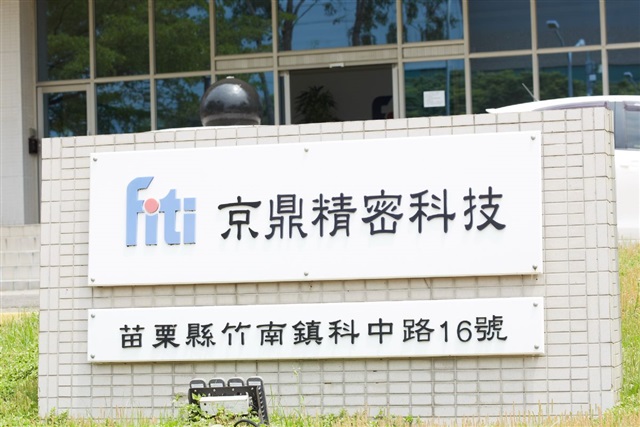
When a company that builds semiconductor manufacturing equipment reports record revenue, it's more than a financial data point. It's a leading indicator of what's happening deep in the compute supply chain. Foxsemicon, a Foxconn subsidiary specialized in chip fabrication gear, closed the first half of 2026 with unprecedented turnover, driven by artificial intelligence orders. The figure, reported by DIGITIMES, says less than it seems but hides more than it declares explicitly: demand for AI hardware isn't just resilient, it's accelerating.
Equipment suppliers like Foxsemicon hold a privileged vantage point. Orders they receive today will translate into additional production capacity twelve to eighteen months from now, when foundries install the new lines. A record-breaking half-year signals that chipmakers — from TSMC to Samsung, from niche foundries to GPU giants — are betting on a structural expansion, not a short-lived peak. For those tracking on-premise deployment of Large Language Models, this dynamic is critical.
The local infrastructure market for AI remains caught in a bind: data sovereignty pushes enterprises and public bodies toward self-hosted solutions, yet access to the most advanced components (high-VRAM GPUs, specialized networking systems) is contested with hyperscalers. Expanded semiconductor production capacity could ease this squeeze only if supply grows faster than cloud demand. The Foxsemicon signal suggests the ecosystem is gearing up for sustained growth, but it doesn't yet reveal how the allocation between centralized data centers and on-premise deployers will shake out.
The most interesting angle concerns cost structure. Wider production capacity tends, over the medium term, to lower the Total Cost of Ownership for local workloads by reducing chip unit prices and cutting lead times. Yet if demand stays overheated, the abundance could be absorbed before reaching the enterprise market, leaving SMEs to compete with giants willing to pay a premium for every unit. In that scenario, shifting inference workloads to owned hardware — today often justified by privacy or GDPR compliance — might also become a cost decision, but only for those able to negotiate volume.
An industrial consolidation effect is also worth noting. The surge in equipment orders rewards scale and vertical integration, environments where Foxsemicon, backed by the Foxconn ecosystem, thrives. Smaller suppliers struggle to keep pace, potentially reducing supply chain diversity and deepening reliance on a few critical nodes. For architects of on-premise infrastructure, supply chain resilience becomes a design parameter as important as raw compute power.
Ultimately, Foxsemicon's record isn't a single high note but the steady hum of a global infrastructure reshaping itself around ever more silicon-hungry AI. For those evaluating on-premise deployment, AI-RADAR offers analytical frameworks at /llm-onpremise to weigh trade-offs between control, cost, and hardware availability. The implicit invitation is to read supply chain news not as background noise but as an early compass: the era of plentiful, commoditized compute is still far off, but the machinery to build it is already being bolted to the factory floor.









💬 Comments (0)
🔒 Log in or register to comment on articles.
No comments yet. Be the first to comment!