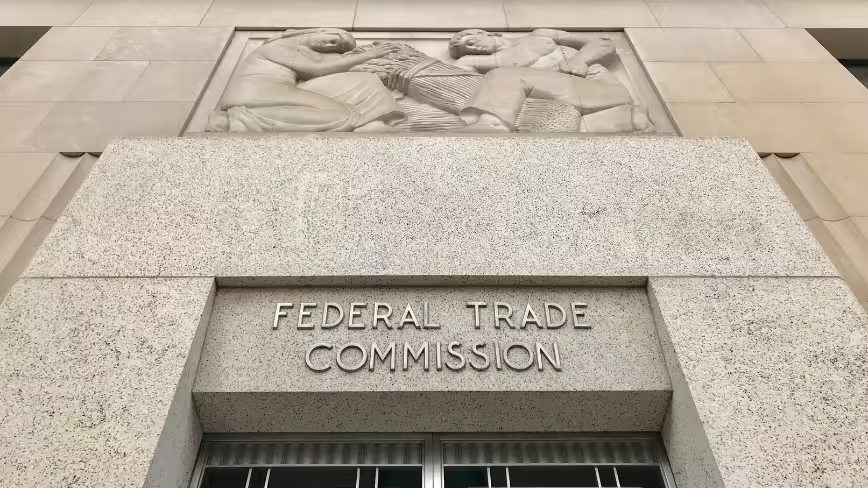
FTC Intervention Against Deceptive Practices
The U.S. Federal Trade Commission (FTC) recently obtained a federal court order that led to the temporary shutdown of a vast commercial operation. This initiative aims to counter a network of subscription apps that, according to allegations, defrauded consumers. The legal action underscores the authorities' commitment to protecting users from unfair business practices in the digital landscape.
The court order, issued at the agency's request, resulted in the freezing of operations for 15 corporations and eight individuals. These entities are under investigation for allegedly charging consumers without their explicit consent and for deliberately obstructing subscription cancellation processes, making them complex and frustrating.
Details of the Operation and Accusations
The network of companies and individuals involved has been described by the FTC as a "sprawling enterprise," featuring a complex structure that extended across jurisdictions such as Cyprus and Delaware, utilizing shell corporations. This architecture allegedly allowed them to mask the true ownership and scope of their operations, making it harder to identify and regulate illicit activities.
The main accusations focus on two crucial aspects of consumer protection: payment authorization and ease of withdrawal. Charging for services without clear and informed consent represents a direct violation of consumer rights, while creating intentional obstacles to subscription cancellation is a well-known tactic that exploits bureaucratic complexity to keep unwanted payments active.
Implications for Transparency and Regulation
This type of intervention highlights the increasing scrutiny by regulatory authorities on online business practices, especially those that leverage complex or opaque subscription models. In a digital era where services are increasingly delivered via platforms and apps, clarity on costs and ease of subscription management are fundamental pillars for consumer protection. Deliberate difficulty in cancellation, in particular, is a known tactic that can lead to frustration and significant financial losses for users.
The case underscores the need for businesses to adopt high standards of transparency and respect consumer rights, not only to avoid legal penalties but also to build trust and reputation in the market. For technical decision-makers and infrastructure architects operating in regulated sectors, regulatory compliance and the ethical management of data and services are crucial aspects, often influencing deployment choices and system architecture.
Future Prospects and the Role of Authorities
The temporary freezing of operations is a significant first step in the legal action taken by the FTC. The order was issued concurrently with a formal complaint, indicating the beginning of a process that will aim to establish accountability and implement permanent corrective measures. The "temporary" nature of the freeze suggests that investigations are still ongoing and further legal developments are anticipated.
This case serves as a warning to all entities operating in the app and digital services sector, reaffirming the role of authorities like the FTC in ensuring a fair and transparent market. The ability of a federal agency to freeze the operations of such an extensive network, which relies on complex and transnational corporate structures, demonstrates the determination to pursue deceptive practices wherever they may manifest.





💬 Comments (0)
🔒 Log in or register to comment on articles.
No comments yet. Be the first to comment!