
When talking about AI hardware, the mind immediately goes to GPUs. Yet, as anyone who has built an on-premise cluster knows, the devil is in the details: cables, connectors, interconnect buses, all the passive infrastructure that holds servers together and determines real-world performance. This is where Fulltech, a Japanese company specializing in connection components, comes in, with its decision to build a new plant in Thailand to meet demand from the AI and satellite sectors.
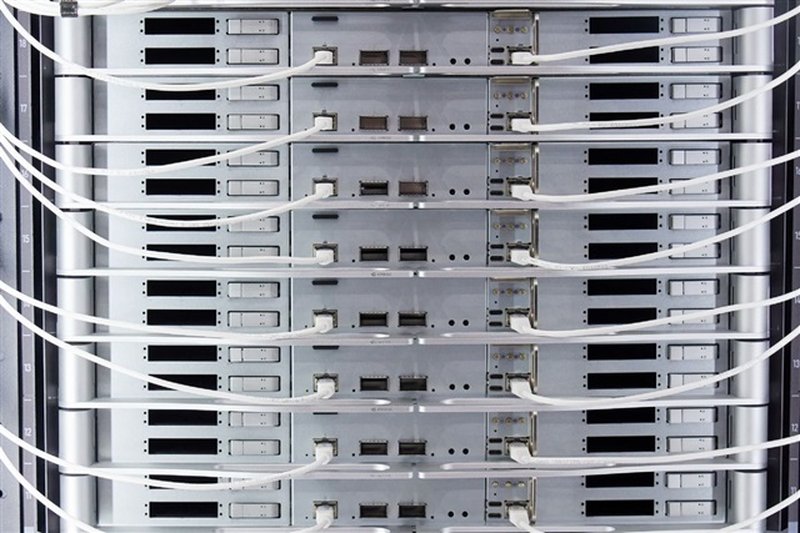
The investment, however unglamorous, highlights an uncomfortable truth for those accustomed to thinking only in teraflops and VRAM: the growth of the AI ecosystem also depends on niche suppliers producing high-speed connectors, cables capable of handling increasing bandwidth, and cabling solutions that minimize latency. Every server running inference or training an LLM is a tangle of physical links: PCIe, NVLink, InfiniBand, and as models grow, these links become more strategic. A bottleneck in connectors can stretch server delivery times and inflate the TCO of an on-premise deployment.
Fulltech’s expansion signals that demand is no longer a temporary spike but a structural plateau. Semiconductor fabs are lagging behind advanced chip demand, but passive components are also reaching a saturation point that pushes manufacturers to expand capacity. For those evaluating LLM on-premise adoption – perhaps with self-hosted, air-gapped stacks for data sovereignty reasons – this means the supply chain is diversifying and strengthening. Thailand, in particular, is emerging as an alternative hub to China and Taiwan for precision electronics, reducing geopolitical risks and aligning with the needs of those who must guarantee data residency under specific jurisdictions.
A second-order effect is the potential compression of costs. When a critical component is produced in larger volumes and in a country with competitive labor costs, the unit price tends to drop. While these are low-unit-cost components, the multiplied effect across hundreds of nodes in a cluster can lighten CapEx. Moreover, a more elastic supply chain reduces lead times, allowing organizations to scale their inference infrastructure without waiting months for each rack.
There is also a signal about market maturity. AI is becoming so pervasive that it is triggering investments in seemingly distant industrial sectors. Fulltech is not a GPU maker or a hyperscaler: it is a connector company. Its bet on Thailand to capture AI demand indicates that the supply chain is completing the shift from artisanal to industrial, a prerequisite for lowering barriers to entry and making on-premise a viable option even for non-tech enterprises. In the long run, this thaws market concentration: more suppliers, more competition, more choice for those who want to avoid the lock-in of large cloud vendors.
Of course, the immediate impact should not be overestimated: the Thai plant will also serve the satellite sector, and the exact numbers of additional capacity are not public. But the direction is clear. While mainstream debate focuses on ever-larger models and more powerful GPUs, the real battle for large-scale on-premise AI adoption is also fought in the basements of the supply chain, where Fulltech’s connectors ensure that bits travel at the speed of light – or thereabouts.






💬 Comments (0)
🔒 Log in or register to comment on articles.
No comments yet. Be the first to comment!