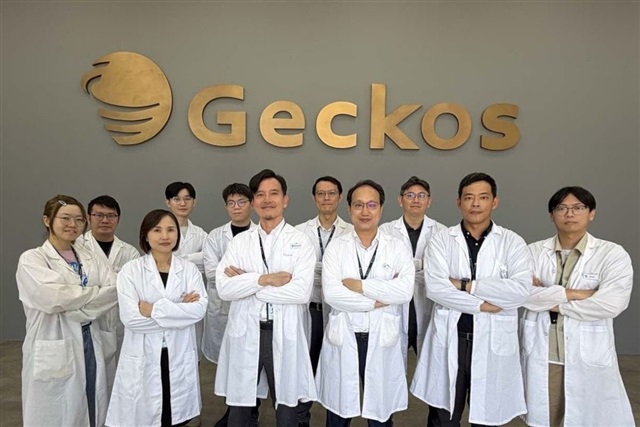
In an era where every square millimeter of silicon seems pushed to its limits, a company called Geckos points in a different direction: the next leap in AI performance won’t come from smaller transistors or more cores, but from the materials that make up the components themselves. It’s a bet that upends the dominant narrative – the one that sees chip design as the main battleground – and brings the physics of substrates, interconnects, and thermal dissipation back to center stage.
For those watching the evolution of infrastructure for Large Language Models, this thesis has a contrarian flavor. For years the industry has chased ever-advanced lithographic nodes, high-bandwidth memory, and optical interconnects. Yet the limits of miniaturization are now evident, while design and manufacturing costs keep rising. In this scenario, improving base materials – insulators, conductors, thermal interfaces – can offer performance gains comparable to a generational leap, without requiring investment in new lithographic plants.
The implications for organisations managing on-premise deployment of LLMs are far from marginal. Today, total cost of ownership is dominated by hardware, energy consumption, and the need to frequently refresh servers to keep pace with models. If the next wave of progress comes from materials, hardware could have longer lifespans: modular upgrades or board-level retrofits would become plausible. This is not science fiction: we already see promises around photonic materials for interconnects or novel dielectric fluids for immersion cooling, solutions that reduce thermal resistance and increase compute density in on-premise racks.
There is also a structural effect on the supply chain. If the competitive differentiator shifts from microarchitecture designs to proprietary materials, bargaining power moves from fabless designers to advanced chemistry and substrate suppliers. Foundries may need to collaborate more deeply with materials companies, reshaping procurement chains. For organisations that view data sovereignty as strategic, a more distributed materials supply chain – compared with the geographic concentration of cutting-edge foundries – could reduce dependence on a few players, widening options for self-hosted infrastructure compliant with regulations such as GDPR.
Geckos has not released technical specifics, but the message is clear: the next frontier will not be measured in nanometres, but in atomic compositions and heterogeneous interfaces. While the spotlight remains on GPUs and tensor cores, those designing on-premise AI infrastructure would do well to also follow materials science labs. That’s where the next shakeup in TCO numbers might come from – and with it, a rethink of deployment choices.






💬 Comments (0)
🔒 Log in or register to comment on articles.
No comments yet. Be the first to comment!