
Global PMX and AI Server Cooling: A Response to Compute Demand
The artificial intelligence industry is experiencing an unprecedented expansion phase, driven by the rapid adoption of Large Language Models (LLM) and generative AI applications across various sectors. This exponential growth translates into an equally soaring demand for compute power, which in turn poses new infrastructural challenges. In this scenario, Global PMX, a known player in the technology landscape, has announced a strategic expansion of its activities, focusing on cooling solutions for AI servers.
Global PMX's decision reflects a broader trend in the industry: supporting infrastructure, and particularly thermal management, is becoming a critical factor for the success of AI deployments. While attention often focuses on the latest generation GPUs, the ability to keep these units operating at optimal temperatures is fundamental to ensuring their performance and longevity.
The Cooling Challenge in the AI Era
Modern Graphics Processing Units (GPUs), such as NVIDIA H100 or A100, are designed to deliver exceptional computational performance but also generate a significant amount of heat. A single AI server can host several of these GPUs, leading to power densities and thermal loads that far exceed those of traditional servers. Efficient dissipation of this heat is essential to prevent performance throttling, reduce hardware failure rates, and optimize energy consumption.
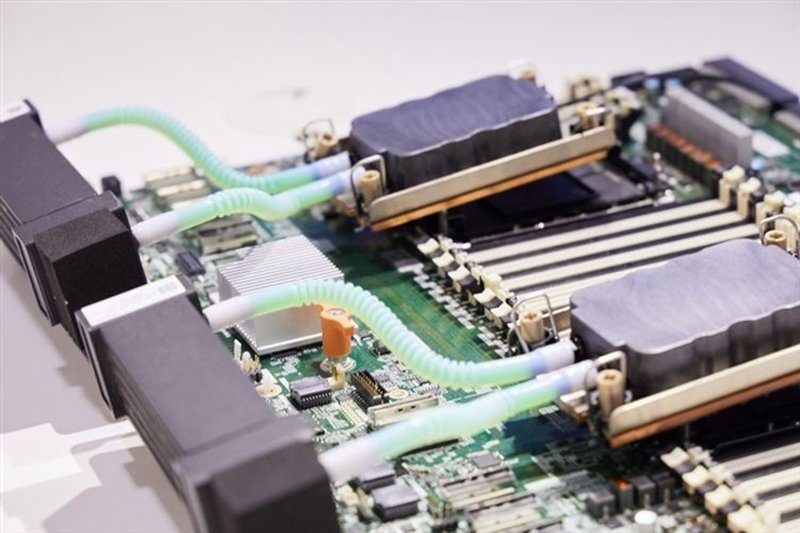
Traditional air-based cooling solutions struggle to manage these extreme densities. Consequently, the industry is increasingly exploring and adopting advanced technologies such as direct-to-chip liquid cooling or immersion cooling. These techniques allow for more effective heat removal with a smaller footprint, becoming indispensable for data centers aiming to scale their AI capabilities.
Implications for On-Premise Deployments
For organizations choosing to implement their AI workloads in self-hosted or on-premise environments, cooling management takes on even greater importance. Unlike cloud providers, who can distribute the costs and complexity of infrastructure across a broad customer base, companies with private data centers must directly face the initial investments (CapEx) and operational costs (OpEx) associated with cooling.
An efficient cooling system not only ensures optimal GPU performance but also contributes to reducing the overall Total Cost of Ownership (TCO) of the AI infrastructure by minimizing energy consumption and extending hardware lifespan. The ability to effectively manage heat is therefore a key factor for deployment decisions, influencing the feasibility and sustainability of AI strategies that prioritize data sovereignty and direct control over hardware. For those evaluating on-premise deployments, AI-RADAR offers analytical frameworks on /llm-onpremise to assess the trade-offs between costs, performance, and infrastructural requirements.
Future Outlook and Trade-offs
Global PMX's transition into the AI server cooling sector is a clear indicator of how the entire AI value chain is evolving. As chip technology advances and compute density increases, the demand for innovative and scalable cooling solutions will only grow. Companies will need to balance the trade-offs between cooling efficiency, implementation and maintenance costs, and operational complexity.
Investing in state-of-the-art cooling solutions is no longer an option but a strategic necessity for anyone intending to build and maintain a competitive and sustainable AI infrastructure. The ability to manage heat will become a key differentiator, enabling data centers to host increasingly intensive workloads and unlock the full potential of AI technologies.







💬 Comments (0)
🔒 Log in or register to comment on articles.
No comments yet. Be the first to comment!