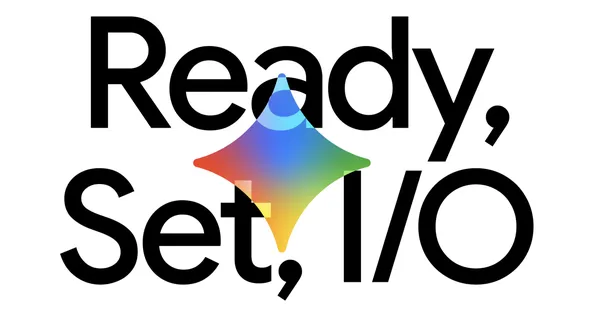
Google I/O 2026: A Glimpse into the Future of AI
The 2026 edition of Google I/O offered an overview of the future directions the Mountain View giant intends to take in the field of artificial intelligence and beyond. Among the numerous novelties presented, names like Gemini Omni, Google Antigravity, and Universal Cart stand out. These announcements, while still shrouded in mystery regarding specific technical details, outline an ambitious vision that aims to extend AI's influence into diverse sectors.
Google, a primary player in the artificial intelligence landscape for some time, continues to push the boundaries of innovation, proposing solutions that promise to redefine human-machine interaction. Presentations at I/O are traditionally a key moment to understand the company's long-term strategies and the technologies it intends to bring to market, often with a strong emphasis on capabilities offered through its cloud infrastructure.
Gemini Omni and the Implications for Large Language Models
The name Gemini Omni suggests an evolution or expansion of Google's family of Large Language Models (LLMs). Although specific details of this model were not disclosed, the introduction of a new flagship LLM raises fundamental questions for companies operating with intensive AI workloads. The deployment of LLMs, especially large ones, requires significant computational resources, particularly for inference.
Hardware specifications, such as GPU VRAM, throughput, and latency, become critical factors. Companies considering the adoption of advanced models like Gemini Omni must carefully evaluate whether their on-premise infrastructures can support such requirements or if it is more convenient to rely on cloud solutions. The choice between a self-hosted infrastructure and a managed cloud service involves complex trade-offs that go beyond the initial cost.
Data Sovereignty and TCO: The On-Premise vs. Cloud Dilemma
The innovations presented at Google I/O 2026, while exciting, reignite the strategic debate for enterprises: rely on managed cloud services or invest in an on-premise deployment? For sectors such as finance, healthcare, or public administration, data sovereignty and regulatory compliance (like GDPR) are absolute priorities. In these contexts, air-gapped environments or self-hosted solutions offer a level of control and security that cloud offerings, however robust, may not match.
A Total Cost of Ownership (TCO) analysis is crucial. While the cloud offers scalability and reduces initial CapEx, long-term operational costs (OpEx), especially for consistent AI workloads, can become prohibitive. On-premise deployment, while requiring a larger initial investment in hardware and infrastructure, can offer a lower TCO and granular control over the entire AI pipeline. For those evaluating on-premise deployment, AI-RADAR offers analytical frameworks on /llm-onpremise to thoroughly assess these trade-offs.
Strategic Perspectives for AI Infrastructure
Google I/O 2026 announcements, with their promises of advanced AI and new capabilities, serve as a catalyst for strategic decisions in infrastructure. Companies must consider not only the functionalities offered by new models but also how these integrate with their business needs, compliance constraints, and cost control strategies. The choice between a cloud environment and a self-hosted solution is never trivial and requires careful planning of all factors involved.
In a rapidly evolving market, where computing power and data management are strategic assets, a company's ability to deploy and manage its AI workloads efficiently and securely is fundamental. Innovations from major cloud players drive the market, but the real challenge for CTOs and infrastructure architects lies in balancing access to cutting-edge technologies with the need to maintain control, security, and long-term economic sustainability.






💬 Comments (0)
🔒 Log in or register to comment on articles.
No comments yet. Be the first to comment!