Google and the Future of Android with Gemini
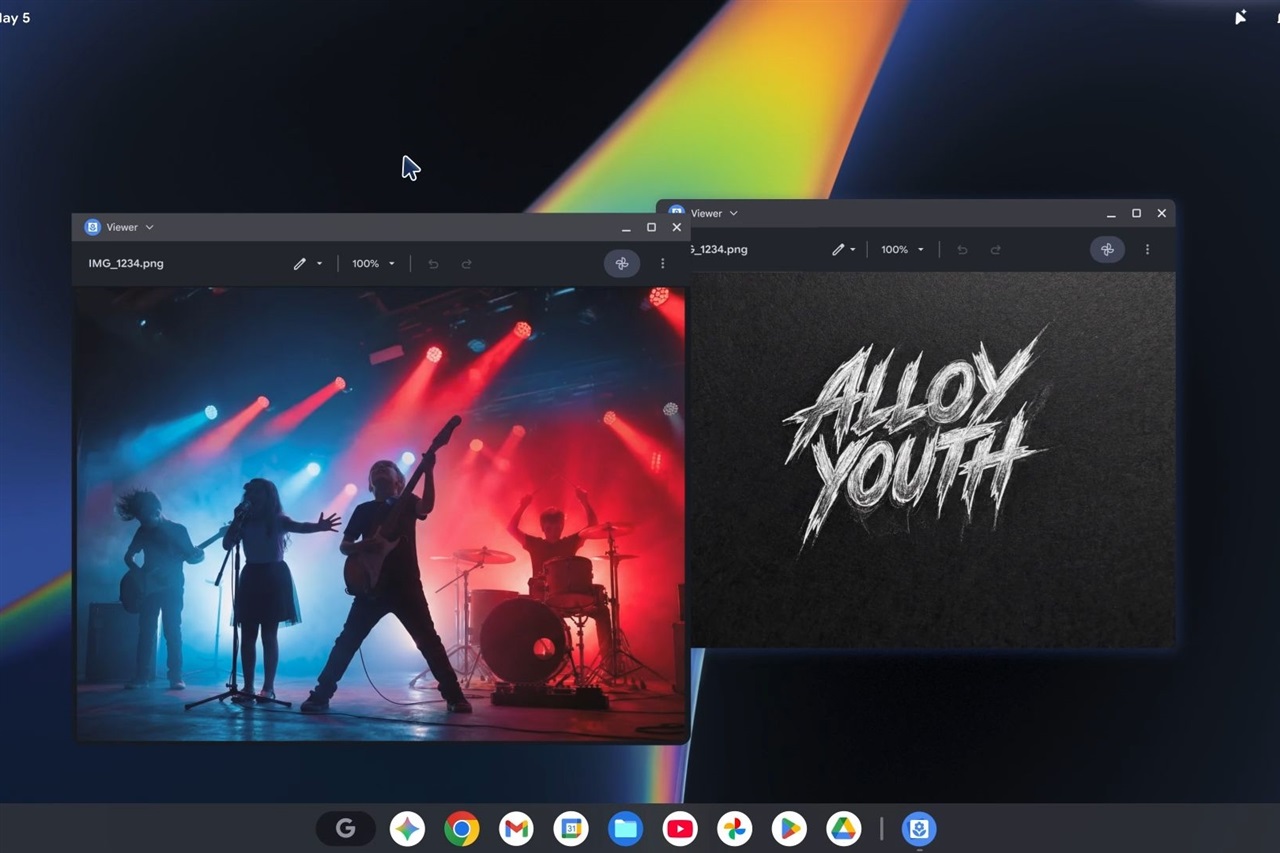
Google recently unveiled its vision for the future of the mobile operating system at the Android Show: I/O Edition, placing the Gemini Large Language Model (LLM) at the core of its innovation. This deep integration marks a significant step towards a smarter, contextually aware user experience, where advanced artificial intelligence capabilities become an integral part of everyday Android functionalities.
The announcement underscores how tech giants are aiming to bring LLM capabilities directly into users' hands, transforming how we interact with our smartphones and tablets. The choice of Gemini as the engine for this evolution is not accidental, reflecting Google's commitment to developing versatile and powerful AI models capable of operating in various contexts, from the cloud to the edge.
On-Device AI: Advantages and Challenges for Edge Computing
Integrating LLMs like Gemini directly onto Android devices opens new frontiers for on-device AI, or edge computing. This approach offers distinct advantages over entirely cloud-based models, particularly concerning latency and data sovereignty. Local processing drastically reduces the time needed to obtain a response, as data does not have to travel to a remote server and back. This is crucial for applications requiring immediate responsiveness, such as advanced voice assistants or real-time editing features.
However, deploying LLMs on mobile devices presents significant technical challenges. Edge devices have limited computational and memory resources (VRAM) compared to high-end GPU-equipped cloud servers (like A100s or H100s). This necessitates advanced techniques such as Quantization to reduce model size and memory requirements while maintaining an acceptable level of accuracy. The design of specialized silicon, such as Neural Processing Units (NPUs) integrated into mobile System-on-Chips (SoCs), becomes fundamental for accelerating inference efficiently from an energy perspective.
Implications for Enterprise Deployments and Data Sovereignty
While the announcement focuses on consumer devices, the implications of on-device AI extend to the enterprise world, especially for organizations evaluating on-premise or hybrid deployment strategies. The ability to run LLMs locally on endpoints or edge devices can strengthen data sovereignty, allowing companies to maintain control over sensitive data without sending it to external cloud services. This is particularly relevant for regulated sectors that must comply with stringent regulations like GDPR or requirements for air-gapped environments.
For CTOs and infrastructure architects, the proliferation of on-device LLMs raises questions about the long-term Total Cost of Ownership (TCO). While operational costs associated with intensive cloud API usage may decrease, investments in more performant edge hardware and the development of software pipelines optimized for these environments must be considered. Managing and updating models distributed across a large fleet of devices represents an additional complexity requiring robust Frameworks and MLOps strategies.
Future Prospects: Balancing Performance, Cost, and Control
The future shaped by Google with Gemini on Android highlights a clear trend: AI is moving increasingly towards the end-user, not just in the cloud. This evolution necessitates a careful evaluation of the trade-offs between performance, cost, and data control. Companies will need to balance the computational power offered by cloud data centers with the latency and privacy benefits derived from on-device processing.
The choice between a cloud, on-premise, or edge deployment will increasingly depend on the specific requirements of the AI workload, data sensitivity, and existing infrastructural capabilities. For those evaluating on-premise deployments or edge solutions, AI-RADAR offers analytical Frameworks on /llm-onpremise to assess these trade-offs, providing tools for informed decision-making without direct recommendations, but with an in-depth analysis of constraints and opportunities. The challenge will be to optimize the efficiency of silicon and software Frameworks to unlock the full potential of distributed AI.






💬 Comments (0)
🔒 Log in or register to comment on articles.
No comments yet. Be the first to comment!