Strategic Collaboration for AI
In an initiative that underscores the growing importance of collaboration between the private sector and governmental institutions, Google, Microsoft, and xAI have announced they will grant the United States government early access to their latest artificial intelligence models, which are not yet publicly available. This strategic move has garnered significant attention, particularly for its potential impact on defining safety standards and protocols for emerging AI technologies.
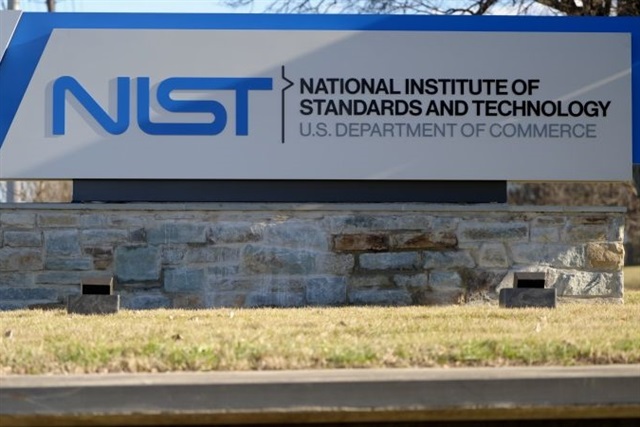
NIST's (National Institute of Standards and Technology) involvement in this process highlights the priority given to rigorous evaluation and risk mitigation associated with next-generation LLMs. Early access to these models before their general release offers a unique opportunity to test their capabilities, identify potential vulnerabilities, and contribute to the development of a regulatory framework that can guide responsible innovation in the field of artificial intelligence.
NIST's Role and Model Evaluation
NIST, known for its role in setting technological standards, will likely be central to the evaluation activities. Early access allows experts to deeply examine model behavior, robustness, the presence of biases, and compliance with ethical and security principles. This process is critical for understanding the implications of large-scale deployment and for preparing the necessary infrastructure to manage these technologies securely and efficiently.
Evaluating complex LLMs requires significant computational resources and specialized expertise. Organizations like NIST face the challenge of creating reliable benchmarks that can measure not only technical performance (such as throughput and latency) but also more nuanced aspects like reasoning capabilities, coherence, and resistance to manipulation attempts. This work is essential to ensure that future AI deployments are stable and predictable.
Implications for Deployment and Data Sovereignty
For enterprises and organizations evaluating LLM deployment, early access to unreleased models raises important questions related to data sovereignty and TCO. While initial access might be via cloud APIs, the prospect of integrating such capabilities into self-hosted or air-gapped environments is a critical factor for sectors like finance, defense, and healthcare, where data protection is paramount.
The ability to perform inference with advanced models on-premise requires significant investment in hardware, such as GPUs with high VRAM and high-throughput network infrastructures. The choice between a cloud deployment and a bare metal or hybrid solution depends on a careful analysis of the trade-offs between operational expenses (OpEx) and capital expenses (CapEx), as well as compliance and security requirements. AI-RADAR offers analytical frameworks on /llm-onpremise to support decisions related to on-premise deployments, highlighting the constraints and opportunities of each approach.
Future Prospects for the AI Ecosystem
This collaboration between tech giants and the US government marks a significant step towards greater transparency and responsibility in AI development. The goal is to build trust in emerging technologies, ensuring that their benefits can be harnessed safely and controllably. Defining common standards and sharing knowledge about the most advanced models are crucial steps for the entire AI ecosystem.
In a rapidly evolving landscape, where computational power and model complexity continue to grow, the ability to evaluate and govern these technologies will be decisive. The initiative highlights the need for a proactive approach to regulation and security, considering both innovation opportunities and potential risks, fostering a future where AI can thrive ethically and sustainably.










💬 Comments (0)
🔒 Log in or register to comment on articles.
No comments yet. Be the first to comment!