
The Evolution of AI in Cars
Google recently announced the rollout of Gemini, its Large Language Model (LLM)-based assistant, to vehicles equipped with the "Google built-in" system. This implementation represents a significant step forward from the current Google Assistant, aiming to elevate the driving experience through more sophisticated artificial intelligence capable of advanced conversational interactions.
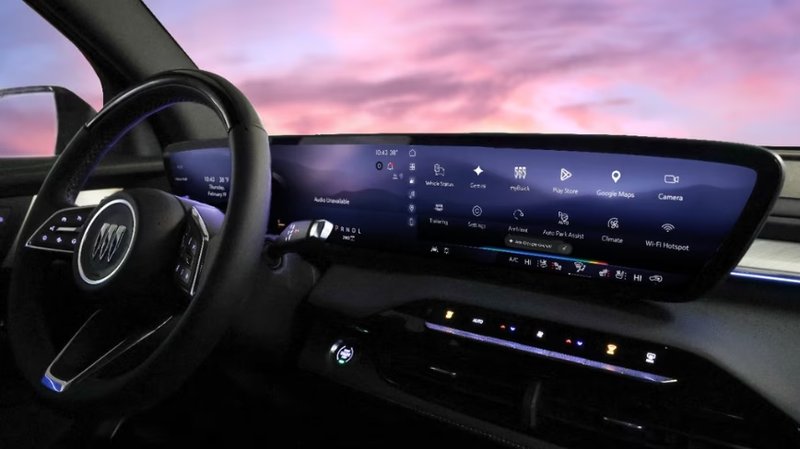
Google's initiative is part of a growing trend to integrate LLMs directly into vehicle systems. The announcement follows a similar revelation from General Motors, which also indicated its intention to integrate Gemini into its vehicles. This trend underscores the desire of technology and automotive companies to bring complex AI capabilities directly to the edge, transforming the interaction between drivers, passengers, and the vehicle itself.
Challenges of Edge Deployment
Deploying LLMs in millions of vehicles, as in the case of Gemini, presents a series of technical challenges inherent to edge environments. Unlike cloud data centers, embedded systems in cars operate with significant constraints in terms of hardware resources, such as available VRAM, computing power, and energy consumption. These factors necessitate careful optimization of AI models.
To overcome these limitations, common strategies include model quantization, which reduces the numerical precision of weights and activations to decrease memory footprint and accelerate inference, and the use of highly efficient inference frameworks. Latency is another critical aspect: AI assistant responses must be almost instantaneous to ensure a smooth and safe user experience while driving, which often implies local data processing rather than sending it to the cloud.
Implications for Infrastructure and TCO
The large-scale adoption of LLMs in edge contexts like vehicles has profound implications for infrastructure design and Total Cost of Ownership (TCO). Automotive manufacturers must carefully evaluate the hardware to integrate, balancing performance, unit costs, and energy consumption across millions of units. The choice of silicio, software update management, and ongoing AI model maintenance become crucial factors for the overall TCO.
Furthermore, data sovereignty and regulatory compliance, such as GDPR, become critically important when AI processes personal or sensitive information within the vehicle. The ability to perform inference locally, potentially in air-gapped environments or with limited connectivity, can offer significant advantages in terms of privacy and security. For those evaluating on-premise or edge deployments, analytical frameworks are available at /llm-onpremise to assess trade-offs between initial and operational costs and performance requirements, also considering aspects related to data management and compliance.
Future Prospects for Automotive AI
The integration of Gemini into vehicles marks a turning point for artificial intelligence in the automotive sector. The trend of bringing LLM capabilities closer to the end-user, directly to the edge, is set to continue, driven by advancements in model efficiency and the development of specialized AI silicio. This approach promises to unlock new functionalities and improve human-machine interaction in ways unimaginable just a few years ago.
Future developments could see hybrid architectures, where some lighter inference operations occur locally to ensure low latency and privacy, while more complex tasks or those requiring updated data are delegated to the cloud. The success of these implementations will depend on the ability to balance technological innovation, economic sustainability, and a constant focus on safety and user experience.





💬 Comments (0)
🔒 Log in or register to comment on articles.
No comments yet. Be the first to comment!