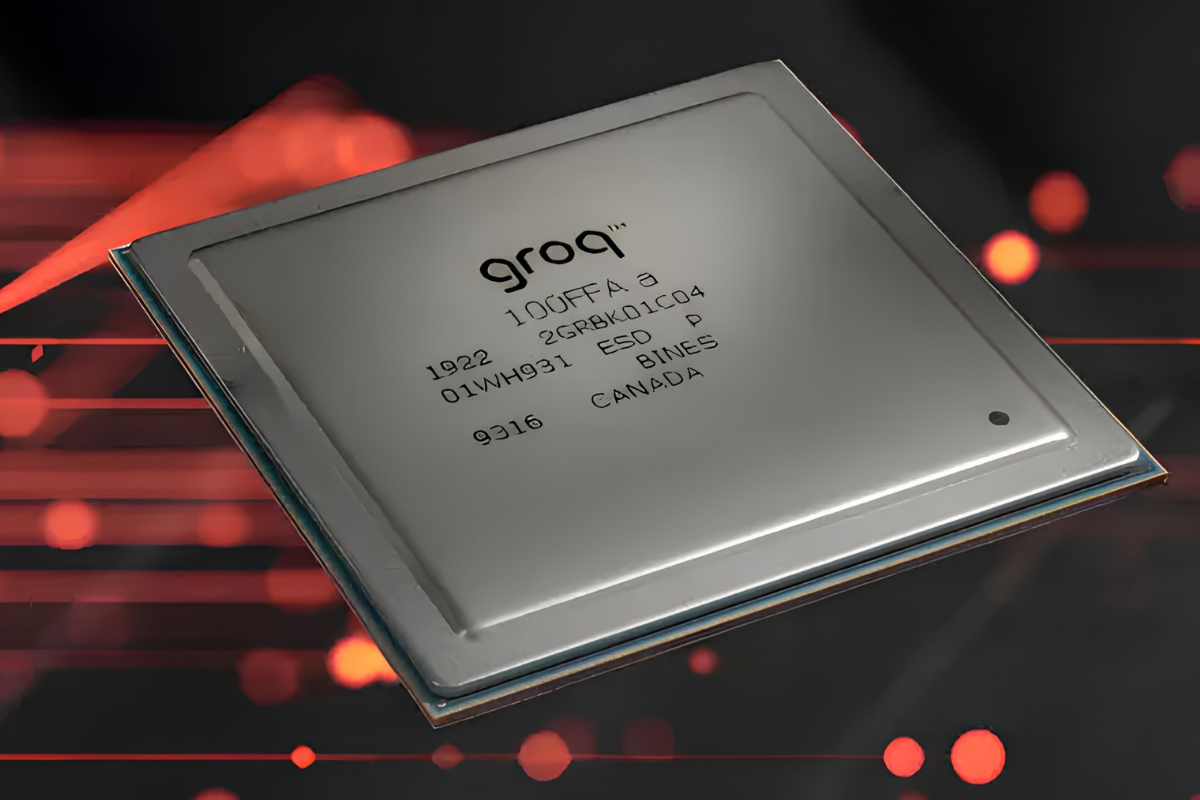
Groq Aims for Cloud Expansion with Major Funding Round
Groq, the US startup known for its specialized AI chips, has initiated a significant fundraising effort, targeting $650 million. The primary goal of this investment is to support a decisive expansion into the cloud services sector, particularly for Large Language Model (LLM) workloads. This move underscores the growing importance of specialized infrastructure for large-scale AI model inference.
The LLM market is rapidly evolving, with increasing demand for efficient and scalable computing capabilities. Companies are seeking solutions that can handle complex model inference with low latency and high throughput, both for internal applications and public-facing services. Groq's approach, centered on proprietary hardware, aims to differentiate itself in this competitive landscape by offering optimized performance for the specific requirements of LLMs.
GroqCloud: An OpenAI-Compatible Service for the Future
At the heart of Groq's expansion strategy is GroqCloud, a service designed to be compatible with OpenAI's APIs. This compatibility is a key factor, as it facilitates adoption by developers and companies already using or familiar with the OpenAI ecosystem, reducing entry barriers and simplifying the migration of existing workloads. The ability to easily integrate new LLM services is crucial for enterprises seeking flexibility and interoperability.
Groq's projections for GroqCloud are ambitious: the company expects to have served over 2 million developers and several Fortune 500 firms by September 2025. These figures, if achieved, would indicate rapid and massive adoption of the platform, highlighting Groq's confidence in its technology and its ability to meet the needs of a broad user base, from individual developers to large corporations with complex deployment requirements.
Implications for LLM Deployment: Cloud vs. On-Premise
Groq's investment in the cloud highlights a clear market trend towards offering LLM inference capabilities as a service. However, for many companies, particularly those with stringent data sovereignty requirements, regulatory compliance, or the need for air-gapped environments, on-premise or hybrid deployment remains a fundamental consideration. The choice between cloud and self-hosted involves a careful evaluation of the Total Cost of Ownership (TCO), which includes not only operational costs but also those related to infrastructure management, security, and compliance.
While cloud services offer scalability and reduced upfront costs, on-premise solutions can provide more granular control over hardware, data, and processes—crucial aspects for sectors such as finance, healthcare, or public administration. For those evaluating the trade-offs between these different deployment strategies, AI-RADAR offers analytical frameworks and insights on /llm-onpremise, providing tools to compare hardware specifications, infrastructure requirements, and cost implications for AI/LLM workloads.
The Future of AI Inference: Hardware Innovation and Scalable Services
Groq's pursuit of such substantial funding reflects the dynamism and capital-intensive nature of the AI sector. Silicon-level innovation, such as that championed by Groq with its specialized chips, is the engine enabling increasingly performant and accessible cloud services. However, the availability of these technologies via a cloud offering also raises important questions regarding reliance on external providers and infrastructure customization.
The Large Language Models landscape will continue to be shaped by a balance between hardware advancements, the flexibility of cloud services, and the need for enterprises to maintain control and sovereignty over their data. Groq's strategy of combining proprietary chips with a cloud service compatible with market standards like OpenAI represents an attempt to capture a significant share of this expanding market, offering a solution that promises speed and scalability for LLM inference.







💬 Comments (0)
🔒 Log in or register to comment on articles.
No comments yet. Be the first to comment!