
Groq Strengthens with $650 Million for Inference Cloud
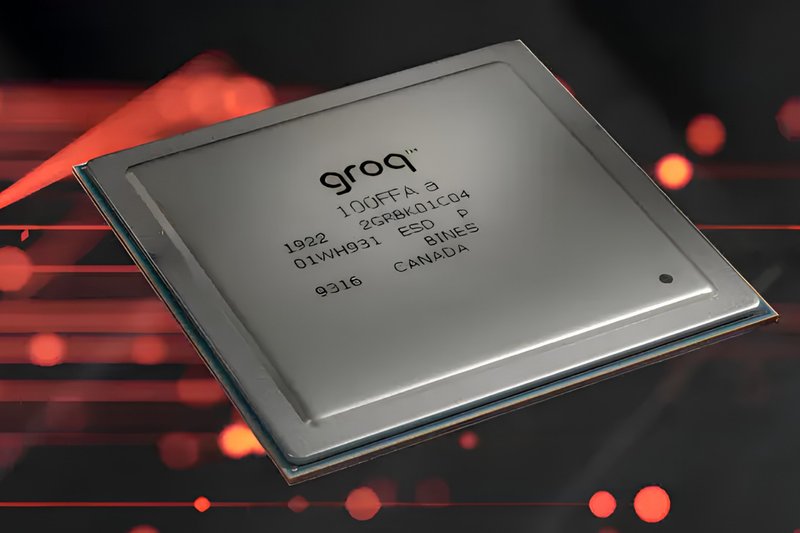
Groq, a company recognized for its hardware solutions dedicated to accelerating Large Language Model Inference, has announced a significant capital injection. According to Axios, the company is raising $650 million from existing investors, funds earmarked to support and expand its Inference cloud business. This financial operation comes at a crucial time for the artificial intelligence sector, where the ability to process Inference requests rapidly and cost-effectively has become a distinguishing factor.
The news gains particular significance when contextualized with events over the past six months. In December, Nvidia, the undisputed leader in the AI chip market, finalized a $20 billion agreement with Groq. This transaction, described as a "not-acqui-hire" – a hybrid formula that does not constitute a full acquisition – allowed Nvidia to acquire prominent engineering talent and obtain a license for the hardware technology developed by Groq.
Deal Details and Strategic Implications
The agreement between Nvidia and Groq, while not a complete merger, has had a substantial impact on the structure and prospects of both companies. Nvidia paid out Groq's investors in cash, ensuring them a significant economic return. Concurrently, it integrated several senior Groq engineers into its team, key figures in the development of hardware architectures for AI acceleration. The aspect of the hardware technology license is equally relevant, suggesting Nvidia's interest in Groq's innovations in the Inference field, potentially to integrate them or draw inspiration from them in its future generations of silicon.
The decision by the same investors, who benefited from the December payout, to now reinvest $650 million in Groq highlights renewed confidence in the company's business model and its ability to compete in the dynamic Inference cloud market. This scenario underscores the growing demand for high-performance and scalable solutions for running Large Language Models, both in cloud environments and, for specific needs, on-premise.
The Inference Market Context and Deployment Trade-offs
The Inference market for Large Language Models currently represents one of the most competitive and strategic frontiers in artificial intelligence. Companies are seeking solutions that minimize latency and maximize throughput, while keeping costs under control. The choice between a cloud deployment and a self-hosted on-premise solution depends on a series of critical factors, including data sovereignty, compliance requirements, Total Cost of Ownership (TCO), and the need for hardware or software customization.
Inference cloud platforms, like the one Groq intends to enhance, offer scalability and immediate access to advanced computational resources, reducing initial CapEx investment. However, they can lead to increasing operational costs (OpEx) and raise questions regarding data governance for regulated sectors. Conversely, on-premise implementations guarantee full control over infrastructure and data but require a higher initial investment and internal expertise for managing and optimizing hardware, such as GPUs with high VRAM specifications or bare metal architectures.
Future Prospects and Strategic AI Decisions
Groq's fundraising and the Nvidia deal reflect the vibrancy and complexity of the AI landscape. While Nvidia continues to consolidate its dominant position in AI silicon, companies like Groq are striving to carve out a niche by innovating on the Inference front, an area where efficiency and speed are fundamental parameters. The ability to offer a competitive Inference cloud service requires not only high-performance hardware but also software optimization and an efficient deployment pipeline.
For organizations evaluating the best strategies for deploying their AI/LLM workloads, it is essential to carefully consider the trade-offs between cloud and on-premise solutions. Factors such as desired latency, required throughput, data security, and overall TCO play a crucial role. AI-RADAR, for instance, offers analytical frameworks on /llm-onpremise to help decision-makers navigate these complexities, providing tools to evaluate the implications of each infrastructural choice. The future of AI will increasingly depend on the ability to balance technological innovation with pragmatism in deployment strategies.






💬 Comments (0)
🔒 Log in or register to comment on articles.
No comments yet. Be the first to comment!