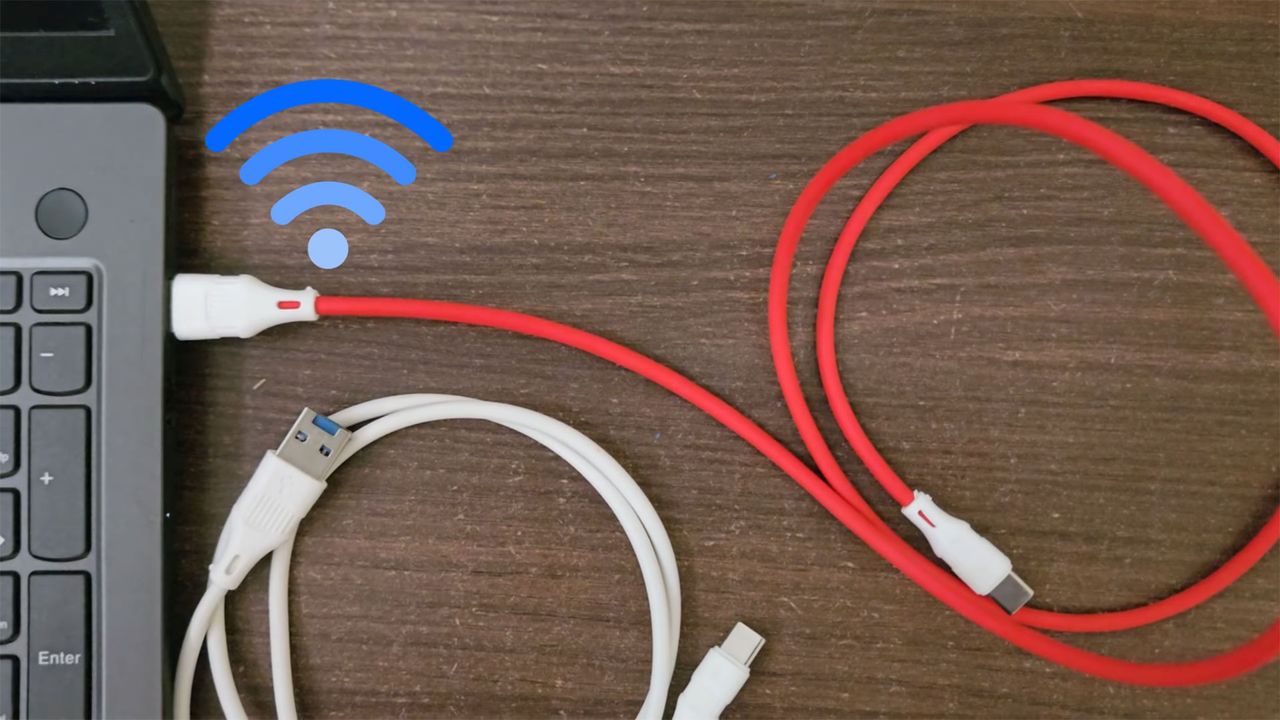
An Apparently Harmless USB Cable, a Hidden Technological Core
In the landscape of cybersecurity, threats can lurk in the most unexpected forms. The Hacknect cable by Little Gadgets is a striking example: a common USB cable that, under the guise of an everyday accessory, conceals sophisticated architecture. This device integrates a microcontroller and microSD memory, elements that transform it from a simple connector into a versatile tool for interacting with computer systems.
Its peculiarity lies in its ability to be controlled via Wi-Fi, a feature that enhances its discretion and operational potential. Although its functionalities make it a potential tool for hacking activities, the company positions it as a resource for a specific audience: makers, developers, tech enthusiasts, and, in particular, cybersecurity students and professionals who wish to deepen their understanding of vulnerabilities and attack techniques.
Technical Details and Operational Capabilities
The core of the Hacknect is its microcontroller, which acts as the operational brain, managing instructions and orchestrating actions. The presence of microSD storage offers the ability to store payloads, scripts, or data, making the cable autonomous and capable of executing complex operations without the need for a constant external host. Wi-Fi connectivity is the key element that allows remote control, enabling operators to interact with the device from a distance, inject commands, or activate payloads discreetly.
Among the most relevant functionalities are remote payload execution and keystroke injection. The former allows arbitrary code to be loaded and executed on the target system, opening scenarios ranging from information gathering to software installation. The latter, on the other hand, simulates keyboard input, allowing commands, passwords, or other predefined sequences to be typed, potentially bypassing user interaction-based defenses. These mechanisms recall the concept of "BadUSB" devices, which exploit operating systems' inherent trust in USB peripherals.
Security Implications and Educational Context
The existence of tools like the Hacknect cable underscores the importance of physical security and access management in any IT environment. For CTOs, DevOps leads, and infrastructure architects, awareness of such attack vectors is critical for protecting deployments, whether on-premise, hybrid, or cloud. The ability of a physical device to bypass traditional perimeter defenses highlights the need for holistic security policies that include physical access control to servers and workstations.
The cable's positioning as a tool for "makers, developers, enthusiasts, and cybersecurity learners" is crucial. In an ethical context, devices like the Hacknect can be used to conduct controlled penetration tests, simulate real attacks, and train personnel on threat response. Understanding how these tools work is essential for developing effective countermeasures and improving system resilience. Evaluating the Total Cost of Ownership (TCO) for security solutions, which includes both software tools and physical protection measures, becomes a relevant aspect for those managing complex infrastructures.
Future Prospects and Technological Responsibility
The evolution of devices like the Hacknect cable reflects a broader trend in cybersecurity, where miniaturization and wireless connectivity make attack tools increasingly sophisticated and difficult to detect. This scenario necessitates constant reflection on data sovereignty and the protection of critical infrastructures. For organizations prioritizing control and security of their data, particularly in air-gapped or self-hosted environments, vigilance against physical threats is as important as protection from digital threats.
The availability of such tools, albeit with a declared educational intent, also raises ethical questions about their potential instrumentalization. It is the responsibility of the technological community to promote ethical and conscious use, ensuring that acquired knowledge is employed to strengthen defenses rather than exploit vulnerabilities. AI-RADAR, in its focus on on-premise LLMs and local stacks, emphasizes the importance of an integrated approach to security, where every component of the infrastructure, including physical access points, is considered a potential risk vector.






💬 Comments (0)
🔒 Log in or register to comment on articles.
No comments yet. Be the first to comment!