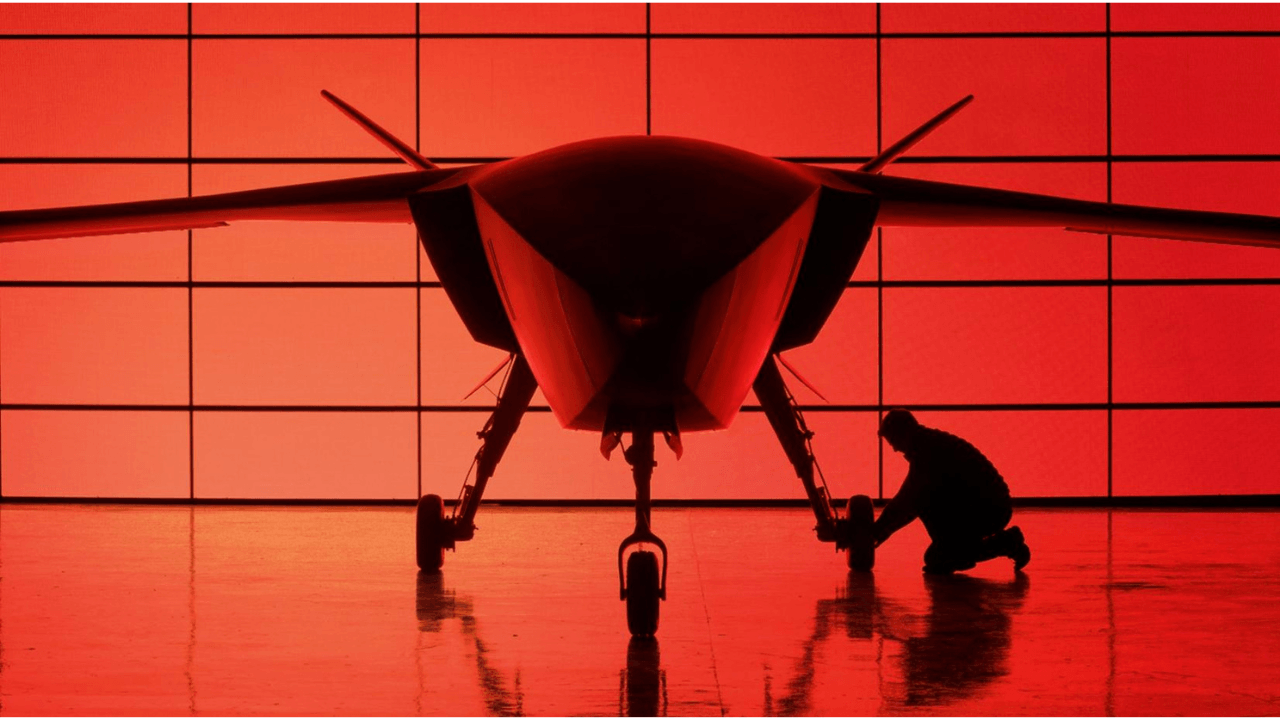
Helsing, Europe's leading defense AI startup, has closed a $1.8 billion Series E round, reaching an $18 billion valuation. The deal, backed by investors including Dragoneer, Lightspeed, Goldman Sachs, and CPP Investments, signals more than financial success: it marks a definitive split between military AI and cloud computing, and forces a reckoning over what hardware and software stack can ensure sovereignty and operational capability in hostile environments.
Founded in 2021, Helsing builds software that fuses data from drones, radar, satellites, and cameras into a single real-time operational picture, helping armed forces detect threats, track targets, and make faster decisions while keeping humans in the loop. The company has since expanded into autonomous systems: AI-powered strike drones capable of operating without GPS and under electronic jamming, and underwater surveillance for critical infrastructure protection.
The structural fact is that Helsing remains predominantly European-owned, a choice that goes beyond symbolism. European governments want to avoid dependence on non-European suppliers for sensitive technology, which imposes an on-premise or edge deployment model, often air-gapped from public networks. In electronic warfare scenarios, AI cannot rely on a remote data center: it must run locally, on robust hardware, with low latency and high reliability.
The massive capital injection comes as Helsing accelerates the integration of AI platforms into the defense capabilities of a growing number of partner nations. This goes beyond software: it entails building physical infrastructure and adopting specialized silicon. Machine learning models for target recognition or radar data fusion need GPUs with ample VRAM and, in drone applications, low power consumption. Aggressive quantization techniques (INT8 or below) become essential for on-device inference, with an eye on performance-per-watt. AI-RADAR closely tracks self-hosted inference solutions, and for those evaluating such deployments, the trade-offs between generic GPUs and specialized accelerators, power consumption, and latency have become central.
Who gains from this dynamic? Accelerator manufacturers targeting ruggedized solutions with integrated encryption, and developers of inference serving frameworks optimized for bare-metal or edge environments, far from cloud comforts. Cloud hyperscalers, on the other hand, will struggle to enter a market where data sovereignty is the prime requirement. The investment itself, with names like General Catalyst and Plural, shows that venture capital sees a growth trajectory separate from consumer tech.
Helsing's story also gauges the maturation of Europe's deep tech ecosystem. It's no coincidence that Spotify co-founder Daniel Ek is chairman and an investor through Prima Materia. The question now is: can Europe maintain technological autonomy when the most advanced chip design still largely happens outside the continent? Helsing's answer, for now, is a software arsenal that leverages available hardware, but the next move might be a push toward custom silicon tailored to defense needs.





💬 Comments (0)
🔒 Log in or register to comment on articles.
No comments yet. Be the first to comment!