A Novel Non-Invasive Approach
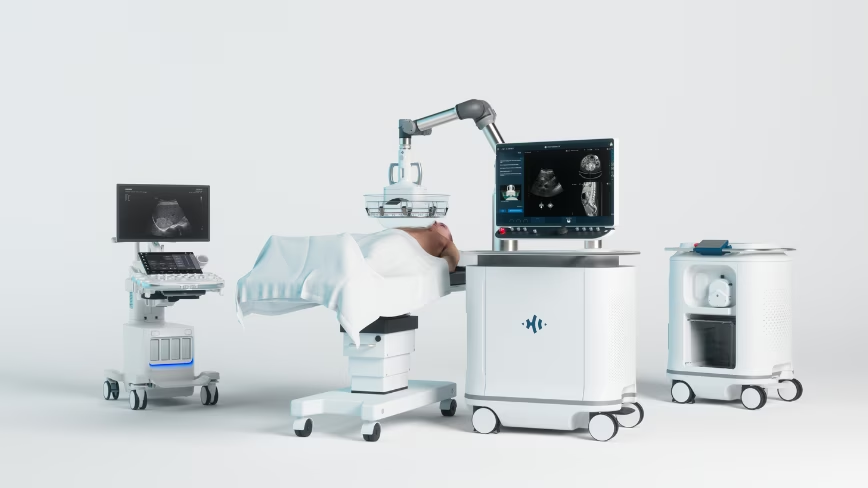
HistoSonics has successfully obtained regulatory approval from Taiwan’s Food and Drug Administration (TFDA) for its Edison Histotripsy System. This achievement represents a significant milestone for the company as it aims to expand its presence in the Asian market. The TFDA authorization enables the deployment of an innovative medical device designed to treat tumors non-invasively.
The Edison Histotripsy System stands out for its ability to destroy tumor masses using focused ultrasound technology. Unlike traditional methods, it does not require surgical interventions, radiation exposure, or the induction of thermal damage to surrounding tissues. This characteristic positions it as a potentially less traumatic solution for patients, offering reduced recovery times.
The Edison Histotripsy System Technology
At the core of the Edison Histotripsy System is its histotripsy technology, a process that utilizes high-intensity, short-duration ultrasound pulses. These pulses generate microbubbles within the target tissue, which, upon collapsing, create mechanical forces capable of disintegrating tumor cells. The process is highly controlled and targeted, allowing for the preservation of adjacent healthy tissues.
The non-thermal nature of the treatment is a crucial aspect, as it eliminates the risk of heat-induced necrosis and associated complications, often present in other ablative therapies. This mechanical approach provides precise control over the treated area, minimizing side effects and enhancing patient safety. The ability to destroy tumors without incisions or radiation opens new avenues for treating complex oncological conditions, especially in contexts where therapeutic options are limited.
Implications for Deployment and Data Sovereignty
While the Edison Histotripsy system operates in the medical field, its deployment within hospital facilities shares analogies with challenges faced in the artificial intelligence sector, particularly for workloads requiring local processing. The installation of a complex medical device like this implies on-premise management of hardware and, potentially, sensitive patient data.
Data sovereignty and regulatory compliance are critical aspects. Data generated by the system, such as diagnostic images or treatment parameters, must be managed in accordance with local privacy laws (like GDPR in Europe or equivalent regulations in Taiwan). This often requires data to remain within the hospital facility, processed on local servers or an air-gapped infrastructure, to ensure maximum security and confidentiality. For those evaluating on-premise deployment of complex systems, including LLMs, managing specialized hardware and protecting data represent fundamental constraints and trade-offs to consider, often balancing initial capital expenditures (CapEx) with long-term control and security.
Future Prospects in the Asian Market
The TFDA approval in Taiwan is not just a regulatory success but also a strategic move for HistoSonics. Asia represents a rapidly growing market for advanced medical technologies, with increasing demand for innovative cancer treatment solutions. Entry into Taiwan opens doors for further expansion in the region, solidifying the company's position as a key player in the field of histotripsy.
This expansion underscores the importance of successfully navigating complex, nation-specific regulatory approval processes. Each market presents unique requirements that companies must address to bring their innovations to patients. HistoSonics' success in Taiwan demonstrates the maturity of the technology and the company's ability to adapt to diverse regulatory contexts, laying the groundwork for future deliveries and broader adoption.






💬 Comments (0)
🔒 Log in or register to comment on articles.
No comments yet. Be the first to comment!