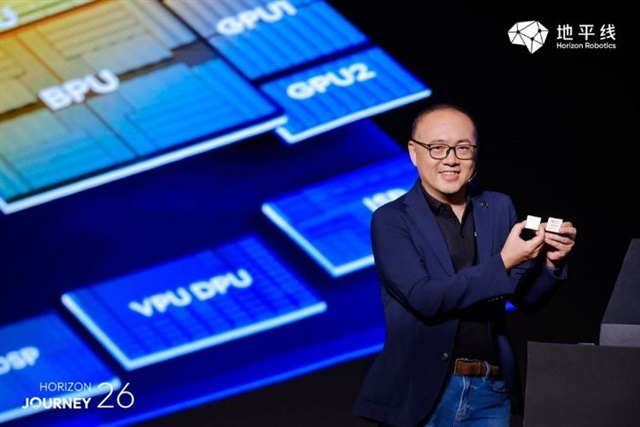
Horizon Robotics: A New Player in Autonomous Driving
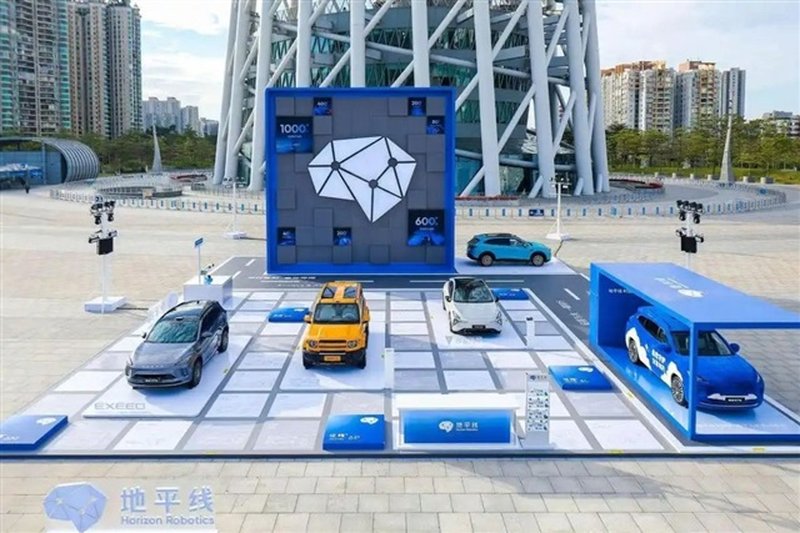
The autonomous driving landscape is constantly evolving, with a growing number of companies seeking to establish themselves as providers of key technologies. In this context, Horizon Robotics, a Chinese company focused on artificial intelligence, has announced the launch of a new platform dedicated to autonomous driving systems. This strategic move places it in direct competition with established industry players, including Tesla, which has been developing its own in-house hardware and software solutions for autonomous driving for years.
The introduction of a new platform by Horizon Robotics reflects the increasing demand for robust and scalable AI solutions for the automotive sector. Automakers are looking for technology partners who can offer complete stacks, from silicio to software Frameworks, to accelerate the development and Deployment of increasingly autonomous vehicles. The ability to provide a credible alternative to existing proprietary systems is crucial for gaining market share in a highly competitive and technologically demanding sector.
The Technological Core of Autonomous Driving Platforms
An autonomous driving platform is a complex system that integrates hardware and software to enable a vehicle to perceive its surroundings, make decisions, and navigate without human intervention. At the heart of these platforms are specialized AI processors, often based on custom architectures or optimized GPUs, capable of executing computationally intensive Inference workloads in real-time. Managing sensors such as cameras, radar, and LiDAR, fusing data, and executing perception and planning algorithms require significant computing power and low latency.
For companies evaluating the integration of such systems, hardware requirements are stringent. It is essential to have an architecture that can handle large volumes of data from sensors, processing them with energy efficiency while ensuring functional safety. The choice of silicio and software optimization are critical aspects that directly influence performance, power consumption, and ultimately, the Total Cost of Ownership (TCO) for vehicle manufacturers. The ability of a system to operate in edge environments, directly on board the vehicle, is a fundamental constraint that distinguishes these solutions from traditional cloud deployments.
Implications for Deployment and Data Sovereignty
Deploying autonomous driving systems presents unique challenges, particularly regarding data processing and sovereignty. Vehicles generate enormous amounts of real-time data, which must be processed locally for critical safety decisions. This makes on-premise or, more precisely, on-device (edge computing) deployments the predominant approach. The need to keep sensitive data on board the vehicle or within manufacturer-controlled infrastructures addresses privacy, regulatory compliance, and cybersecurity requirements.
For CTOs and infrastructure architects evaluating AI solutions, choosing a platform like Horizon Robotics' implies a thorough analysis of the trade-offs between performance, cost, and control. The possibility of having a complete and controllable technology stack, not entirely dependent on external vendors or cloud infrastructures, can be a decisive factor. This approach ensures greater flexibility, customization, and potentially a more advantageous TCO in the long term, in addition to strengthening data sovereignty and intellectual property. For those evaluating on-premise deployments for AI/LLM workloads, AI-RADAR offers analytical frameworks on /llm-onpremise to assess these trade-offs.
Competitive Landscape and Future Prospects
The competition in the autonomous driving sector is intense and diverse. On one hand, there are companies like Tesla that adopt a vertically integrated approach, developing almost every component internally, from chip to software. On the other hand, there are suppliers like Horizon Robotics, Mobileye (Intel), and Nvidia, which offer platforms and components to third parties, allowing vehicle manufacturers to assemble their own solutions. This dynamic creates a market where manufacturers can choose between massive investment in internal development or the adoption of third-party solutions, balancing costs, development times, and technological control.
The entry of Horizon Robotics with a new platform highlights the market's maturation and the increasing fragmentation of available solutions. A company's ability to offer a competitive alternative in terms of performance, efficiency, and TCO will be crucial for its success. The future of autonomous driving will depend not only on technological innovation but also on the ability of suppliers to build robust ecosystems and support their customers in the integration and maintenance of complex and safety-critical systems.




💬 Comments (0)
🔒 Log in or register to comment on articles.
No comments yet. Be the first to comment!