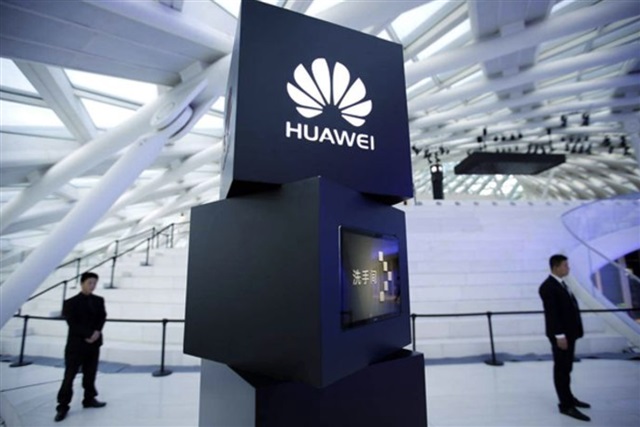
Huawei, China Mobile, and Baidu have joined forces to develop China’s first NPO optical interconnect standard, a data transport technology that is becoming an enabler for next-generation AI compute clusters. The initiative is not just a technical milestone: it signals China’s acceleration toward a complete, self-sufficient infrastructure ecosystem capable of supporting Large Language Model training without relying on external vendors.
Optical interconnects are the invisible backbone of modern data centers. Unlike traditional electrical links, they transmit data via light signals, offering far greater bandwidth, lower latency, and reduced energy consumption. When training LLMs with hundreds of billions of parameters across thousands of GPUs, the internal network becomes the primary bottleneck: if gradients and weights don’t circulate fast enough, expensive compute resources sit idle. Standardizing this layer therefore means governing a crucial component of the AI value chain.
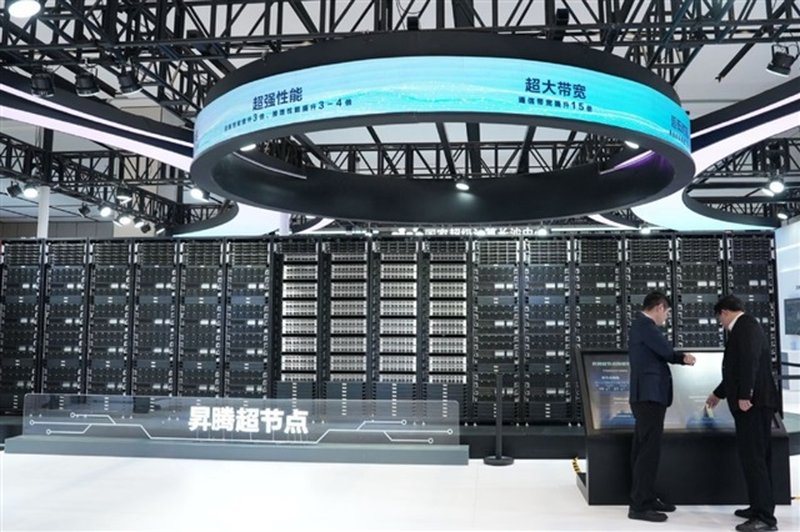
The choice of partners reveals a vertical strategy. Huawei provides expertise in Ascend chips and optical networking solutions; China Mobile controls the country’s largest data center and transmission infrastructure; Baidu brings its PaddlePaddle platform and large-scale training know-how. Together they cover the entire pipeline, from silicon to model. This is not a minor detail: U.S. sanctions have cut off access to technologies like NVIDIA’s NVLink or InfiniBand, which are tightly integrated with Western GPU hardware. Creating a domestic optical standard allows AI clusters to scale autonomously, reducing Total Cost of Ownership and shielding the supply chain from geopolitical shocks.
For those managing on-premise AI deployments in China – banks, government agencies, hospitals – this move means access to a certified and verifiable supply chain, essential when handling sensitive data subject to the Personal Information Protection Law (PIPL). Joint optimization between local accelerators and the NPO network promises to boost performance in self-hosted setups, cutting operational costs and ensuring physical control over data. In a context where digital sovereignty is a priority, having network components independent of foreign vendors reduces the risk of backdoors and aligns infrastructure with regulatory requirements.
Structurally, the announcement signals a potential fragmentation of global standards. While the Western ecosystem converges on NVLink and Ultra Ethernet specifications, China is building a parallel track. This divergence could complicate future interoperability and push other regional blocs – Europe, India – to consider similar paths to reduce technological dependence. It remains to be seen whether the NPO standard will seek international recognition or remain confined to the domestic market, but the direction is clear: optical interconnects have become a hot front in the battle for AI infrastructure sovereignty.







💬 Comments (0)
🔒 Log in or register to comment on articles.
No comments yet. Be the first to comment!