
When a behemoth like IBM—no longer the IT industry’s center of gravity but still a bellwether—decides to step outside its regular earnings calendar and issue a mid-quarter warning, markets listen. Big Blue’s latest move is as rare as it is freighted with implications: the accelerating adoption of artificial intelligence is causing a memory shortage that, in turn, is shifting enterprise spending away from software and toward hardware.
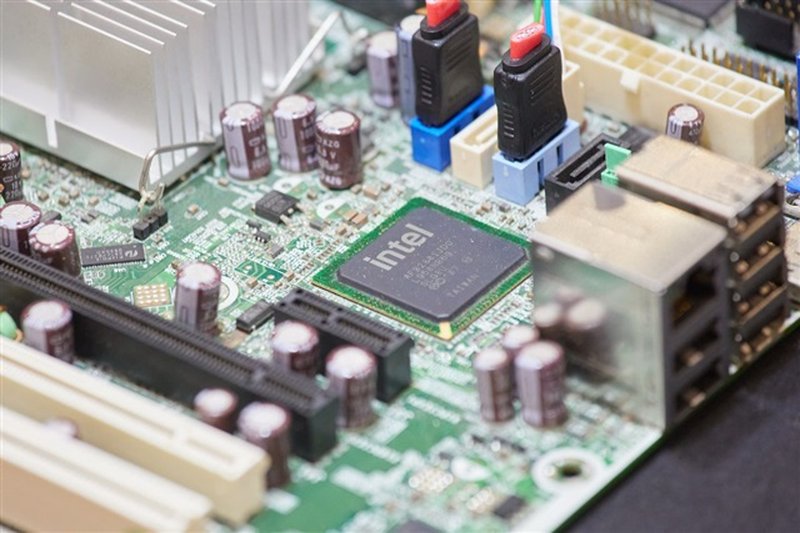
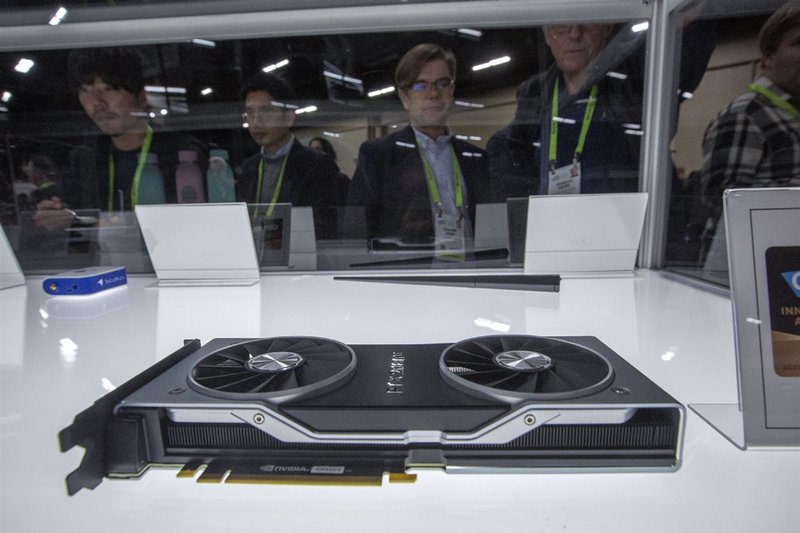
The message, dry as it may be, paints a short circuit familiar to anyone tracking the infrastructure behind large language models. Training and inference at scale voraciously consume high-bandwidth memory (HBM), the kind that powers GPUs and specialized accelerators. The same memory that until recently was a nearly invisible component in enterprise data centers has become the supply chain’s most fought-over resource. The effect goes beyond making AI-ready servers pricier and harder to source: it is triggering a budget realignment that punishes those who live on software licenses and subscriptions.
IBM’s warning is a litmus test. We are not talking about a graphics card manufacturer, but about a company that built its second life on hybrid cloud acquisitions, automation, and, crucially, enterprise software—from Red Hat to Watson. If even IBM sees softening software demand because customers are diverting funds to AI hardware, the phenomenon has reached a sector-wide critical mass.
Winners and losers in the memory drought
The immediate winner is the memory semiconductor industry, with HBM foundries running at full tilt. Yet the bigger beneficiary—and here the analysis becomes less obvious—may be the cloud ecosystem. Hyperscale platforms have the contractual muscle and capital reserves to secure privileged access to memory supply, while enterprises that want to keep direct control over on-premise hardware risk being pushed to the back of the queue.
For advocates of data sovereignty and self-hosted deployments, this bottleneck introduces a paradox. On one hand, the memory shortage makes it more expensive and uncertain to build a local machine fleet for LLMs. On the other, scarcity can act as an accelerator for techniques that shrink the memory footprint—from quantization (INT8, FP8 and beyond) to the rising attention on smaller models and Mixture of Experts architectures—making on-premise not just a political option but a technically more mature investment.
Software, then, does not exit the stage but is downsized as an autonomous growth engine. Application and platform vendors will have to prove an even sharper ROI if they don’t want to be sacrificed on the altar of hardware. And companies that had planned software upgrades on a steady budget will now face a new variable: the cost of acquiring and maintaining the physical AI components, which directly competes with their digitalization choices.
The return of lost materiality
At a structural level, the crunch signals the end of an illusion: that of a fully virtualized IT, where hardware was an infinitely available commodity and software the only differentiating factor. The arrival of foundation models has thrust the materiality of bits back to center stage—not the data, but the circuits that process them. And it has created a new hierarchy of access to physical resources, with obvious geopolitical implications for anyone operating under GDPR or strict data residency regulations.
In this landscape, those who build chip fabs and control supply chains gain a power not seen since the dot-com bubble. And companies like IBM, whose bread and butter is services and software, are forced to watch silicon thermometers as intently as they once scrutinized departmental IT budgets.
For anyone evaluating an on-premise deployment today, memory is no longer a technical footnote but a primary TCO driver. Procurement lead times are stretching, prices are climbing, and financial planning must include unavailability scenarios that three years ago would have sounded like science fiction. AI-RADAR dedicates extensive space to analytical frameworks on /llm-onpremise precisely to map these trade-offs, offering a pragmatic view of how silicon scarcity is rewriting the rules of the game.








💬 Comments (0)
🔒 Log in or register to comment on articles.
No comments yet. Be the first to comment!