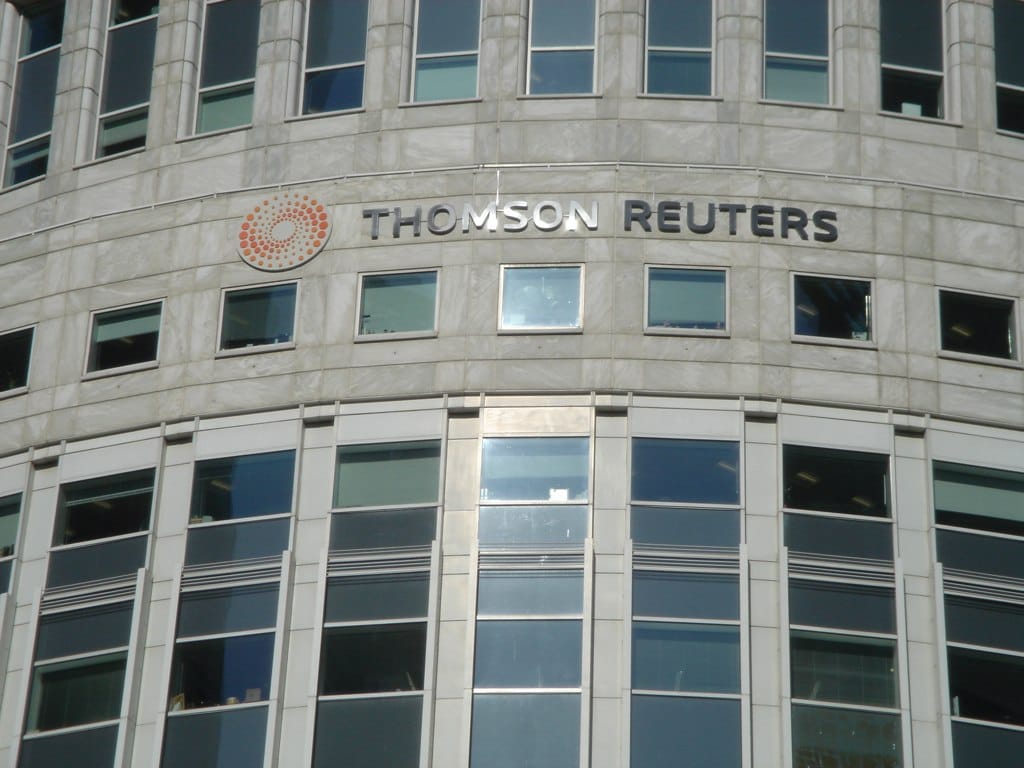
The Thomson Reuters Case: Employee Fired for Reporting Data Sales to ICE
Thomson Reuters, a conglomerate operating both in the media sector with the Reuters agency and in technology with the management of the investigative CLEAR database, has fired a long-standing employee. The decision came after the employee publicly expressed concerns about the company's sale of data products to Immigration and Customs Enforcement (ICE) and the Department of Homeland Security (DHS). The news emerges from a recently filed lawsuit, raising significant questions about corporate policies and the management of sensitive data.
This controversy has gained traction amidst increasing scrutiny over the use of personal data by government agencies. Billie Little, a senior attorney editor at Thomson Reuters, stated in a press release that, after nearly two decades with the company, she felt compelled to “raise the alarm” when she found evidence that the company's products were being “used to harm people and undermine the law.” Her report led to her termination on March 20, according to her attorneys.
The Context of the Controversy and the CLEAR Database
Little's firing and the subsequent legal action follow a letter signed by over 200 Thomson Reuters employees, addressed to the company's leadership. The letter expressed deep unease regarding the company's contracts with ICE and DHS. Little, in particular, was identified as one of the prominent figures in this initiative, raising concerns that Thomson Reuters' CLEAR database was being used to compile and deliver sensitive personal and location data to federal immigration authorities. According to the complaint, such practices allegedly circumvented and violated state sanctuary laws, privacy protections, and the Constitution.
CLEAR is Thomson Reuters' primary data broker product and contains a wide range of personal information, including names, addresses, vehicle registration data, Social Security numbers, and details on individuals' ethnicity. Several journalistic investigations have highlighted links between CLEAR and specific tools used by ICE, such as references to CLEAR in documentation for ELITE, a Palantir application used by ICE to identify areas for raids, and Mobile Companion, a license plate reader app. These revelations underscore the sensitivity and potential reach of the information managed.
Legal and Ethical Implications for Data Management
The lawsuit, filed in the District Court for the District of Oregon, seeks Little's reinstatement, back pay, compensatory damages, and attorney fees. Little's attorneys argue that Oregon's whistleblower law was created precisely for situations like this, protecting employees who report in good faith potential legal violations by their employer. Little's termination, justified by a generic “code of conduct violation” after an internal investigation, is interpreted as an attempt to “make an example” of her, as she was the most visible leader of the protest movement.
This case highlights the complex ethical and legal challenges companies face in managing vast volumes of sensitive data. For technical decision-makers, such as CTOs and infrastructure architects, the incident underscores the crucial importance of data sovereignty and regulatory compliance. The choice between cloud and self-hosted, or on-premise, deployment becomes fundamental not only for TCO and performance but also for ensuring rigorous control over the use and protection of information, especially in contexts where ethical and legal implications are high.
Future Outlook and Data Control
As the lawsuit proceeds, the Thomson Reuters-Little case remains a warning for the technology industry and all organizations that handle sensitive data. The pressure to balance commercial interests with ethical responsibility and legal compliance is constantly increasing. Transparency and data governance are no longer just regulatory requirements but fundamental pillars for employee and public trust.
For companies developing and implementing solutions based on Large Language Models (LLM) or other AI technologies, the lesson is clear: the provenance, use, and protection of data are non-negotiable aspects. The ability to keep data within controlled environments, potentially air-gapped or self-hosted, offers a level of control and security that can mitigate legal and reputational risks. AI-RADAR, for example, offers analytical frameworks to evaluate the trade-offs of on-premise deployments, providing tools for informed decisions that consider these delicate balances. The Thomson Reuters incident underscores how ethical data management is intrinsically linked to deployment strategy and overall infrastructure governance.








💬 Comments (0)
🔒 Log in or register to comment on articles.
No comments yet. Be the first to comment!