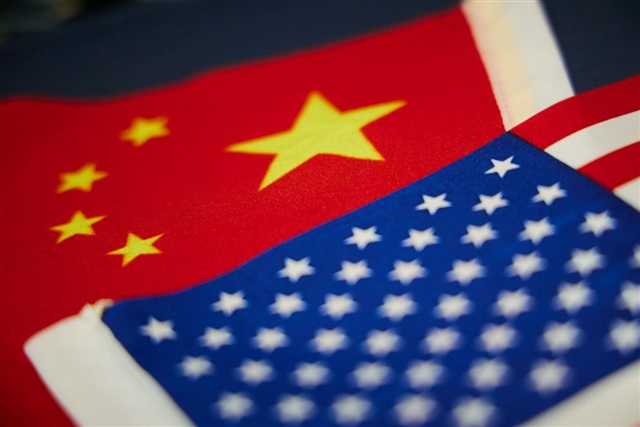
China's Push for AI Self-Sufficiency
The People's Republic of China is redoubling its efforts to develop and produce its own artificial intelligence chips. This strategic initiative aims to reduce reliance on foreign suppliers, particularly companies like Nvidia, which have dominated the global market for high-performance GPUs. Beijing's move signals a significant shift in the global technological landscape, with profound implications for the supply chain and enterprise AI deployment strategies.
The goal of achieving self-sufficiency in the AI semiconductor sector is not merely an economic matter, but also one of national security and technological sovereignty. For companies operating in China or with interests in the region, this trend could influence decisions regarding AI infrastructure, pushing towards the adoption of domestic hardware solutions and the evaluation of new trade-offs.
Technical Challenges of Domestic AI Chip Development
Developing competitive AI chips, especially those optimized for Large Language Models (LLMs), is a complex undertaking that requires massive investments in research and development. Crucial hardware specifications include high amounts of VRAM, memory bandwidth, and computational capacity for floating-point (FP16) and integer (INT8 for Quantization) operations. Creating a complete ecosystem is not limited to silicon alone but also encompasses software Frameworks, development Pipelines, Deployment tools, and a broad developer base.
Domestic alternatives must demonstrate not only competitive performance in specific Benchmarks, measured in terms of Throughput (e.g., tokens/sec) and Latency, but also comparable reliability and scalability to established solutions. The maturity of the software ecosystem and compatibility with existing models are critical factors determining the widespread adoption and long-term success of these new hardware platforms.
Implications for On-Premise Deployment and Data Sovereignty
For organizations evaluating the Deployment of LLMs on-premise, the availability of domestic hardware introduces new strategic variables. Data sovereignty, regulatory compliance (even in contexts beyond GDPR), and the security of Air-gapped environments become priorities. A local AI chip ecosystem can offer greater control over the supply chain and mitigate geopolitical risks, but it might also entail a higher initial TCO (Total Cost of Ownership) and a learning curve for integration with existing stacks.
The choice between Self-hosted solutions based on proprietary or alternative hardware requires a thorough analysis of the trade-offs between performance, cost, and strategic autonomy. AI-RADAR offers analytical Frameworks to evaluate these trade-offs, providing tools to compare CapEx and OpEx, energy consumption, and VRAM requirements for different models and workloads. The ability to keep data and models within national or corporate boundaries is an increasingly decisive factor for many enterprises, especially in regulated sectors.
Future Prospects and Strategic Trade-offs
China's strategy highlights a global trend towards diversifying supply sources and reducing dependence on a single vendor. This scenario compels technical decision-makers, such as CTOs and infrastructure architects, to carefully consider the long-term implications of their hardware and software choices. While Nvidia's solutions have set a standard for AI performance, the emergence of domestic alternatives, albeit with potential initial constraints in terms of ecosystem maturity or performance, could offer strategic advantages in terms of control and resilience.
Evaluating these trade-offs is fundamental for anyone planning robust and future-proof AI infrastructures. The ability to adapt to an evolving hardware landscape and integrate diverse solutions will be crucial for maintaining a competitive edge and ensuring operational continuity in a rapidly transforming geopolitical and technological environment.








💬 Comments (0)
🔒 Log in or register to comment on articles.
No comments yet. Be the first to comment!