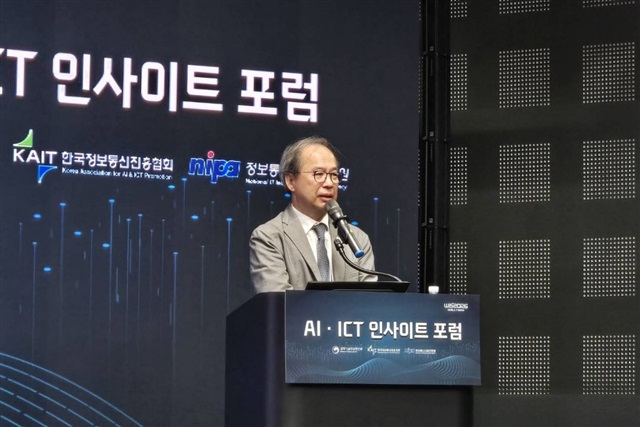
The Evolution of AI Memory and Kim Jung-ho's Vision
Professor Kim Jung-ho of the Korea Advanced Institute of Science and Technology (KAIST) is a prominent figure in the technology landscape, recognized as the "father of HBM" (High Bandwidth Memory). His vision is particularly relevant in an era where artificial intelligence, and Large Language Models (LLMs) in particular, are redefining hardware requirements.
HBM is an advanced memory technology, characterized by high bandwidth and density, making it indispensable for modern GPUs and demanding AI workloads. Its architecture, which stacks multiple memory dies vertically and integrates them tightly with the processor, enables significantly higher data throughput compared to traditional memory. This capability is crucial for powering increasingly complex LLMs, which require rapid access to vast amounts of data and parameters. Professor Kim predicts a thousandfold surge in AI memory demand, an estimate that underscores the growing pressure on hardware infrastructure and the need for continuous silicio innovations to support the advancement of AI.
Google's TurboQuant: Optimization and Real-World Challenges
In parallel with hardware developments, software optimization plays an equally fundamental role. This is where Google's TurboQuant comes in, a quantization technique currently undergoing real-world tests. Quantization is a process that reduces the numerical precision of a model's weights, typically from floating-point formats (like FP16) to lower-precision integer formats (like INT8 or INT4).
The primary goal of quantization is twofold: to decrease the model's memory footprint and to accelerate inference, which is the process of generating responses by the LLM. By reducing the VRAM required, it becomes possible to run larger models on hardware with limited resources or to increase batch size to improve throughput. "Real-world tests" are critical steps to validate the effectiveness of TurboQuant in concrete operational scenarios. These tests aim to evaluate the delicate trade-off between memory reduction/speed increase on one hand, and the potential impact on model precision or accuracy on the other. The objective is to maintain model performance integrity while drastically optimizing computational resource utilization.
Implications for On-Premise Deployments and Data Sovereignty
Innovations in HBM and quantization techniques like TurboQuant have direct and significant implications for on-premise LLM deployments. For companies choosing to host their models locally, VRAM limitations on available GPUs can represent a bottleneck. HBM offers a hardware solution to increase memory capacity and speed, while quantization allows otherwise oversized models to fit within existing VRAM resources.
These technologies contribute to improving the Total Cost of Ownership (TCO) of self-hosted infrastructures, reducing both operational costs (lower energy consumption for inference) and capital expenditures (possibility of using less expensive hardware or extending the lifespan of existing hardware). Furthermore, on-premise deployments, including air-gapped environments, are often preferred by sectors such as finance, healthcare, and public administration for reasons of data sovereignty, regulatory compliance (such as GDPR), and security. Technologies like HBM and quantization make it more feasible to manage complex AI workloads while keeping sensitive data within corporate boundaries, ensuring control and auditability. For those evaluating on-premise deployments, AI-RADAR offers analytical frameworks on /llm-onpremise to assess trade-offs between performance, cost, and data sovereignty requirements.
The Future of AI Infrastructure: Between Hardware and Algorithms
Professor Kim Jung-ho's vision and advancements in techniques like TurboQuant highlight a fundamental truth in the evolution of artificial intelligence: the ability to scale and effectively deploy AI depends on a continuous synergy between hardware innovations and algorithmic optimizations. It is not enough to have powerful GPUs if memory cannot keep up, nor is it sufficient to have efficient models if the hardware cannot support them.
The future of AI infrastructure will be shaped by this interdependence. Companies and organizations will need to make thoughtful strategic decisions about infrastructure, balancing the need for high performance with cost efficiency, data sovereignty, and deployment flexibility. Innovation in areas such as HBM and quantization will be crucial for addressing the growing computational demands of artificial intelligence, enabling broader and more sustainable adoption across various operational contexts.





💬 Comments (0)
🔒 Log in or register to comment on articles.
No comments yet. Be the first to comment!