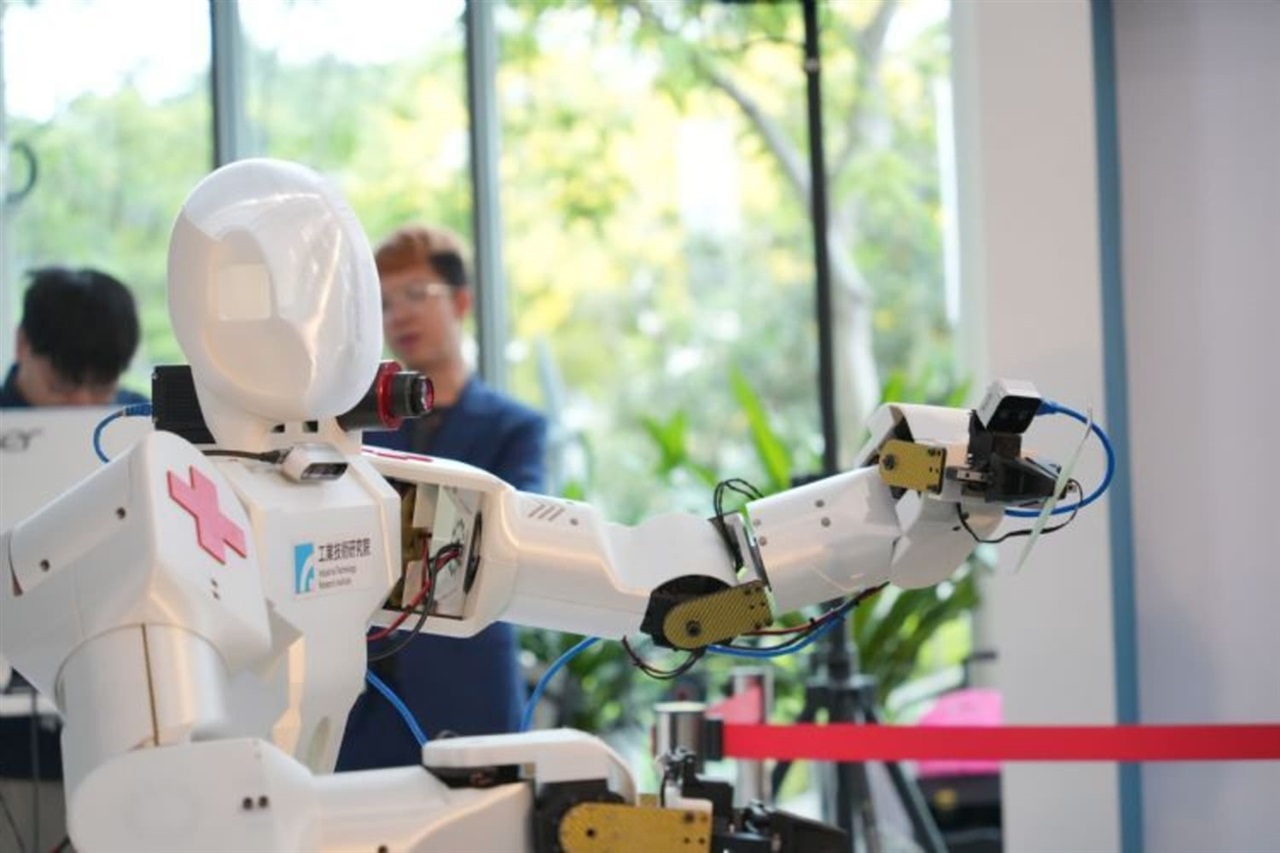
Introduction: Taiwan's Strategic Role in Advanced Robotics
Taiwan, long recognized as a fundamental pillar in the global production of semiconductors and electronic components, is now directing its efforts towards a new phase of industrial development. A recently established robotics hub on the island has the stated goal of pushing local suppliers to move beyond the role of simple component manufacturers, aiming for greater integration and the creation of value-added solutions. This strategic move, although focused on robotics, fits into a broader context of technological evolution that directly impacts the artificial intelligence sector.
The initiative reflects a global trend towards diversification and elevation of production capabilities, essential for maintaining competitiveness in high-tech markets. For Taiwan, it means further consolidating its position not only as a basic supplier but as a strategic partner in the development of complex and innovative systems, including those that power modern AI applications.
Technical Detail: Implications for AI Hardware and On-Premise Deployments
Advanced robotics, particularly that which incorporates machine learning capabilities and computer vision, critically depends on specialized hardware. High-performance Graphics Processing Units (GPUs), Neural Processing Units (NPUs), and custom silicon are fundamental elements for the efficient execution of AI algorithms, from perception to action. Taiwan's ambition to go "beyond components" suggests potential involvement in the production of more complex AI modules, integrated edge AI devices, or even significant contributions to the supply chain of next-generation AI accelerators.
For companies evaluating on-premise deployments of Large Language Models (LLM) or other intensive AI workloads, the availability of a robust and advanced supply chain is crucial. The ability to procure hardware with precise specifications, such as high VRAM, optimized throughput, and low latency, is a determining factor for the success of a local AI infrastructure. A hub that promotes the production of integrated solutions can simplify procurement and improve the reliability of critical components, reducing reliance on a limited number of suppliers and mitigating supply chain risks.
Context and Implications: Data Sovereignty and TCO
The push towards more sophisticated and localized production has direct implications for data sovereignty and the Total Cost of Ownership (TCO) of AI infrastructures. Relying on complex global supply chains can expose organizations to geopolitical risks, logistical disruptions, and cost uncertainties. Developing internal or regional production capabilities for high-level AI components and systems can offer greater control over quality, availability, and security. This is particularly relevant for air-gapped environments or sectors with stringent compliance requirements, where the origin and integrity of hardware are fundamental.
From a TCO perspective, a more resilient and diversified supply chain can translate into more stable and predictable acquisition costs (CapEx), as well as reduced operational costs (OpEx) related to maintenance and replacement. The ability to access more integrated and optimized solutions can also improve energy efficiency and overall performance, critical aspects for the economic sustainability of large-scale AI deployments. For those evaluating on-premise deployments, there are significant trade-offs between flexibility, control, and costs, and the solidity of the supply chain is a key element in this equation. AI-RADAR offers analytical frameworks on /llm-onpremise to evaluate these trade-offs.
Final Outlook: Towards a More Resilient AI Ecosystem
Taiwan's robotics hub initiative represents a significant step towards creating a more mature and resilient technological ecosystem. By shifting focus from the production of individual components to the integration of complex systems, Taiwan not only strengthens its position in the robotics sector but also indirectly contributes to stabilizing and innovating the global supply chain for artificial intelligence. This is a crucial factor for businesses seeking to build and maintain robust, secure, and high-performing AI infrastructures in a context of increasing demand and technological complexity.
For CTOs, DevOps leads, and infrastructure architects, understanding these dynamics in the supply chain is essential for strategic decisions regarding AI deployments. A country's ability to evolve its production capabilities from simple components to integrated solutions is an indicator of its future influence in the technological landscape and its capacity to support the needs of an increasingly pervasive and critical AI.






💬 Comments (0)
🔒 Log in or register to comment on articles.
No comments yet. Be the first to comment!