The Enigma of Untapped Performance
An Intel executive recently raised a crucial point for the tech industry, stating that up to 30% of modern CPU performance can remain unused. The primary cause of this inefficiency lies in software optimization, deemed critical for unlocking the full potential of hybrid architectures. This observation, while originally contextualized within the gaming world, has profound implications for a wide range of computational workloads, including those related to artificial intelligence and Large Language Models (LLMs).
For companies investing in on-premise infrastructure, the ability to leverage every single clock cycle of their hardware is directly related to the Total Cost of Ownership (TCO) and the sustainability of their investments. The challenge is not just acquiring powerful processors but also ensuring that the software can orchestrate their resources optimally.
Hybrid Architectures and the Optimization Challenge
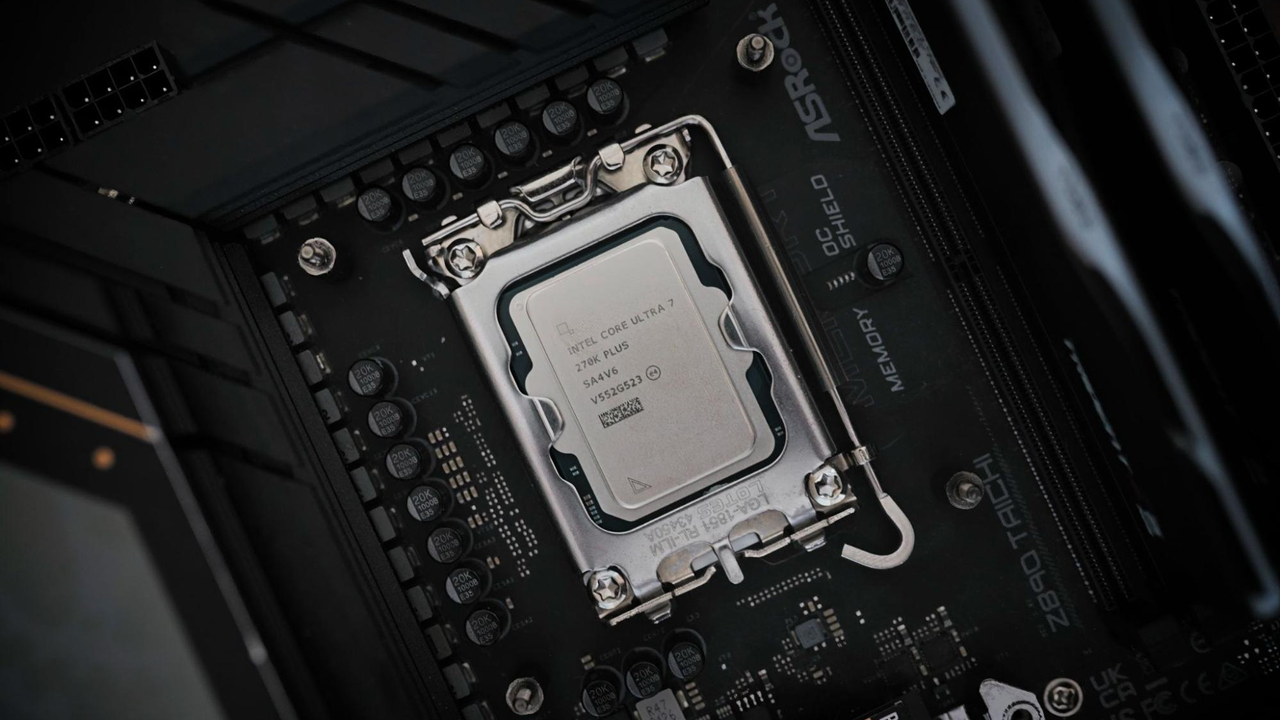
Hybrid CPUs, such as the Intel Core Ultra 7 270K Plus mentioned, combine high-performance cores (P-cores) with high-efficiency cores (E-cores) on a single die. This architecture is designed to balance power and energy consumption by assigning workloads to the most suitable cores. However, the effective management of this complexity largely falls on the operating system and application Frameworks. If the software is not adequately optimized to recognize and exploit the specific characteristics of each core type, a significant portion of computational capacity can be wasted.
In the context of AI, where processes like LLM Inference require intensive and often parallel processing, poor software optimization can result in higher latencies and reduced Throughput. This is particularly true for self-hosted Deployments, where hardware is a finite resource, and its maximum utilization is a strategic imperative.
Implications for On-Premise LLM Deployments
For CTOs, DevOps leads, and infrastructure architects evaluating on-premise solutions for their AI workloads, Intel's statement underscores a critical aspect: hardware alone is not enough. The choice of a powerful CPU, such as those with hybrid architecture, must be accompanied by a robust software strategy. This includes adopting AI Frameworks that natively support the peculiarities of CPU architectures, optimizing code to leverage vector instructions, and efficient memory management.
An on-premise LLM Deployment, for example, can greatly benefit from software that knows how to balance loads between P-cores and E-cores, reducing response times and increasing the number of Tokens processed per second. Ignoring the software aspect means accepting a higher TCO, as the company would be paying for hardware capacity that is not fully utilized. This is a fundamental trade-off compared to cloud solutions, where infrastructure abstraction can mask these inefficiencies, but often at a higher operational cost in the long run.
The Synergy Between Hardware and Software for AI
Intel's statement highlights a fundamental truth in the tech world: the true potential of any hardware component is realized only through effective synergy with software. For the future of AI workloads, especially those requiring data sovereignty and control over self-hosted Deployments, attention to software optimization will increasingly become a distinguishing factor.
Companies that succeed in maximizing the utilization of their hybrid CPUs through optimized Frameworks and Pipelines will be able to gain a significant competitive advantage, managing LLMs and other AI applications with greater efficiency and lower costs. AI-RADAR continues to explore these trade-offs, offering analysis for those evaluating on-premise Deployments, as discussed in our analytical Frameworks on /llm-onpremise.









💬 Comments (0)
🔒 Log in or register to comment on articles.
No comments yet. Be the first to comment!