
The figure reported by DIGITIMES is sparse but dense: Google's TPU pays back its investment in about a year. This is not a spec-sheet story; it is a market signal. When a proprietary accelerator reaches break-even in twelve months, the opportunity cost of continuing to buy merchant GPUs changes.
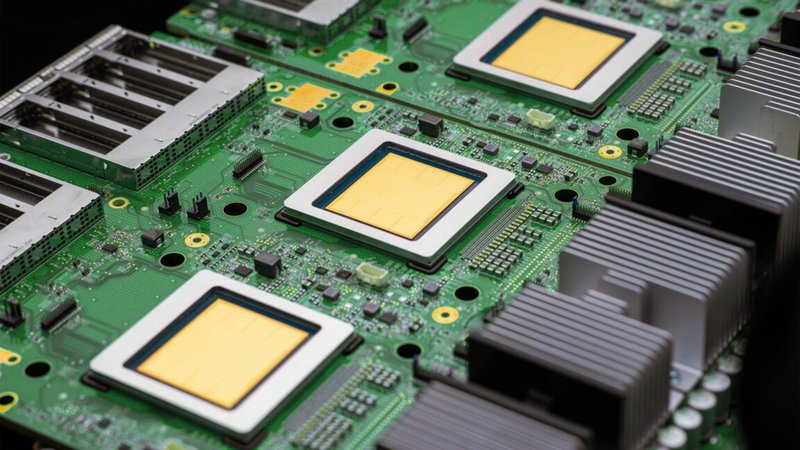
Google does not sell TPUs as general-purpose hardware: it uses them inside its data centers and exposes them as cloud capacity. But the fast return on investment explains why Broadcom and MediaTek see upside in ASIC revenues. Each new TPU generation requires design, integration, packaging, and volume that only specialized partners can deliver. Broadcom has a consolidated relationship with Google on this front; MediaTek, historically strong in mobile, is building a data center ASIC presence. The source does not add technical details, but the connection is consistent with industrial logic.
A one-year payback signals that the cost of developing an AI ASIC is diluted quickly by operational savings and by the ability to size the silicon to the workload. It is no longer an exotic bet: it is a concrete TCO option for large operators. The second-order effect is that second-tier cloud providers and large industrial groups can look more seriously at custom or semi-custom ASIC programs, even if upfront costs remain high. Not everyone can afford it, but the signal is that the economics have crossed a threshold.
The winners are Broadcom and MediaTek, but also Google, which can reinvest the savings into additional capacity without exploding capital expenditure. The losers are merchant GPU vendors, because every additional custom accelerator reduces the share of spending allocated to general-purpose silicon. This is not an immediate threat, but a structural one: it shifts the demand mix toward dedicated projects and design margins rather than standard volumes.
For those evaluating on-premise or self-hosted deployments, the point is not TPU availability, which today remains confined to Google Cloud. The point is that the economic maturity of custom silicon reduces the marginal cost of alternatives to GPUs and increases pressure on on-premise infrastructure providers to offer more specialized accelerators. In a data sovereignty context, an ASIC designed for a specific workload can be easier to control and audit than an opaque commercial component, though the path is not trivial. If the payback is really one year, how long before the model extends from clouds to data centers that prefer to keep tokens on premises?




💬 Comments (0)
🔒 Log in or register to comment on articles.
No comments yet. Be the first to comment!