
Impulse Space: Investing in Human Capital for Space Engineering
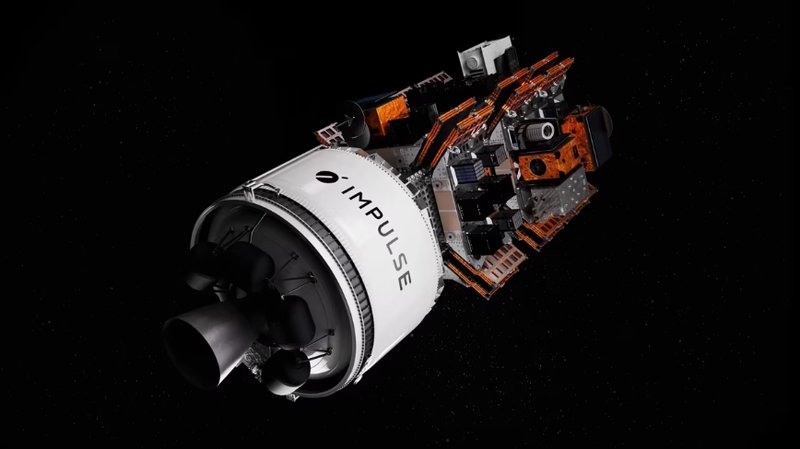
Impulse Space, a startup active in the rocket engine sector, recently closed a $500 million funding round. A notable aspect of this announcement is the statement from President Eric Romo, who specified that the funds would be used for hiring personnel rather than investing in artificial intelligence solutions. This strategic choice highlights a clear perspective: the engineering of complex physical systems, particularly in the aerospace sector, continues to rely predominantly on human talent and experience.
Impulse Space's decision fits into a broader debate about the balance between automation and human intervention in technology-intensive sectors. While AI and Large Language Models (LLM) are revolutionizing numerous fields, the design and realization of critical hardware, such as rocket engines, demand a level of intuition, problem-solving, and contextual understanding that, for now, remains the prerogative of human cognitive abilities.
The Irreplaceable Role of Human Ingenuity in Physical Systems
Eric Romo's statement underscores a fundamental reality: the engineering of physical systems, especially those operating in extreme environments or with minimal error margins, requires a deep understanding of physical principles, critical thinking skills, and creativity that go beyond the current capabilities of AI algorithms. Designing a rocket engine, for instance, involves managing complex variables, optimizing materials and processes, and solving novel problems that often emerge during testing and development phases.
In this context, human talent is not limited to task execution but extends to formulating innovative hypotheses, evaluating unforeseen risks, and adapting to continuously evolving scenarios. While AI can support data analysis, simulation, and optimization of certain parameters, the ideation phase and final validation often remain a domain where human experience and judgment are irreplaceable.
AI and Deployment: A Context of Strategic and Infrastructural Choices
Impulse Space's choice, while not directly concerning LLM deployment, offers a starting point for reflection for companies that are instead evaluating the integration of artificial intelligence into their processes. Where AI is adopted for critical tasks, infrastructure decisions become central. The need to ensure data sovereignty, regulatory compliance, and control over workloads drives many organizations to consider self-hosted solutions or on-premise deployment.
This approach implies significant investments in specific hardware, such as high-performance GPUs with ample VRAM, and the construction of robust Inference pipelines. The Total Cost of Ownership (TCO) of an on-premise deployment for LLMs can be high, but it offers advantages in terms of latency, throughput, and security compared to cloud-based alternatives. For those evaluating on-premise deployment, there are complex trade-offs between initial (CapEx) and operational (OpEx) costs, scalability, and control. AI-RADAR offers analytical frameworks on /llm-onpremise to evaluate these trade-offs in detail.
Future Perspectives: Synergy Between Humans and Machines
Impulse Space's decision should not be interpreted as a categorical rejection of AI, but rather as a clear definition of priorities in a specific, high-risk sector. It is likely that, even in fields like space engineering, AI will continue to evolve as a support tool, improving efficiency and analytical capabilities, but without completely replacing the role of human ingenuity.
The future will likely see an increasing synergy between human talent and artificial intelligence capabilities. While AI handles repetitive tasks or large-scale analysis, humans can focus on innovation, creativity, and complex strategic decisions. The challenge for companies will be to find the right balance, optimizing investment in both resources to maximize effectiveness and innovation.










💬 Comments (0)
🔒 Log in or register to comment on articles.
No comments yet. Be the first to comment!