Quantum Computing and the Financial Sector's Interest
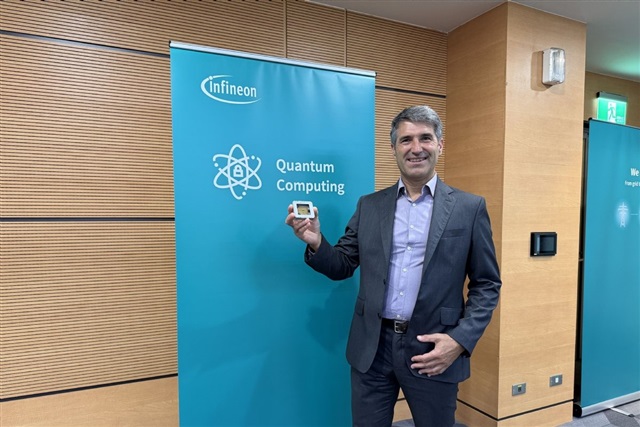
Infineon, a leading player in the global technology landscape, has recently highlighted early significant progress in quantum computing. One fact clearly emerges: the financial sector is establishing itself as the primary driver for the adoption of these new computational capabilities. This interest is not coincidental but is rooted in the need to address increasingly complex computational challenges and ensure unprecedented levels of security.
Financial institutions manage enormous data volumes and require high-speed processing for activities such as risk modeling, portfolio optimization, and fraud detection. Quantum computing promises to overcome the limitations of classical systems, offering the possibility of solving problems that are currently intractable, opening new frontiers for predictive analytics and advanced cryptography.
Enterprise Implications and Data Sovereignty
The adoption of quantum computing by the financial sector raises fundamental questions for companies evaluating the integration of emerging technologies. Managing sensitive data, such as banking information, makes data sovereignty an absolute priority. In this context, on-premise or hybrid deployment solutions could become an essential requirement, ensuring organizations full control over infrastructure and data, in compliance with stringent regulations like GDPR.
For those evaluating on-premise deployments, Total Cost of Ownership (TCO) analysis will be crucial. Although quantum computing is still in an early stage, today's strategic decisions will influence a company's ability to maintain control over its IT assets and protect critical information. The ability to keep sensitive workloads within air-gapped or self-hosted environments represents a significant competitive advantage for sectors like finance.
Hardware and Deployment: Challenges and Prospects
The infrastructure required for quantum computing is radically different from that of classical systems. It demands highly specialized hardware, often operating at extreme cryogenic temperatures to maintain qubit stability. This implies significant challenges in terms of initial CapEx, management, and maintenance. While early quantum computing services are often offered via the cloud, the long-term vision for companies with high security and control needs might lean towards bare metal solutions or dedicated infrastructures.
The choice between a cloud approach and an on-premise deployment will depend on a careful evaluation of the trade-offs between accessibility, scalability, costs, and, above all, the desired level of control over data and underlying hardware. The need to integrate these complex systems with existing data pipelines will require advanced technical expertise and meticulous infrastructure planning.
TCO and Future Strategic Decisions
Investing in quantum computing, even in its initial stages, represents a strategic decision with significant TCO implications. Beyond the direct costs of hardware and software, companies will need to consider expenses for staff training, internal research and development, and integration with existing systems. Vendor neutrality and the ability to evaluate concrete hardware specifications, such as VRAM for supporting systems or the capabilities of quantum processors, will be essential.
As the technology matures, the ability to deploy quantum computing solutions efficiently and securely, while maintaining data sovereignty, will become a distinguishing factor. For companies aiming to maintain a competitive advantage and protect their most valuable assets, exploring deployment models that prioritize control and security from the early stages of adoption will be fundamental.







💬 Comments (0)
🔒 Log in or register to comment on articles.
No comments yet. Be the first to comment!