
The signal is not the GPU, it is stack openness
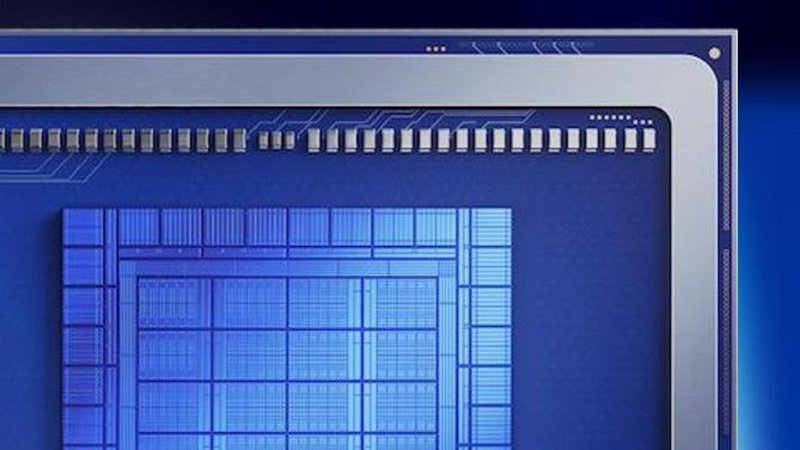
Intel used Supercomputing 2026 to discuss the D270, but the core message is not the card. The company is positioning open source software support as a differentiator. For teams managing on-premise clusters, this carries weight: an accelerator enters production when it integrates with existing inference and fine-tuning pipelines, when drivers can be inspected, and when runtimes do not impose proprietary toolchains. Raw compute alone is not enough.
The Xe3P architectural base, Crescent Island generation, is framed as a step toward more competitive ground, but Intel offers no details. Instead of listing specifications, the company shifts attention to the layer that historically decides data center adoption: software maturity. It is not a comfortable position. Without public numbers, those evaluating hardware for LLM workloads still face open questions on memory, numeric precision, and power. But the signal is clear: Intel wants to be read as a vendor enabling open stacks, not just a silicon producer.
This approach reverses the industry's typical narrative. Many GPU announcements start with raw performance and treat software as an accessory. Intel tries to invert the order: integrability first, numbers later. For teams running local infrastructure, the question is not only speed but control over the pipeline. At this stage, the D270 is mostly a statement of direction.
Missing specifications weigh on TCO
Intel's communication does not detail VRAM capacity, supported precision, or power consumption. This choice can be read two ways. On one side, the company wants to avoid premature comparisons and keep the debate on the ecosystem. On the other, it leaves teams planning self-hosted deployments waiting for public benchmarks. For TCO analysis, this absence is a concrete constraint.
The total cost of ownership of an accelerator depends on more than list price. It depends on workload power draw, driver stability, maintenance overhead, and compatibility with compute libraries. Without verified data on VRAM and consumption, teams cannot build reliable scenarios for LLM inference or distributed training. They can only formulate hypotheses. In an on-premise decision, hypotheses are not enough to justify investment.
There is also a timing effect. Intel's decision to postpone details pushes evaluation forward, but it does not remove the underlying question: will the D270 be competitive on cost per token served or cost per training hour? Until those data arrive, the announcement remains a strategic signal rather than a spec sheet. Those who must decide today face an uncomfortable situation: software openness is attractive, but missing numbers make TCO an unknown.
Open source and sovereignty: shifting incentives
The emphasis on open source software changes incentives for builders of local infrastructure. In a market where proprietary stacks tend to tie hardware to closed toolchains, an explicit commitment to open components lets integrators build inference and fine-tuning pipelines without depending on a single vendor. This is a notable advantage for organizations that want control over the entire stack.
For teams with data sovereignty constraints, software openness is a prerequisite. The ability to inspect drivers, serving runtimes, and compute libraries reduces the risk of ending up with unverifiable components or imposed updates. Organizations can decide where data runs, how updates are managed, and how the pipeline adapts to internal policy. This does not eliminate risk: open source support must be verified in practice, not in announcements.
There is a difference between declaring open components and maintaining a genuinely governable ecosystem. The history of GPU drivers shows that formal openness is not enough without steady contributions, documentation, and real-world workload testing. For AI-Radar, the decisive question is whether Intel can turn the announcement into a durable community project. If open source becomes merely a showcase, sovereignty advantages disappear at the first technical bottleneck.
The ripple effect on supply chain and competition
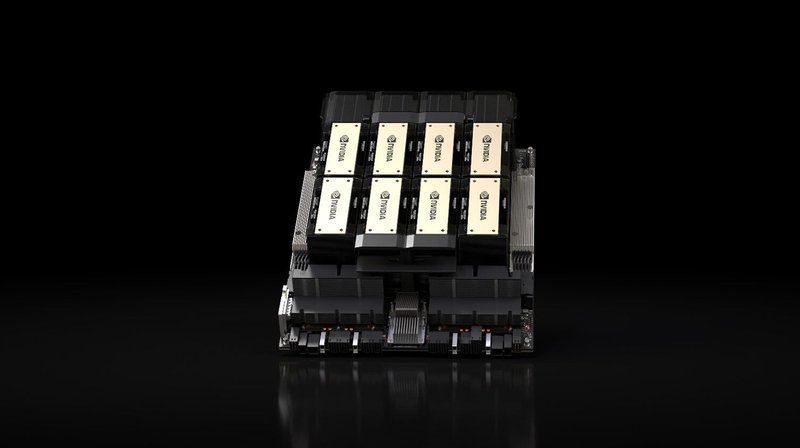
Intel's move should also be read competitively. After years in which NVIDIA consolidated a dominant position in data center GPUs, the entry of a second or third supplier with an open software strategy can reduce supply chain bottlenecks. For companies planning local capacity, a more diversified hardware base means less dependence on a single ecosystem and greater negotiating leverage.
But the game is not decided by press releases. Teams managing on-premise infrastructure need to see driver maturity, quality of support for compute libraries, and availability of preconfigured systems. Announcing an open GPU is not enough: certified nodes, orchestration tools, and integration paths with mainstream frameworks are required. The D270 name alone does not yet say whether the hardware will be competitive on price per token served or cost per training hour.
The most interesting effect is second-order. An open ecosystem, even if initially minority, pushes established vendors to review their closed policies. This is not automatic, but it is a real incentive: if a significant part of on-premise demand asks for inspectable stacks, competition must respond. The D270 could therefore matter more for shifting context than for immediate sales volume.
Who benefits and who waits
The first beneficiaries of a genuinely open approach are integrators and organizations with sovereignty constraints. Teams building inference and fine-tuning pipelines on open components can avoid locking themselves into proprietary toolchains and can keep control over updates. Teams running on-premise clusters with mixed HPC and AI workloads also gain from a GPU that promises more transparent integration.
Those left waiting are buyers who must purchase today. The lack of verified specifications makes it impossible to compare the D270 with current alternatives. Teams needing immediate deployment cannot rely on a directional signal: they need data on VRAM, power, supported precision, and driver reliability. For them, the risk is betting on a promise without being able to calculate TCO.
Proprietary stack vendors could also feel the effect if an open strategy gains adoption. However, their head start does not dissolve with an announcement. Software maturity, installed base, and framework integration still count heavily. The D270 does not shift balances in a week; it introduces a new variable to watch over the long term.
What to watch after Supercomputing 2026
The first signal to monitor is publication of independent benchmarks. Without public numbers on inference, training, and power, the announcement remains a direction. On-premise teams should also watch for complete spec sheets: VRAM capacity, memory bandwidth, supported precision, and power requirements. Such data allow credible TCO scenarios.
The second front is driver and library maturity. Software openness is measured in practice: release cadence, quality of framework support, availability of toolchains for inference and fine-tuning, documentation for local cluster deployment. It is worth watching whether Intel releases source code and whether the community responds with contributions, tests, and integrations.
Finally, the most important signal is adoption by integrators. If major suppliers of preconfigured systems start offering D270-based nodes, the hardware moves from announcement to real availability. Until then, the D270 is a promise of openness: a promise that could change how companies evaluate hardware for LLMs, but still needs to be turned into verifiable infrastructure.








💬 Comments (0)
🔒 Log in or register to comment on articles.
No comments yet. Be the first to comment!