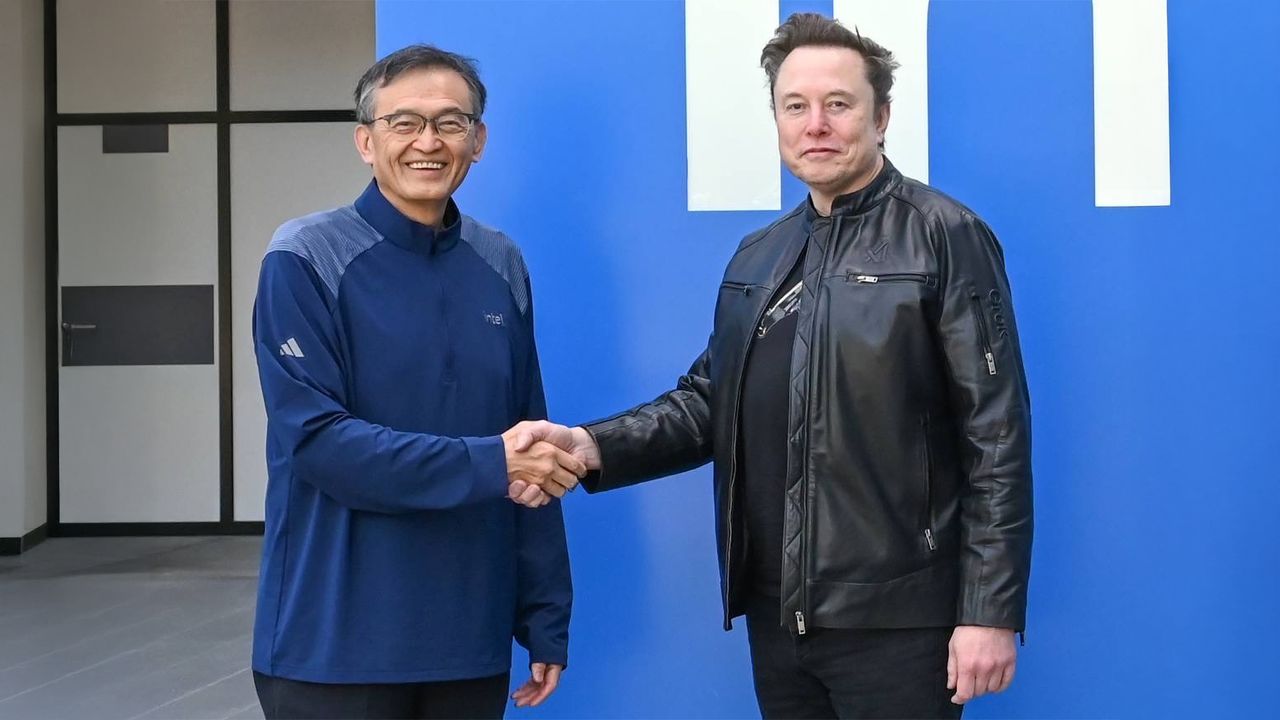
Intel and Musk: A Partnership to Revolutionize Chip Manufacturing
Intel CEO Pat Gelsinger recently articulated a clear vision for the future of semiconductor production, identifying Elon Musk as an ideal partner to explore "unconventional" avenues. This statement underscores the strategic importance of the TeraFab partnership, an initiative with the ambitious goal of radically rethinking chip manufacturing processes. The primary intent is to reduce the costs associated with production, a crucial factor for the entire technology industry.
The collaboration between a semiconductor giant like Intel and an innovative figure like Musk, known for his ventures in diverse sectors, suggests an out-of-the-box approach. The chip industry has long sought solutions to optimize production processes, which have become increasingly complex and costly. This partnership could mark a turning point, introducing methodologies and technologies capable of overcoming current limitations.
TeraFab's Vision and Innovation in Production
At the heart of the TeraFab partnership lies the willingness to "rethink how chips are made." This means going beyond traditional lithography and assembly paradigms, potentially exploring new factory architectures, innovative materials, or advanced automation processes. The goal of reducing costs is not just a competitive advantage but a necessity to sustain the exponential growth in demand for computing power.
Semiconductor manufacturing is a highly capital-intensive endeavor, with massive investments in research and development (R&D) and fabrication plants (fabs). Each new generation of chips requires more sophisticated technologies and tighter tolerances, exponentially increasing costs. An "unconventional" approach could involve adopting modular production techniques, integrating artificial intelligence to optimize yields, or exploring new supply chains.
Implications for the Industry and On-Premise Deployments
Cost reductions in chip manufacturing would have significant repercussions across the entire technology ecosystem. Cheaper hardware means greater accessibility to high-performance components, from CPUs to GPUs, essential for training and Inference of Large Language Models (LLMs). This is particularly relevant for organizations evaluating on-premise or self-hosted deployments for their AI workloads.
A lower Total Cost of Ownership (TCO) for hardware can make on-premise solutions more competitive compared to cloud services, while offering greater data control and compliance with data sovereignty regulations. For those evaluating on-premise deployments, there are significant trade-offs between initial costs, operational expenses, and data control. AI-RADAR offers analytical frameworks on /llm-onpremise to delve deeper into these evaluations, helping to understand how evolving hardware costs can influence strategic decisions.
Future Prospects and Challenges
The path towards radically cheaper and more efficient chip production is fraught with technical and operational challenges. The inherent complexity of semiconductors and the need to maintain extremely high quality standards require continuous investment and a high tolerance for risk. However, the potential impact of TeraFab, if it succeeds in achieving its objectives, could redefine the balance of the global semiconductor market.
This partnership is not just a signal of innovation but also an indicator of the growing interconnectedness between seemingly disparate sectors, all converging towards the need for more powerful and economical computing infrastructure. The success of initiatives like TeraFab will be crucial for fueling the next generation of technologies, from artificial intelligence to edge computing, making advanced hardware more accessible and sustainable.







💬 Comments (0)
🔒 Log in or register to comment on articles.
No comments yet. Be the first to comment!