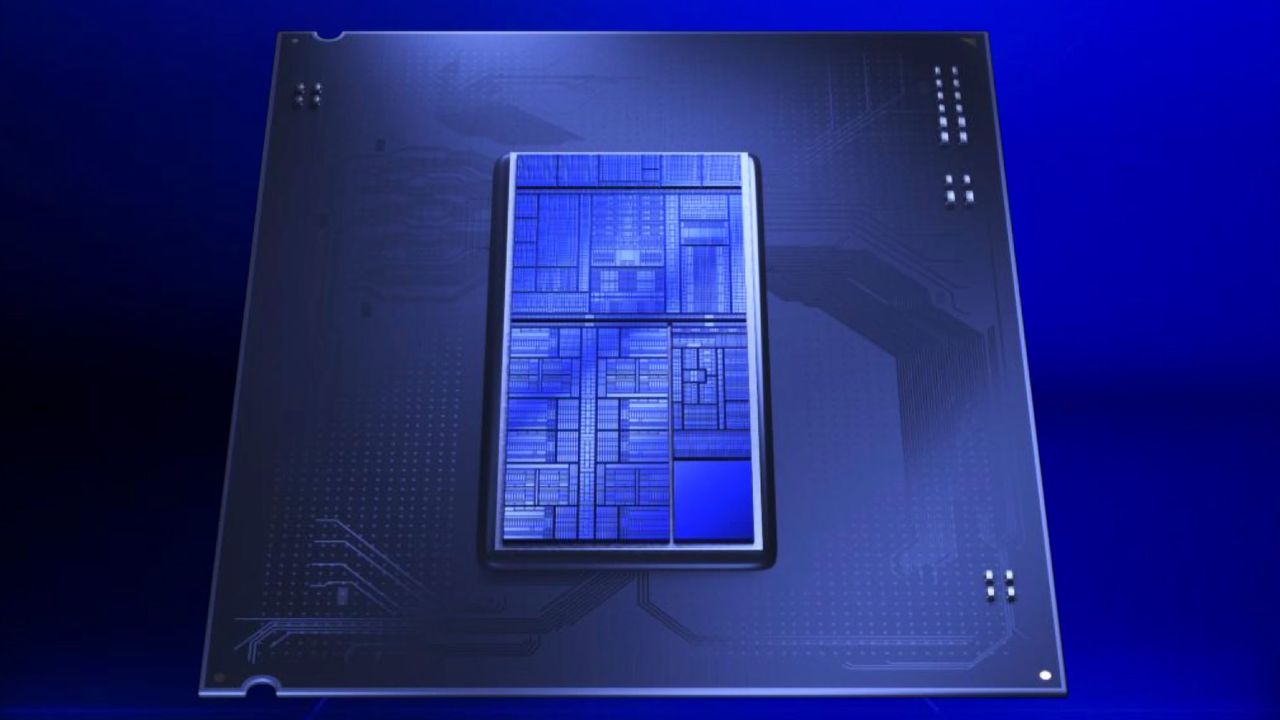
Rumors are becoming increasingly concrete: Intel's next enthusiast-class processor, codenamed Nova Lake, may not stop at a simple core count increase but rather push into a peak power range that, until recently, belonged to entire high-end graphics cards. We are talking about a claimed 474W, a figure that, according to early information, will profoundly impact the design of motherboards for the LGA1851/LGA1954 platform.
The heart of the beast: 52 cores and an outsized appetite
Details circulating among motherboard manufacturers — and reported by Kunal Khullar at Tom’s Hardware — paint a rather clear picture. The top-tier Nova Lake configuration is expected to feature 52 physical cores, most likely based on a hybrid architecture mixing high-performance and efficiency cores, a constant for Intel since the debut of Alder Lake. But the eye-catching figure is the power consumption: up to 474W peak, forcing designers to abandon the traditional two 8-pin auxiliary power connectors in favor of three EPS connectors on the LGA1954 standard.
This is no small detail. A single 8-pin EPS connector safely delivers around 235W (with standard ATX margin). Add the 24-pin motherboard supply, and two 8-pin connectors barely suffice when the processor flirts with 350–400W, a range already reached by current 13th and 14th Gen Core i9 chips under heavy overclocking. To reach 474W, the third connector becomes essential, a sign that Intel is deliberately pushing the thermal envelope to deliver a markedly aggressive monolithic performance uplift.
Implications for on-premises infrastructure
For those managing on-premises servers or high-density workstations, a processor drawing nearly half a kilowatt is not just a bragging number: it reshapes the total cost of ownership (TCO) calculus. Every watt consumed turns into heat that must be removed, and cramped spaces like SME racks, research labs, or edge computing environments will need to rethink cooling. Traditional forced air might not cut it, pushing toward all-in-one liquid coolers or custom loops, adding to the electricity bill and maintenance overhead. All this without considering that larger power supplies and more generous cabling will be required.
From the perspective of those evaluating on-premise deployments for AI workloads, such a high core count on a single socket could become interesting for CPU-based inference, where parallelism partly compensates for the lack of dedicated tensor units. If Nova Lake retains the vector acceleration capabilities seen in recent generations (AVX-512 and similar), it might represent a more affordable alternative to a GPU cluster in contexts where latency is not critical and budgets are tight. However, the operational cost tied to energy and cooling must be carefully weighed, because 474W at full load for a single CPU makes the choice less obvious compared to options with a milder thermal profile, such as many AMD Epyc processors or ARM-based chips.
Beyond power: the platform’s generational leap
The LGA1954 socket is not a simple evolution: it signals that Intel is preparing a deep update of the I/O subsystem, most likely to embrace higher-speed DDR5 memory, more PCIe 5.0 lanes, and perhaps an early taste of PCIe 6.0. A 52-core processor makes sense in dual-socket workstations for rendering, scientific simulation, or heavy virtualization — all scenarios typically on-premises and, in some cases, air-gapped for sovereignty or security reasons. In such environments, core density combined with high bandwidth matters more than a few extra tens of watts, provided the physical infrastructure can handle the heat without becoming unmanageable.
It remains to be seen whether Intel can keep real-world consumption in check during everyday workloads, where a CPU is rarely pushed to 100% on all cores simultaneously. Much will depend on the manufacturing process quality and integrated power-saving technologies. For now, the bar has been raised, and the entire hardware ecosystem — PSU makers, case designers, and cooler manufacturers — will have to adapt to a new reference point.
Beyond the hype: what this leak says about industry direction
The 474W figure is not just a record for its own sake. It tells of an industry trying to squeeze every last drop of performance from the x86 architecture while ARM-based alternatives gain ground in efficiency. Chipmakers like Intel find themselves having to balance core competition with power consumption, and the decision to reach such a high value suggests that, at least for this generation, the priority has been raw power. For IT professionals who monitor hardware roadmaps through the lens of TCO and data center sustainability, it is a signal not to be ignored: today’s architectural choices will impact tomorrow’s operating budgets. And the line between desktop and server, at least on the thermal front, is becoming more blurred by the day.


💬 Comments (0)
🔒 Log in or register to comment on articles.
No comments yet. Be the first to comment!