Intel focuses on on-device AI with a new leader
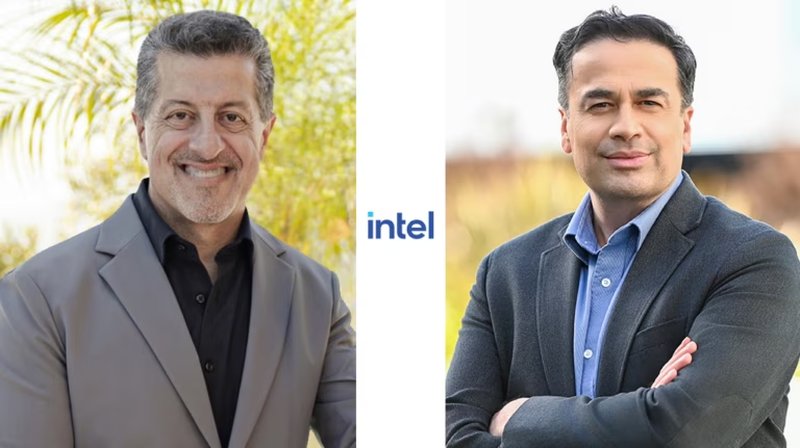
Intel recently announced a significant addition to its executive team, welcoming Alex Katouzian as the new head of its client computing group. Katouzian, who brings 25 years of experience from Qualcomm, assumes a crucial role where he will be responsible for both consumer CPUs and the development of on-device AI. This strategic move highlights Intel's increasing emphasis on integrating artificial intelligence capabilities directly into end-user devices, a rapidly expanding sector that promises to redefine user experience and deployment architectures.
Katouzian's experience in the mobile and semiconductor industry, gained at a leading company like Qualcomm, will be instrumental in guiding Intel in an increasingly competitive market. His leadership in the client computing segment, with a specific focus on on-device AI, suggests a clear strategic direction aimed at enhancing local AI processing, reducing reliance on the cloud, and opening new opportunities for applications requiring low latency and high privacy standards.
The strategic importance of on-device AI for local deployments
The concept of on-device AI, or “physical AI” as it is sometimes called, is central to discussions for companies evaluating Large Language Models (LLM) deployments and other AI workloads. Processing artificial intelligence directly on the device, rather than in the cloud, offers significant advantages in terms of data sovereignty, security, and latency. For sectors such as finance, healthcare, or public administration, where regulatory compliance (e.g., GDPR) and the protection of sensitive information are absolute priorities, the ability to keep data within the local perimeter or even on the individual device is a determining factor.
This deployment architecture allows AI model inference to be performed without data ever having to leave the user's or organization's controlled environment. This is particularly relevant for air-gapped environments or edge computing applications, where network connectivity can be limited or unreliable. Intel's investment in this direction indicates a clear understanding of enterprise market needs and the growing demand for self-hosted and localized AI solutions that offer total control over data and processes.
Implications for the hardware market and TCO
The arrival of a high-profile executive like Katouzian to lead on-device AI development underscores Intel's commitment to strengthening its hardware offerings. To support LLM inference and other complex models directly on client devices, it is essential to have CPUs and NPUs (Neural Processing Units) with adequate computing power and VRAM. This drives innovation towards more powerful and efficient silicio, capable of handling intensive AI workloads with low power consumption.
From a Total Cost of Ownership (TCO) perspective, on-device AI can present an attractive alternative to cloud-centric deployments. While the initial investment in higher-performance hardware may be greater (CapEx), long-term operational costs (OpEx) related to bandwidth consumption and cloud usage fees can be significantly reduced. For organizations processing large volumes of sensitive data, the ability to avoid cloud transfer and storage costs while maintaining high security standards represents a beneficial trade-off. For those evaluating on-premise or edge deployments, AI-RADAR offers analytical frameworks on /llm-onpremise to assess these trade-offs in detail.
Future prospects for client computing and the AI ecosystem
The appointment of Alex Katouzian marks a significant moment for Intel and the entire client computing ecosystem. With a renewed focus on on-device AI, Intel is positioned to lead innovation in an era where artificial intelligence will become increasingly pervasive and personalized. This approach will not only improve the performance and responsiveness of AI applications on user devices but also pave the way for new functionalities that leverage data proximity and local computing power.
The impact of this strategy will extend beyond individual products, influencing the development of new frameworks, quantization tools, and deployment pipelines optimized for client hardware. Competition in the on-device AI silicio sector is set to intensify, with various players seeking to offer the best combinations of performance, efficiency, and functionality to support the next generation of intelligent applications. The direction taken by Intel with this strategic appointment is a clear signal of a future where AI will be increasingly closer to the user, directly on their device.








💬 Comments (0)
🔒 Log in or register to comment on articles.
No comments yet. Be the first to comment!