Iran: Over a Thousand Hours of Blackout and the Crackdown on Starlink
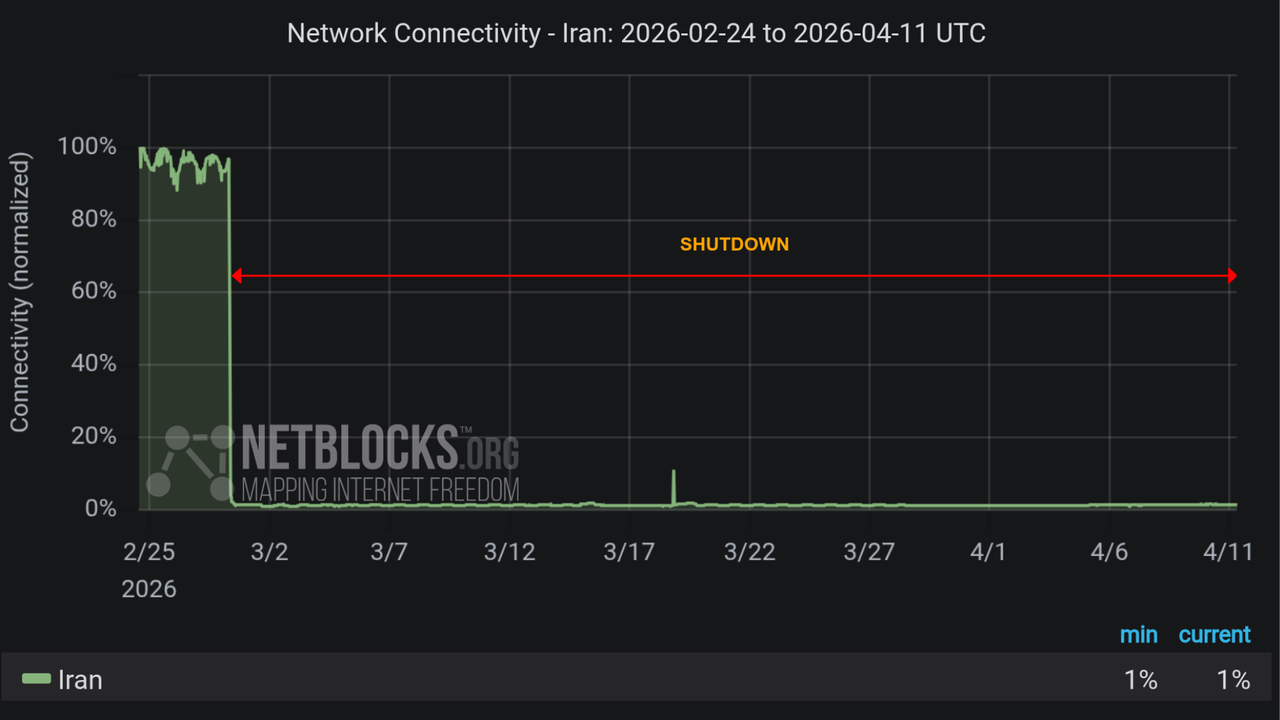
Iran is currently in the midst of a prolonged nationwide internet blackout, a measure that has exceeded one thousand hours of disconnection, making it the second-longest episode ever recorded in the country. This forced interruption is not merely an obstacle to daily communication but represents a clear strategy of information control by the authorities.
The severity of the situation is further underscored by the drastic measures adopted against the use of alternative technologies. The Iranian government has declared that possession of Starlink terminals is punishable by death, a sanction that highlights the determination to block any attempt to circumvent imposed restrictions.
Technical Details of Censorship and Countermeasures
National-level internet access control often involves a combination of complex techniques. These can include Border Gateway Protocol (BGP) manipulation to redirect or block traffic, DNS filtering to prevent web address resolution, or physical disruption of network infrastructure. Such strategies aim to create an isolated, or "air-gapped," digital environment where the flow of information is strictly monitored and controlled.
Against services like Starlink, which promise global and decentralized satellite connectivity, Iranian authorities are employing "military-grade jamming" techniques. This type of interference relies on emitting powerful, targeted radio signals to disrupt or block communications between Starlink terminals and satellites. The objective is to render the terminals unusable, effectively preventing internet access and neutralizing a potential escape route from censorship.
Implications for Digital Sovereignty and Infrastructure
The situation in Iran vividly illustrates the challenges related to data sovereignty and digital infrastructure control. For organizations operating in complex geopolitical contexts, the ability to maintain operational continuity and data security becomes an absolute priority. Reliance on centralized or state-controlled network infrastructures can expose them to significant risks, including sudden blackouts and loss of access to essential services.
This scenario prompts companies to carefully evaluate their deployment strategies. The choice between cloud and self-hosted solutions, or the adoption of hybrid or "air-gapped" architectures, takes on critical importance. The ability to operate in disconnected environments or with limited connectivity can be a decisive factor for resilience. The evaluation of TCO (Total Cost of Ownership) must therefore include not only hardware and software costs but also the risks associated with potential service disruption and loss of sovereignty over one's data.
Future Prospects and Infrastructural Resilience
The Iranian case serves as a stark warning about the growing tension between the desire for universal access to information and state control policies. For businesses and institutions managing critical workloads, including those based on Large Language Models (LLM) or other AI applications, infrastructure resilience is no longer an option but a strategic necessity.
Planning for scenarios of limited or absent connectivity, investing in self-hosted solutions, and ensuring data sovereignty under all circumstances are fundamental aspects. AI-RADAR, for example, offers analytical frameworks on /llm-onpremise to evaluate the trade-offs and implications of on-premise deployment, helping organizations build robust and future-proof architectures in an increasingly uncertain digital landscape.









💬 Comments (0)
🔒 Log in or register to comment on articles.
No comments yet. Be the first to comment!