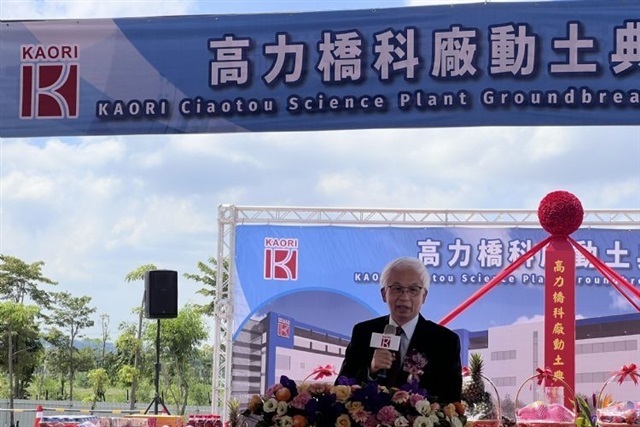
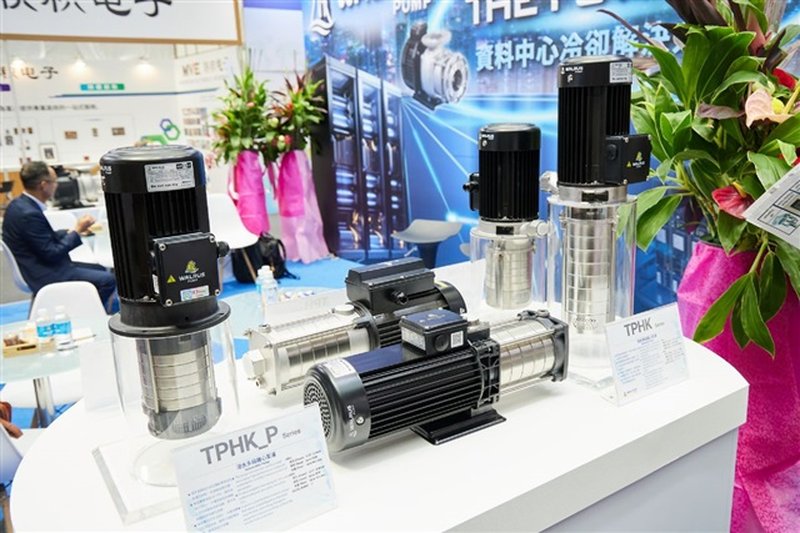
When AI workloads push servers to their limits, every watt of dissipated power becomes an engineering challenge. Traditional fans and heatsinks are no longer enough: you need industrial-grade cooling systems capable of handling GPUs that consume as much as a small appliance. It’s within this scenario that Kaori Heat Treatment Co., led by Chairman Dr. Allen Wu, is doubling down on its Kaohsiung plant, aiming to start production by 2027 to meet the growing demand for AI cooling and green energy applications.
Why cooling has become an AI bottleneck for on-premise deployments
The LLM race has transformed datacenters into something closer to power plants than simple server rooms. Cards with hundreds of gigabytes of VRAM and NVLink interconnects push the thermal envelope of a single node far beyond what air cooling can manage. In on-premise deployments, where organizations keep full infrastructure control but face tight space and energy constraints, the cooling choice is no longer secondary: it directly affects compute density, boost frequency stability, and ultimately inference throughput.
Liquid cooling systems – whether direct-to-chip or immersion – are gaining ground because they extract heat far more efficiently while also lowering overall facility power consumption. For teams evaluating on-premise LLM clusters, liquid cooling has moved from an exotic option to a practical lever to reduce total cost of ownership (TCO) and hit sustainability targets.
The Kaohsiung bet and the 2027 timeline
Kaori’s announcement isn’t just a capacity expansion; it’s a positioning around a window that many analysts see as an inflection point for mass adoption of liquid cooling in AI datacenters. The Kaohsiung plant is being readied precisely to capture the demand expected to materialize when next-generation GPUs, multi-die configurations, and systems with ever-larger HBM stacks become the norm inside on-premise racks.
The company hasn’t disclosed precise output figures, but setting a target date so far out signals a long-term industrial commitment and a conviction that the market will be ready to absorb significant volumes. It’s a signal to be read alongside investments from other thermal infrastructure providers and silicon vendors’ roadmaps.
What changes for those assessing an on-premise deployment
For infrastructure leaders currently evaluating on-premise LLM clusters, the evolution of cooling introduces a strategic variable. On one side, the availability of more efficient solutions allows higher rack density, reducing the physical footprint of the datacenter. On the other, integrating liquid loops demands different mechanical design and operational practices than air cooling, affecting maintenance, staff training, and supply chain considerations.
Those investing today in self-hosted infrastructure must thus view 2027 not as a distant horizon, but as the point at which their installed base will likely need upgrading to handle new workloads. The cooling system becomes an architectural decision in its own right, with consequences for modularity and the ability to scale in the future without rebuilding the facility.
The intersection with green energy
The other pillar of Kaori’s strategy is green energy demand. Advanced cooling systems are not limited to datacenters: they are key components for power electronics in solar farms and wind turbines, and for fast-charging stations for electric vehicles. This dual purpose gives the Kaohsiung operation a resilience that extends beyond AI hype, tying into energy trends that are regulated and funded on a global scale.
For the AI ecosystem, the link with green energy points to an increasingly intertwined path: cooling GPUs with renewable power, while using the same thermal technologies for the infrastructure that generates and distributes that energy. A virtuous loop that rewards those who integrate both trajectories into their planning.
Outlook: cooling without heating the planet
Kaori’s announcement doesn’t set the course, but it confirms that cooling is moving out of engineering obscurity to become a front-page topic in datacenter roadmaps for AI. For the professionals tracking on-premise deployment decisions on AI-RADAR, it’s a reminder to treat thermal management not as an accessory cost, but as a structural variable that will shape availability, operating expenses, and compute density in the years ahead.
2027 only seems far off: for those planning GPU clusters today, the cooling choices made now will largely determine the flexibility and economic sustainability of the infrastructure when Kaori and other players are ready to ship next-generation solutions.






💬 Comments (0)
🔒 Log in or register to comment on articles.
No comments yet. Be the first to comment!