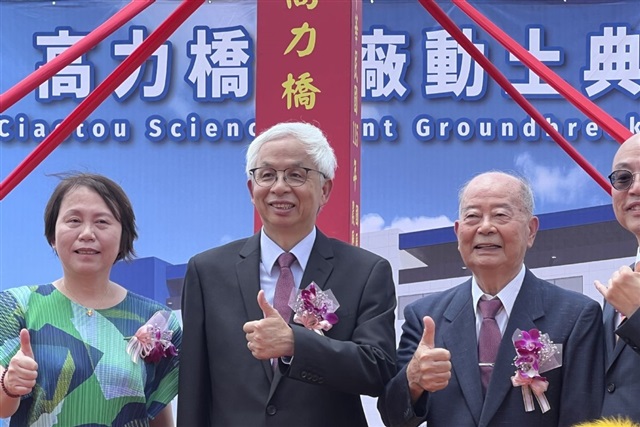
The news is short but carries weight: Kaori, a Taiwanese specialist in thermal and energy components, has announced that its fuel cell orders now span a full year of production. To cope, the company is expanding capacity both at home and at overseas sites. No precise figures, no revenue forecasts – just a snapshot of an order book stretching well beyond industry norms.
For AI-RADAR, which closely tracks hardware and infrastructure for on-premise LLMs, this announcement is a piece in the energy supply chain puzzle. Fuel cell demand is not growing in a vacuum: the shift toward clean sources and the need for stable power for compute-intensive workloads are reshaping priorities for those designing data centers, edge nodes, and distributed inference environments.
The role of fuel cells in compute infrastructure
Fuel cells convert hydrogen (or other fuels) into electricity through a silent, low-emission electrochemical process. They are not new, but in recent years they have moved from experimental niche to a solution taken seriously for continuous power or backup at sites where the grid is fragile or expensive. For an on-premise data center hosting inference servers, power availability is non-negotiable: every interruption means lost sessions, service degradation, and unexpected operational costs.
Kaori’s stretched order book suggests that the supply chain is scaling to meet a wider user base. Whether those components end up directly in AI racks is uncertain, but the principle holds: precision energy components – Kaori produces heat exchangers and cooling systems for fuel cells – become cogs in the machine that keeps workloads alive.
Energy and TCO: the on-premise equation
Anyone evaluating the shift of LLMs from public clouds to self-hosted servers quickly confronts Total Cost of Ownership. Often the focus falls solely on GPU VRAM or node cost, forgetting that power structurally impacts the bottom line. A high-power inference cluster can draw several kilowatts; in many regions, energy cost is the second largest expense after hardware, and its volatility undermines multi-year plans.
In this scenario, solutions like fuel cells – offering predictability and sometimes grid independence – alter the TCO calculation. If a manufacturer like Kaori signals one-year orders, it implies that deployers are buying components well in advance, perhaps precisely to secure energy availability for their projects. It’s a data point every CTO should cross-check with their own consumption forecasts: on-premise infrastructure planning isn’t just about GPU benchmarks, but also about the reliability of the watt supply.
Taiwan as a hub and global ramifications
Kaori’s expansion spans Taiwan and overseas locations, a twin track mirroring the geography of tech manufacturing: on one hand, the island’s central role in semiconductor and advanced component production; on the other, the push to diversify in order to serve global customers and mitigate geopolitical risks. For the AI-RADAR observer, this is an indirect indicator of how the energy supply chain is gearing up to support AI workload diffusion beyond major cloud hubs, in settings where data control and sovereignty matter more than the elasticity of a remote instance.
The announcement offers no volume or customer detail, but the lengthening order book is raw data that speaks for itself. In an energy market still marked by uncertainty, a supplier seeing year-ahead demand is either a bottleneck or an enabler, depending on the perspective. For those designing the next on-premise inference cluster, tracking the production capacity of companies like Kaori is not an academic exercise: it’s a piece of due diligence that completes the analysis of GPU datasheets.



💬 Comments (0)
🔒 Log in or register to comment on articles.
No comments yet. Be the first to comment!