
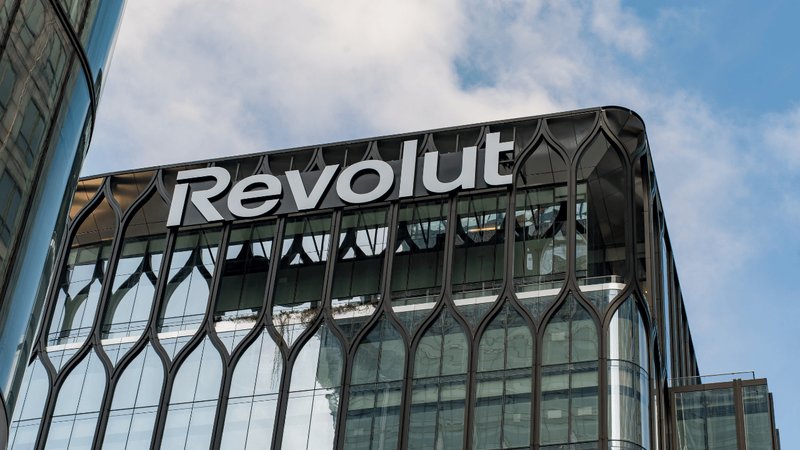
Klarna has filed for a US banking licence with the Utah Department of Financial Institutions and the FDIC. It’s not a first: other European fintechs like Revolut and Bunq have walked or are walking the same path. But the timing and context make Klarna’s bid a litmus test for anyone tracking data-infrastructure evolution in finance.
Until now, Klarna has served US customers through partner banks, providing over $93 billion in credit. With its own licence, it could directly offer credit products, debit cards, and accounts, but the real leap lies elsewhere: becoming the sole custodian of transactional data and underwriting decisions. In a market where predictive solvency models feast on increasingly granular feeds, owning the banking infrastructure means being able to train and deploy models—including Large Language Models for customer service, fraud detection, or dynamic pricing—on proprietary data, without intermediaries.
This isn’t just commercial strategy. The Trump administration has signaled greater openness to new entrants, lowering a barrier that previously stymied European players. Yet the licence isn’t a pass for AI; it’s the prerequisite for on-premise deployment of sensitive workloads, where current partner banks retain partial control. Klarna, which already holds a European banking licence, could replicate a model in which the technology stack—from servers to inference runtimes—stays within its own perimeter.
For AI-RADAR readers, the signal is twofold. First, vertical integration into financial infrastructure enables self-hosting scenarios for machine learning models that touch personal data, with gains in compliance and latency. Second, it shifts competition from the product to the architectural layer: true differentiation won’t come from yet another buy-now-pay-later feature, but from the ability to orchestrate data and inference pipelines without third-party dependence. This is precisely the frontier that sovereignty-conscious companies are exploring, in finance and beyond.
Of course, the outcome is far from guaranteed. FDIC approval demands time and capital strength. And a new bank operator doesn’t automatically mean a well-designed on-premise architecture. But the direction is clear: when a digitally native player asks to become a bank, it’s not to own physical vaults, but to control the data that feeds its algorithms. That’s where a banking licence turns into an infrastructure asset.
Klarna has already shown marketing savvy by enlisting Shaquille O’Neal for US campaigns. Now it must prove the same readiness in designing its stack. For the European fintech market, watching how Klarna handles a potential on-premise phase—and whether it can bring LLMs into production within its own regulatory boundaries—will be as instructive as the licence battle itself.








💬 Comments (0)
🔒 Log in or register to comment on articles.
No comments yet. Be the first to comment!