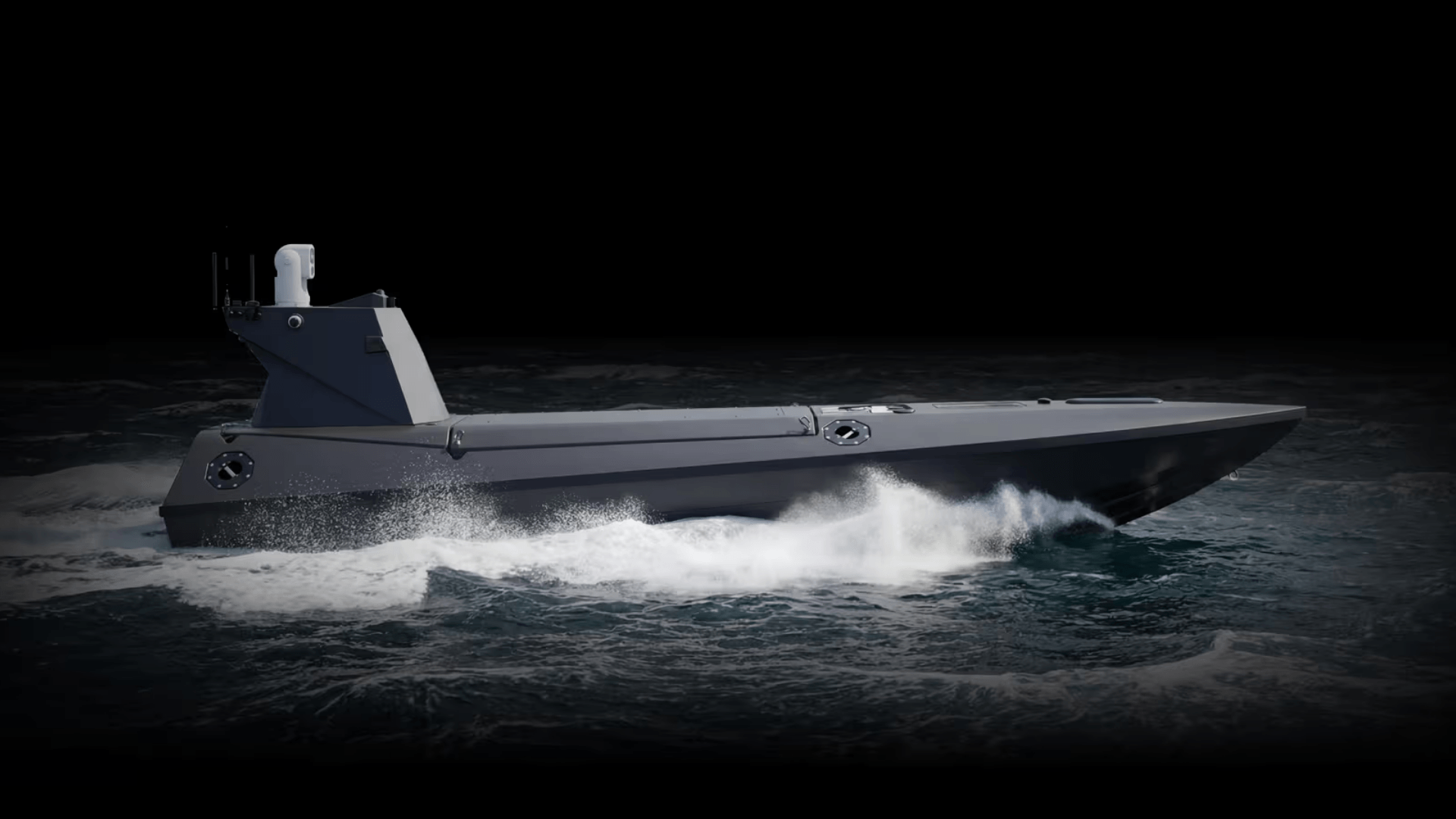
Kraken Technology, founded in 2020 by former speedboat racer Mal Crease, announced it has hit a $1 billion valuation after a $175 million Series B round. The company designs and builds autonomous maritime platforms—subsurface and surface—for military and security purposes. On the surface, it might look like just another defence-tech funding milestone. But the client roster—NATO, the UK Ministry of Defence, the US Navy—and the nature of the technology reveal an architectural watershed with deep consequences for anyone building local AI stacks.
The funding details are straightforward: Digital Transformation Capital Partners (DTCP) led the round, with support from the British Business Bank, NATO Innovation Fund, Rheinmetall, Inocea group, and VCs Hico Ventures, Thesiger Capital, and BOKA Capital. Kraken will use the capital to develop a new autonomous surface vessel and expand manufacturing. The real signal, however, is subtler: every unit Kraken builds must make real-time decisions in electromagnetically contested environments, without stable links to the cloud. This is an extreme case of on-premise—or rather, on-edge— inference, where satellite latency and vulnerability to jamming make onboard compute the only viable option.
The end of cloud in operational theatres
Anyone who has evaluated self-hosted AI deployments knows the trade-off: giving up cloud flexibility means shouldering CapEx and management complexity, but yields ultra-low latency and full data control. In defence, that trade-off is existential. An uncrewed surface vessel (USV) on a surveillance mission cannot stream video feeds to a remote data centre for analysis: it must process everything onboard, often under strict thermal and power constraints. Kraken is not merely a high-tech shipbuilder; it is an integrator of ruggedized hardware, sensors, and AI models running on silicon designed for harsh environments. The presence of the NATO Innovation Fund signals institutional pressure to build autonomous stacks that reduce dependency on non-EU cloud providers and external compute chains.
For the European and Italian industry, the message is clear: producers of inference hardware—embedded GPUs, FPGAs, neuromorphic ASICs—will see rising demand from prime contractors assembling naval drones, not just from software vendors. TCO for these use cases isn't measured in dollar-per-GPU-hour of rental, but in cost per completed mission without losing the vehicle. On-device compute shrinks the communication footprint and lowers detection risk. This dynamic rewards those who can optimise models through aggressive quantization and lightweight frameworks that run on limited VRAM and sub-50-Watt power budgets.
Data sovereignty and the renaissance of specialized hardware
Kraken's rise highlights a structural trend: defence is becoming the most demanding proving ground for digital sovereignty. The data collected by these platforms—acoustic signatures, radar patterns, thermal imagery—carry strategic value and cannot transit over infrastructure owned by non-alliance actors. This drives investment toward European and North American silicon suppliers offering supply-chain audits and verified absence of backdoors. At the same time, deploying autonomous maritime agents multiplies the attack surface: every onboard compute node is a potential compromise point. The answer lies in isolated execution enclaves and verifiable firmware update pipelines, themes central to on-premise deployments in regulated sectors.
Kraken's unicorn moment is therefore not just a story of venture capital flowing into defence. It is a leading indicator of how the market rewards architectures where processing moves to where data is born, not to where it's cheapest. For system integrators accustomed to cloud as the default, the lesson is stark: in the maritime military domain, edge is already the only reality. And as hybrid scenarios proliferate, orchestrating distributed inference without permanent connectivity will become the defining skill.





💬 Comments (0)
🔒 Log in or register to comment on articles.
No comments yet. Be the first to comment!