Perplexity has brought its local AI agent to Windows, but with a requirement that immediately divides the audience: you need RTX GPUs with at least 24GB of VRAM. The announcement comes through the Portable Computer project, designed to run multistep tasks on compatible PCs. This is not a simple app: the agent must manage multiple steps, maintain context, and coordinate tools, which has direct consequences for the video memory required.
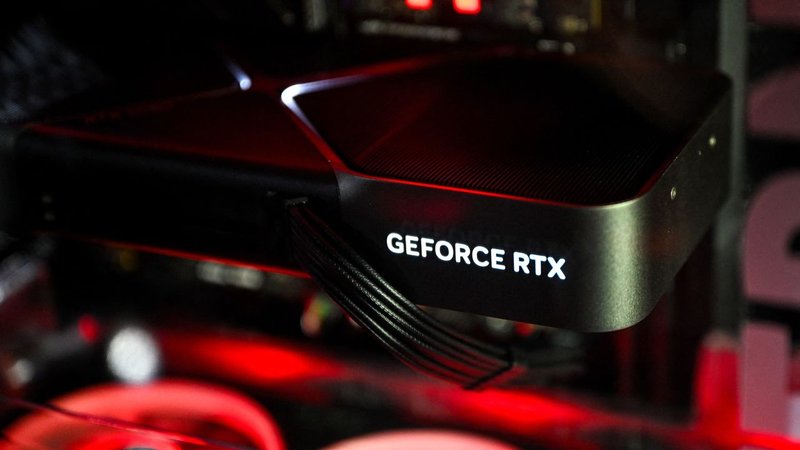
The 24GB constraint is not a small technical detail. It effectively excludes most laptops and entry-level consumer cards, narrowing the field to high-end desktop configurations or workstations. For those thinking in on-premise terms, the threshold becomes an infrastructure design criterion: having any RTX GPU is not enough; you need enough VRAM to load the model, handle the context window, and keep intermediate agent states in memory. Multistep activities, such as navigating between applications or chaining multiple tool calls, amplify memory consumption compared to a single inference.
This choice signals a structural direction: local agents are not simple chatbots. They need resources that until recently were considered the domain of servers or professional workstations. The fact that Perplexity sets such a high requirement on Windows suggests the company aims first at technical and enthusiast users willing to invest in powerful hardware, rather than at immediate mass adoption. Winners include GPU makers with high memory configurations and system integrators building machines for local AI. Losers include users with an average PC, who will have to use the agent in the cloud or give up the local version.
There is also a second-order effect: such an explicit VRAM threshold pushes developers to work on quantization and compression techniques to reduce model footprint. But lowering precision can compromise the reliability of an agent that must execute multiple steps without errors. The trade-off between accessibility and robustness thus becomes a central theme for those designing local pipelines.
On the data sovereignty front, the local agent promises to keep information and commands on the device, avoiding passage through remote services. For organizations with compliance constraints, this is a significant lever, but the cost of the required hardware raises the initial TCO. It is not a zero-cost path: the CapEx for a GPU with 24GB of VRAM can be significant, even if operating costs remain tied to energy and local maintenance.
Ultimately, the news is not only about Perplexity: it shows that local deployment of AI agents is entering a phase where video memory defines who can participate. For those evaluating on-premise deployment, there are trade-offs between control, costs, and performance that must be analyzed case by case; AI-RADAR offers analytical frameworks on /llm-onpremise to navigate without shortcuts.





💬 Comments (0)
🔒 Log in or register to comment on articles.
No comments yet. Be the first to comment!