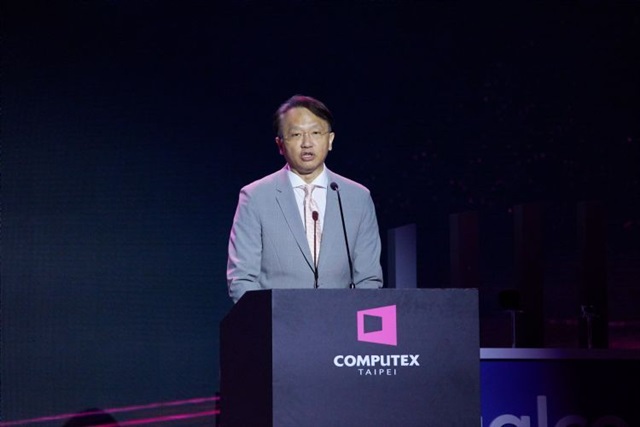
Artificial Intelligence Reshapes the PC Market
The personal computer sector, often perceived as mature with moderate growth rates, could receive a significant new impetus from the advancement of Artificial Intelligence agents. According to Acer Chairman Jason Chen, this new generation of AI-powered software has the potential to rekindle PC demand, driving users towards devices equipped with more robust local processing capabilities. This perspective highlights an emerging trend: AI is no longer exclusively confined to the cloud but is spreading towards the edge and end devices.
Acer's statement is part of a broader context of technological innovation, where the integration of AI directly into PC hardware is becoming a priority for manufacturers. The goal is to enable advanced functionalities that require low latency and direct access to user data, without the need for constant interaction with remote servers. This scenario opens new opportunities for the entire ecosystem, from chip manufacturers to software providers, and ultimately to end-users who will benefit from more personalized and responsive experiences.
AI Agents and Hardware Requirements for Local Processing
The "AI agents" Acer refers to are programs capable of performing complex tasks, learning from interactions, and adapting, often operating autonomously. To function effectively on a PC, these agents require significant computational resources. Traditionally, running Large Language Models (LLM) and other intensive AI workloads was the domain of data centers, leveraging high-end GPUs with large amounts of VRAM. However, model optimization techniques like Quantization and the development of Neural Processing Units (NPU) integrated into modern processors are making on-device AI Inference increasingly feasible.
These new hardware requirements imply that future PCs will need to be equipped not only with powerful CPUs and GPUs but also with dedicated NPUs, capable of accelerating specific AI workloads with greater energy efficiency. The availability of adequate VRAM and sufficient bandwidth will become critical factors in determining a PC's ability to host complex AI agents and run sizable LLMs locally. This represents a significant shift from the past, where computing power was often measured solely in terms of general processor speed.
Advantages of On-Premise Deployment: Sovereignty and TCO
The push towards local, or self-hosted, AI processing is driven not only by performance but also by strategic considerations for businesses. Data sovereignty is a crucial factor: keeping sensitive data within corporate boundaries or on controlled devices reduces risks related to privacy and regulatory compliance, such as GDPR. For highly regulated sectors or air-gapped environments, running LLMs and AI agents locally is often the only viable option.
Furthermore, the Total Cost of Ownership (TCO) can play a decisive role. While the initial hardware investment for an on-premise deployment might be higher than using cloud services, long-term operational costs, especially for intensive and constant AI workloads, can be lower. Eliminating dependencies on external cloud providers and having direct control over the infrastructure offers greater flexibility and cost predictability. For those evaluating on-premise deployment, AI-RADAR offers analytical frameworks on /llm-onpremise to assess these trade-offs.
Future Prospects for the AI Ecosystem and Edge Devices
The Acer chairman's statement underscores a vision where PCs are no longer mere terminals but become intelligent hubs capable of autonomously processing a wide range of AI tasks. This evolution will have a profound impact on the entire technology value chain. Chip manufacturers will continue to innovate to integrate more powerful and efficient NPUs, while software developers will focus on creating applications and AI agents optimized for local execution.
For CTOs, DevOps leads, and Infrastructure architects, this trend means a growing need to evaluate hardware and software solutions that support AI at the edge. The choice between cloud and on-premise deployment will become even more complex, requiring a thorough analysis of performance, security, compliance, and TCO requirements. The era of "AI PCs" is upon us, promising to transform not only how we interact with technology but also enterprise-level Artificial Intelligence deployment strategies.






💬 Comments (0)
🔒 Log in or register to comment on articles.
No comments yet. Be the first to comment!