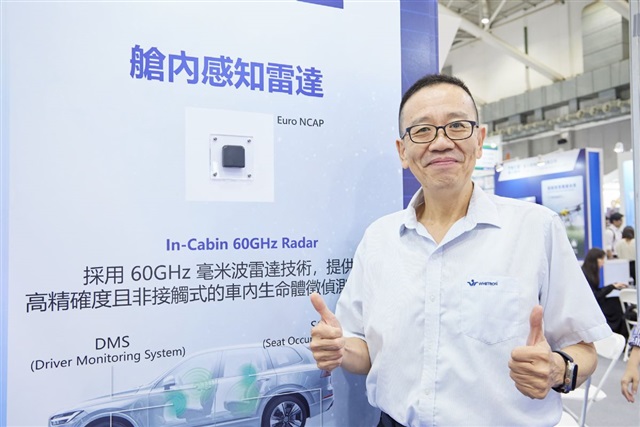
Whetron Presents AI Safety Systems at Taipei AMPA 2026
Whetron, a company specializing in technological solutions, participated in Taipei AMPA 2026, an industry fair showcasing the latest innovations in the automotive field. The company's focus was on presenting its advanced safety systems, which integrate AI-powered computer vision and radar technologies.
These systems are designed to enhance vehicle safety, offering real-time detection and analysis capabilities crucial for accident prevention. The choice to integrate AI into such critical applications underscores a market trend towards autonomous and predictive solutions, where reliability and low latency are essential requirements for deployment.
The Technology Behind AI Safety and Inference Challenges
AI-based safety systems, like those proposed by Whetron, rely on complex Machine Learning algorithms to interpret data from visual and radar sensors. Computer vision allows for the identification of objects, pedestrians, and road signs, while radar sensors offer detection capabilities in adverse conditions, such as fog or rain, by measuring distance and speed.
Integrating these data streams requires high inference capabilities, often directly at the edge, to ensure real-time responses. This implies the use of specialized hardware, such as SoCs (System on Chip) with integrated AI accelerators, which must balance performance and power consumption. The need to process large volumes of video and radar data in fractions of a second poses significant challenges in terms of throughput and latency, often requiring quantization techniques to optimize models and make them compatible with available hardware resources. These requirements are analogous to those encountered in the deployment of Large Language Models (LLM) on on-premise or edge infrastructures, where efficiency and latency are critical parameters.
Implications for Deployment and Data Sovereignty
The deployment of AI systems for vehicle safety raises crucial questions for organizations adopting them. The critical nature of these applications often necessitates data processing directly on board the vehicle or within self-hosted infrastructures (edge computing), to minimize latency and ensure operational continuity even in the absence of cloud connectivity. This choice has a direct impact on the Total Cost of Ownership (TCO), which must consider not only the initial hardware cost but also maintenance, energy, and software updates.
Furthermore, managing sensitive data related to safety and mobility imposes strict requirements for data sovereignty and regulatory compliance. Companies must ensure that data is processed and stored in accordance with local and international laws, making air-gapped or on-premise solutions particularly attractive for sectors such as automotive and logistics, where direct control over infrastructure is a priority.
Future Prospects and Trade-offs in Infrastructure Choices
The evolution of AI safety systems, like those presented by Whetron, will continue to push the boundaries of on-device processing and sensory integration. Decisions regarding the deployment architecture – whether on-premise, edge, or hybrid – will increasingly depend on a careful evaluation of the trade-offs between performance, costs, security, and compliance requirements.
For companies operating in highly regulated sectors, the ability to maintain complete control over their data and AI infrastructures represents a significant competitive advantage. AI-RADAR, for instance, offers analytical frameworks to evaluate the trade-offs associated with on-premise LLM deployment, providing useful tools for CTOs and infrastructure architects in choosing the most suitable solutions for their specific needs. The challenge will be to balance technological innovation with the need for robust, scalable, and compliant infrastructures.









💬 Comments (0)
🔒 Log in or register to comment on articles.
No comments yet. Be the first to comment!