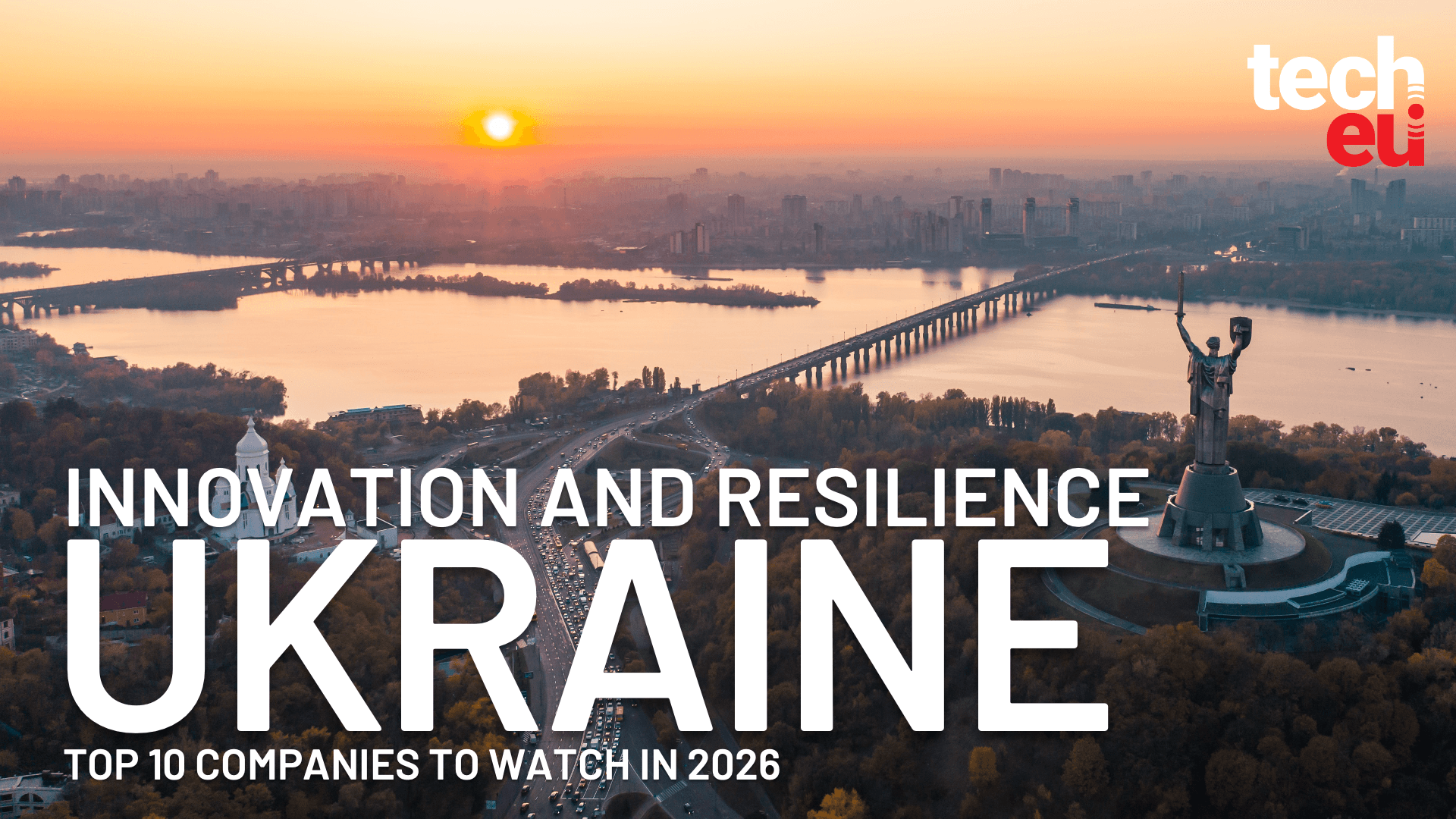
A Top-Heavy Yet Resilient Ecosystem: Ukraine's Investment Landscape in 2025
In 2025, the Ukrainian technology ecosystem recorded a total funding volume of €945 million. This seemingly robust figure was significantly influenced by a single, exceptional financing round: the $1 billion raised by Grammarly. This operation propelled Ukraine into the global top 10 for attracted capital, but at the same time, it highlighted a market structure concentrated at the top, where a single dominant player accounts for a large portion of the total volume.
Beyond this anomalous case, the investment landscape presents a more contained funding base, characterized by numerous small, early-stage rounds, generally below €10 million. Funding activity is predominantly concentrated in initial phases, such as pre-seed, seed, and Series A, with occasional alternative structures like debt financing. This indicates a developing ecosystem that shows limited depth in more advanced growth stages.
Strategic Specializations: Defense, Security, and Artificial Intelligence
From a sectoral perspective, the Ukrainian ecosystem demonstrates a strong presence of companies operating in the fields of defense, security, and robotics. These sectors are complemented by significant activity in software, artificial intelligence (AI), and healthtech. This dual focus highlights a commitment to both deeptech, with high-tech solutions often linked to critical contexts, and scalable digital products aimed at broader markets.
The orientation towards defense and security, in particular, reflects the country's geopolitical and strategic needs. Companies such as Swarmer, Himera, Dropla Tech, M-FLY, LetsData, and Teletactica develop cutting-edge technologies, ranging from autonomous drone swarm systems to electronic warfare-resistant communications, from landmine detection to combating disinformation. These innovations, often with stringent requirements in terms of data sovereignty and operational control, pose significant challenges for infrastructure deployment decisions, often favoring self-hosted or air-gapped solutions to ensure security and resilience.
Driving Companies and Their Innovations
Among the entities that attracted the largest funding in 2025, names like Grammarly stand out. Founded in 2009, it raised $1 billion to expand its AI-powered writing assistance solutions. Reface, a Ukrainian AI company, secured €15.2 million for its consumer generative AI content creation applications. Swarmer, with €13.1 million, is dedicated to developing AI software for coordinating drone swarms in defense contexts.
Other significant entities include Liki24, a health and wellness marketplace that raised $9 million to expand across Europe, and PeopleForce, a cloud-based HR platform that secured $5.4 million for its expansion in Poland. Himera, Dropla Tech, M-FLY, LetsData, and Teletactica, with funding ranging from €1.5 million to €2.5 million, focus on deeptech solutions for defense and security, from secure communication to threat detection and combating disinformation. These companies, despite varying funding volumes, contribute to defining a dynamic and innovative ecosystem.
Resilience and Prospects for AI Infrastructure
In summary, the 2025 data describe a resilient but uneven Ukrainian technology ecosystem. An active and broad pipeline is observed in the early stages, along with increasing specialization in the defense and security sectors. However, there is also a continued reliance on a limited number of large, globally scaled companies to sustain total funding volumes. This dynamic suggests that while innovation flourishes in startups, the ability to scale and attract capital in advanced stages remains a challenge.
For companies operating in critical sectors such as defense and security, infrastructure choices become fundamental. The need to ensure data sovereignty, regulatory compliance, and security in potentially hostile environments drives the adoption of self-hosted or hybrid solutions. For those evaluating on-premise deployment for LLM and AI workloads, AI-RADAR offers analytical frameworks on /llm-onpremise to assess the trade-offs between costs, control, and performance—crucial aspects for supporting the growth of such a specialized ecosystem.





💬 Comments (0)
🔒 Log in or register to comment on articles.
No comments yet. Be the first to comment!