
The New Direction of Chinese Automotive
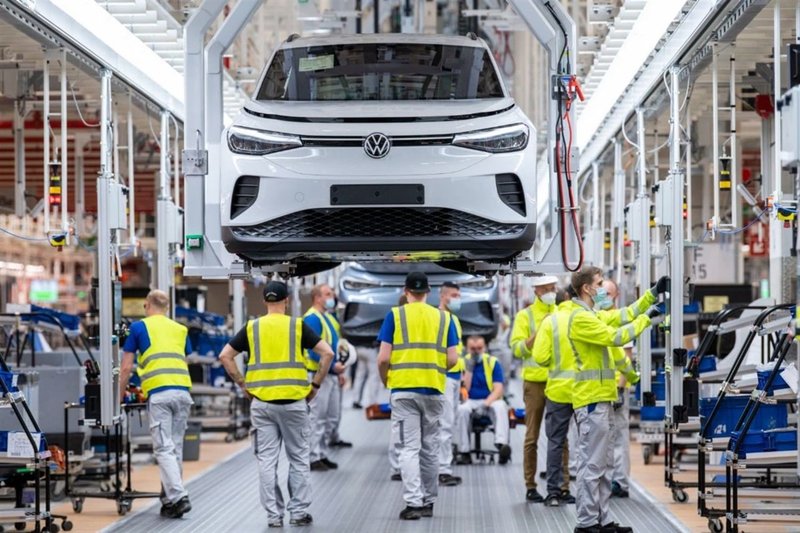
The Chinese automotive sector is undergoing a profound transformation, moving towards production and consumption models that could be described as a 'shift towards disposable cars.' This trend, while not yet fully defined in its specific contours, suggests a growing emphasis on vehicles with shorter lifecycles, greater affordability, or a different approach to ownership and replacement compared to traditional paradigms. This evolution is not an isolated phenomenon but is part of a global context of innovation and competition, where China aims to consolidate its leadership in the electric and intelligent vehicle market.
This potential reorganization of production and design priorities within the Chinese automotive industry has the potential to alter the demand for specific electronic components. Modern automotive is, in fact, a voracious consumer of semiconductors, advanced sensors, and complex control systems, many of which integrate artificial intelligence functionalities for assisted driving and infotainment. A change in design and production philosophies could therefore translate into a different demand for chip types, volumes, and technical specifications, influencing the entire global supply chain.
The Strategic Role of Taiwan's Tech Ecosystem
At the heart of this dynamic lies Taiwan's technology ecosystem, long recognized as a fundamental pillar for global semiconductor production. The island hosts some of the largest manufacturers of advanced chips, whose foundries are essential for supplying critical components for a wide range of sectors, from consumer electronics to IT infrastructure, including automotive. Its strategic position and production capacity make it particularly sensitive to any significant variation in demand from key markets such as China.
An alteration in the needs of the Chinese automotive sector can therefore generate a ripple effect on the Taiwanese industry. This could manifest through changes in foundry production priorities, reallocation of production capacity, or even investments in research and development to meet new specifications. Such dynamics concern not only high-end chips but also microcontrollers, power management components, and sensors, all crucial elements for modern vehicles. Taiwan's ability to adapt to these new demands will be decisive for maintaining its leadership position and for the stability of the global supply chain.
Implications for AI Infrastructure and On-Premise Deployments
The repercussions of these changes in the automotive sector and the Taiwanese supply chain extend far beyond the automotive market, indirectly affecting the artificial intelligence sector as well. The infrastructure required for training and Inference of Large Language Models (LLM) and other intensive AI workloads heavily depends on the availability of specialized hardware, such as high-performance GPUs and dedicated VRAM. Any imbalance in the semiconductor supply chain can impact the availability and TCO (Total Cost of Ownership) of these critical components.
For organizations evaluating on-premise deployment strategies for their AI workloads, the stability of the hardware supply chain is a crucial factor. Fluctuations in component prices or lead times can significantly impact capital expenditure (CapEx) planning and operational expenditure (OpEx). The ability to anticipate and mitigate such risks becomes essential to ensure data sovereignty and control over the infrastructure, which are priority aspects for many tech decision-makers. For those evaluating on-premise deployments, AI-RADAR offers analytical frameworks on /llm-onpremise to assess trade-offs related to costs, performance, and data sovereignty, aspects that can be influenced by market dynamics like those described.
Future Outlook and Supply Chain Resilience
Looking ahead, the resilience of the global technology supply chain will increasingly be under scrutiny. Dependence on a limited number of players for advanced semiconductor production, coupled with geopolitical dynamics and changes in end-market needs, requires a proactive strategy from all stakeholders. Companies operating in the AI sector, particularly those focusing on self-hosted or air-gapped solutions, will need to closely monitor these market trends.
Diversification of sourcing, long-term hardware procurement planning, and evaluation of flexible architectures that can adapt to varying component availability will be key strategies. Understanding how macro-economic and industrial trends, such as the transformation of Chinese automotive, can influence silicio availability is fundamental for CTOs, DevOps leads, and infrastructure architects. Only through careful analysis and strategic planning will it be possible to navigate the complexities of a constantly evolving technology market, ensuring the continuity and efficiency of AI operations.







💬 Comments (0)
🔒 Log in or register to comment on articles.
No comments yet. Be the first to comment!