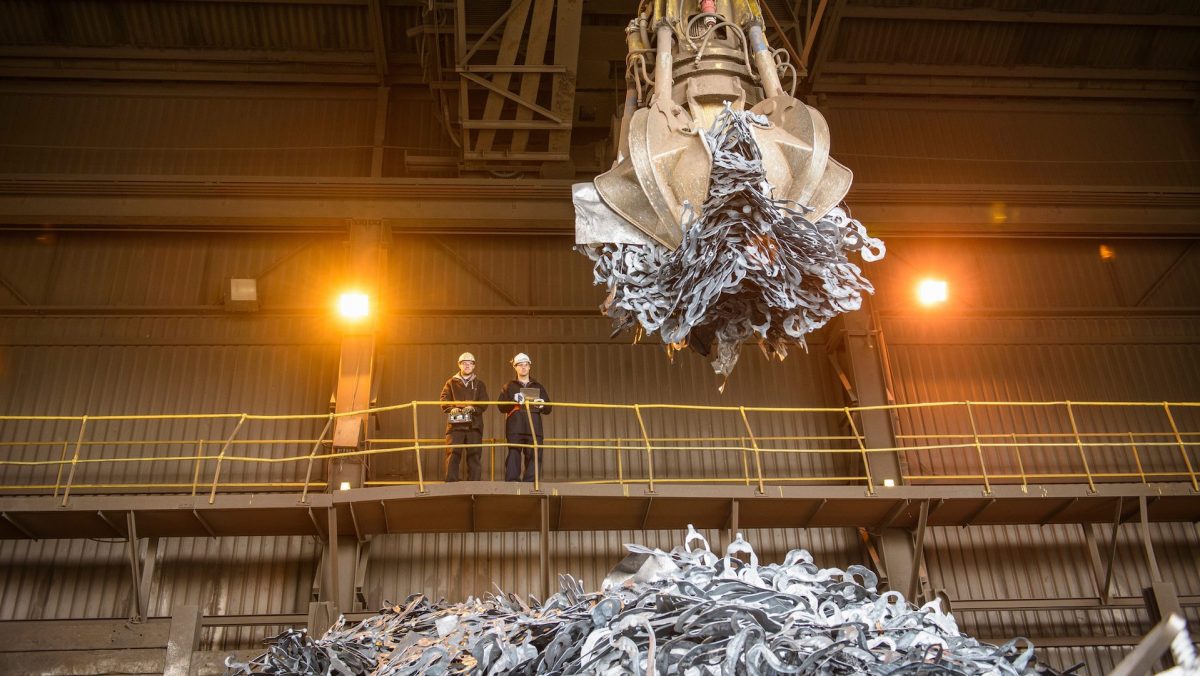
Artificial Intelligence Serving the Circular Economy
The recycling sector faces a significant economic and technological juncture. With a 20% increase in aluminum prices, attention is shifting towards innovative solutions capable of improving efficiency in material recovery. In this scenario, several startups are betting on artificial intelligence (AI) as a strategic lever to transform recycling processes, aiming to extract value from critical minerals and build a massive, sustainable source of secondary raw materials.
The growing demand for metals and market volatility push companies to explore every avenue to optimize their operational pipelines. AI, with its analytical and automation capabilities, emerges as a key tool to address the intrinsic complexities of recycling, from material separation to demand and supply forecasting, contributing to a more circular economy.
The Role of AI in Optimizing Recovery
The application of artificial intelligence in recycling processes can range from the use of computer vision algorithms for automatic material identification and separation, to predictive models for optimizing logistics and plant maintenance. For example, Machine Learning-based systems can analyze mixed waste streams, accurately recognizing and classifying different types of metals or plastics, reducing human error and increasing overall Throughput.
These technologies require significant data processing capabilities, often in real-time. The Inference of AI models, especially the more complex ones, necessitates dedicated hardware, such as GPUs with high VRAM, to ensure rapid and accurate responses. The ability to process large volumes of data locally becomes a critical factor for operational efficiency and system responsiveness, directly impacting the speed of material recovery.
Implications for Infrastructure and Data Sovereignty
For startups and companies in the sector, the adoption of AI in recycling raises important considerations regarding Deployment infrastructure. Data generated by recycling plants—related to material composition, volumes, and process efficiency—are often proprietary and sensitive. A Self-hosted or On-premise Deployment offers superior control over data sovereignty, security, and regulatory compliance, which are crucial aspects in industrial sectors handling critical information.
Choosing Bare metal infrastructure or hybrid solutions allows for managing intensive AI workloads while keeping data within the company's perimeter. This approach can also influence the long-term TCO, balancing initial CapEx costs with the benefits derived from increased operational efficiency and reduced reliance on external cloud services. For those evaluating on-premise deployment, AI-RADAR offers analytical frameworks on /llm-onpremise to assess specific trade-offs related to performance, costs, and control.
Future Prospects and Strategic Considerations
The integration of AI into recycling represents a significant step towards a more circular and resilient economy. Startups investing in these technologies not only aim to capitalize on rising mineral prices but also to establish new standards of efficiency and sustainability in the industry. The ability to recover a greater quantity of critical materials with optimized processes has a direct impact on reducing the extraction of new resources and decreasing the environmental footprint.
Decisions regarding system architecture and AI Deployment will be fundamental to the success of these initiatives. Balancing the needs for computing power, data security, and operational costs will require careful evaluation of available options, including On-premise, Cloud, or Edge computing solutions. Infrastructure flexibility and scalability will be key elements to adapt to future market and AI technology evolutions, ensuring long-term competitiveness.






💬 Comments (0)
🔒 Log in or register to comment on articles.
No comments yet. Be the first to comment!