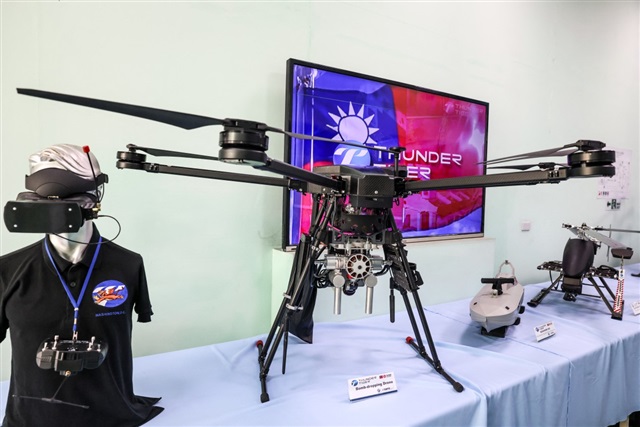
The US Drone Industry Looks to Ukraine: Lessons in Agile, Low-Cost Production
The US drone industry is closely observing the methodologies adopted in Ukraine for the production of unmanned aerial systems. The emphasis on a low-cost approach and rapid production represents a crucial lesson that transcends the defense sector alone, offering significant insights for the entire technology ecosystem. This dynamic highlights a growing need for agility and resource optimization, factors increasingly decisive in the field of artificial intelligence and Large Language Models (LLMs).
The current context, characterized by accelerated technological evolution and cost pressures, compels companies to reconsider their development and deployment strategies. The Ukrainian experience, while specific to the drone sector, underscores how innovation does not necessarily have to depend on massive investments in complex infrastructures but can emerge from intelligent engineering and lean processes.
Agile Production and Costs: A Parallel with AI
The principles of low-cost production and rapid iteration, observed in the drone sector, find a direct parallel in the challenges companies face in deploying advanced AI solutions, such as LLMs. The need to manage Total Cost of Ownership (TCO) is a critical factor, especially when evaluating on-premise architectures versus cloud-based ones. Optimizing Inference, for example, through techniques like model Quantization, or adopting specific hardware with high VRAM, becomes fundamental to reduce operational costs and improve Throughput.
The ability to rapidly develop and release new models or updates is equally crucial. This requires efficient development and Deployment Pipelines, allowing innovations to be tested and integrated without excessive delays. The choice of Frameworks and tools that support this agility, combined with a flexible infrastructure, is a key element for maintaining a competitive advantage.
Implications for On-Premise Deployment
For CTOs, DevOps leads, and infrastructure architects, the lessons learned from the drone sector reinforce the argument for careful evaluation of on-premise deployments for AI workloads. A Self-hosted environment offers superior control over data sovereignty and compliance, critical aspects for regulated industries or applications requiring Air-gapped environments. Although the initial investment in hardware, such as high-performance GPUs (e.g., A100 or H100), can be significant, the long-term TCO may be lower compared to recurring cloud costs, especially for intensive and predictable workloads.
Planning a Bare metal or containerized infrastructure for LLMs requires a deep understanding of hardware specifications, such as GPU memory and bandwidth, to ensure optimal performance. The ability to scale horizontally and autonomously manage resources allows organizations to adapt quickly to changing needs while maintaining full ownership and control over their digital assets. For those evaluating on-premise deployments, AI-RADAR offers analytical frameworks on /llm-onpremise to assess specific trade-offs.
Future Prospects and Challenges
The experience of agile and low-cost production in the drone sector indicates a clear direction for future technological innovation: efficiency is no longer an option but a strategic necessity. Companies that can integrate these principles into their AI development and deployment strategies will be better positioned to face market challenges. This implies constant attention to Silicio optimization, the development of more efficient software Frameworks, and the creation of teams capable of operating with agility.
The continuous pursuit of balance between performance, cost, and flexibility will remain a priority. The LLM sector, in particular, will benefit from approaches that allow rapid experimentation with new models and architectures without incurring prohibitive costs. The lessons from Ukraine, though born in a different context, offer a model of resilience and ingenuity that can inspire the entire tech industry.









💬 Comments (0)
🔒 Log in or register to comment on articles.
No comments yet. Be the first to comment!