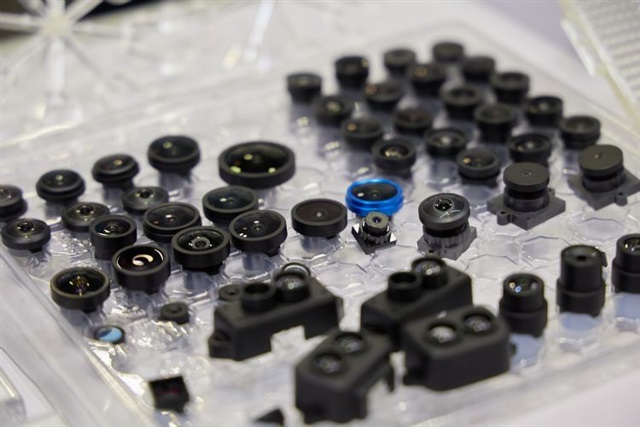
The Evolution of the Optics Industry in the AI Era
The advancement of artificial intelligence is profoundly transforming numerous industrial sectors, with imaging representing one of the most dynamic fields of this revolution. In this context, Taiwan's optics industry is finding a new and significant role, adapting its manufacturing and technological expertise to the growing demands of AI imaging. This transition is not merely an economic opportunity but also an indicator of the deep interconnection between specialized hardware and the development of cutting-edge AI solutions.
Historically, Taiwan has solidified its position as a global hub for the production of electronic components and semiconductors. The integration of optics with AI technologies represents a natural evolution, allowing the local industry to capitalize on its prior experience by providing the essential "eyes" for intelligent systems. This strategic shift reflects a broader trend in the tech sector, where the quality and efficiency of data acquisition become critical factors for the success of artificial intelligence models.
The Crucial Role of Optics in AI Imaging Systems
AI imaging systems, ranging from industrial robotics to medical diagnostics, advanced surveillance, and autonomous vehicles, inherently depend on the quality and precision of acquired visual data. Optical components such as high-resolution CMOS sensors, advanced lenses, LiDAR systems, and specialized cameras are the pillars upon which these systems are built. Their ability to capture detailed and accurate images is fundamental not only for real-time inference but also for training Large Language Models (LLM) and other machine learning models that process visual data.
The challenge for the optics industry lies in providing solutions that are not only high-performing but also compact, energy-efficient, and integrable with AI accelerators. This includes the development of miniaturized optics for edge devices, stereoscopic vision systems for depth perception, and multispectral sensors for specific applications. The quality of the optical input directly impacts the accuracy and efficiency of AI models, influencing requirements such as the VRAM needed for processing and the overall system throughput.
Implications for On-Premise Deployments and Data Sovereignty
For enterprises evaluating AI imaging solution deployments, the choice between cloud and self-hosted infrastructures is often dictated by specific constraints. In sectors such as defense, healthcare, or finance, data sovereignty and regulatory compliance (like GDPR) make on-premise or air-gapped deployments a necessity. In these scenarios, hardware, including optical components, becomes a central element of the Total Cost of Ownership (TCO) and the overall infrastructural strategy.
The availability of advanced optical components, produced by a robust industry like Taiwan's, is crucial for building self-hosted AI architectures. These solutions allow for granular control over the entire pipeline, from data acquisition via optical sensors to inference on bare metal servers or local clusters. For those evaluating on-premise deployments, AI-RADAR offers analytical frameworks on /llm-onpremise to assess the trade-offs between initial (CapEx) and operational (OpEx) costs, ensuring that infrastructural decisions support both performance needs and compliance and security requirements.
Future Outlook and the Global Supply Chain
The convergence between the optics industry and artificial intelligence is set to intensify, driving continuous innovations in sensors, lenses, and visual processing systems. Taiwan's ability to adapt and innovate in this space strengthens its position in the global technology supply chain, providing critical components for a wide range of AI applications.
Enterprises aiming to build robust and resilient AI solutions will need to consider the entire hardware pipeline, from optics to silicio, to optimize performance, costs, and security. Collaboration between optical component manufacturers and AI platform developers will be essential to unlock the full potential of AI imaging, especially in contexts where control and data sovereignty are paramount. This scenario underscores the importance of a diversified and innovative supply chain to support the growth of artificial intelligence globally.









💬 Comments (0)
🔒 Log in or register to comment on articles.
No comments yet. Be the first to comment!