Taiwan's Optical Industry Expands Towards Edge AI
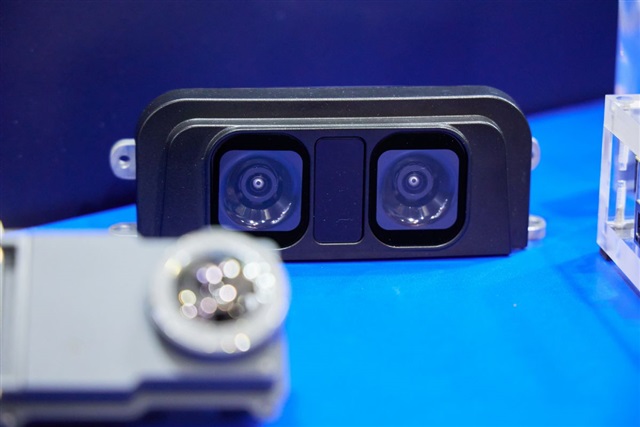
Taiwan's optical industry is undergoing a significant transformation, strategically shifting its production focus towards smart cameras. This evolution is driven by the growing demand for advanced computer vision solutions, with a particular emphasis on applications in drones and robots. The move highlights a crucial change in the technological landscape, where the capability for AI processing directly on the device, or at the edge, is becoming a critical success factor.
Smart cameras, equipped with integrated computing capabilities and sensors, represent a fundamental component for the autonomy and operational efficiency of drones and robots. Their adoption is rapidly increasing across sectors ranging from industrial automation to logistics, surveillance, and defense, where the need for real-time decision-making and operation in complex environments is paramount. This trend compels suppliers to innovate, offering solutions that integrate not only precision optics but also increasingly sophisticated AI inference capabilities.
Implications for On-Premise and Edge AI Processing
The increasing demand for smart cameras in drones and robots has profound implications for AI deployment strategies, particularly for those evaluating on-premise and edge solutions. Processing visual data directly on the device, rather than in the cloud, offers significant advantages in terms of latency, throughput, and bandwidth consumption. This is crucial for applications requiring immediate responses, such as autonomous navigation or obstacle detection.
To support these requirements, specialized hardware is essential. This includes chips with NPUs (Neural Processing Units) or low-power GPUs, optimized for AI inference at the edge. The choice of silicon and system architecture becomes critical for balancing performance, energy efficiency, and Total Cost of Ownership (TCO). Companies must carefully consider the initial CapEx for purchasing these devices and the OpEx for their management and maintenance, comparing them against the recurring costs of cloud services.
Data Sovereignty and Security in Autonomous Systems
A critical aspect in the adoption of smart cameras and autonomous systems is data sovereignty and security. Many applications in sensitive sectors, such as manufacturing, healthcare, or public safety, generate data that cannot be transferred to the cloud due to privacy regulations (like GDPR) or security requirements. In these scenarios, on-premise or directly on-device (air-gapped) processing becomes not only a preferred option but often a mandatory requirement.
The ability to keep data within the corporate perimeter or on the device itself ensures greater control and reduces risks associated with security breaches or compliance issues. For CTOs and infrastructure architects, this means designing data pipelines and deployment architectures that prioritize localized processing, utilizing frameworks and models optimized for inference on limited, but secure and controlled, hardware.
Future Prospects and Trade-offs for Decision-Makers
The push from Taiwan's optical industry towards smart cameras for drones and robots is a clear indicator of the direction AI is taking: increasingly distributed and closer to the data collection point. For technology decision-makers, this scenario presents a complex set of trade-offs to evaluate. The choice between cloud and on-premise/edge deployment is never trivial and depends on factors such as latency requirements, budget constraints, security needs, and data sovereignty.
The ability to effectively implement and manage AI workloads on edge devices requires a deep understanding of hardware specifications, model optimization techniques (such as quantization), and deployment strategies. AI-RADAR offers analytical frameworks and insights on /llm-onpremise to help evaluate these trade-offs, providing the necessary tools to make informed and strategic decisions in the era of distributed AI.







💬 Comments (0)
🔒 Log in or register to comment on articles.
No comments yet. Be the first to comment!