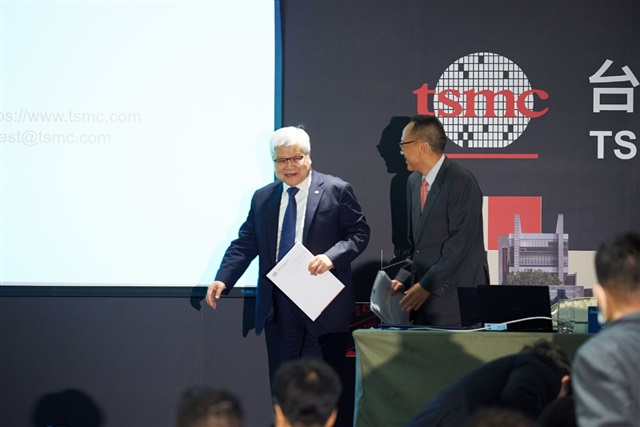
Taiwan's Central Role in the Global AI Ecosystem
The demand for dedicated artificial intelligence hardware continues to surge, prompting companies to carefully evaluate their deployment strategies. In this scenario, Taiwan's supply chain emerges as an irreplaceable pillar, a fact that underscores a strategic dependence for the entire technology sector. This reality, highlighted by market analyses, demands deep reflection for anyone involved in AI infrastructure, particularly for teams considering self-hosted solutions.
The concentration of advanced semiconductor manufacturing, including the fundamental chips for AI acceleration like GPUs, makes Taiwan a critical node. Taiwanese foundries are at the forefront of silicio production with cutting-edge manufacturing processes, essential for the performance required by Large Language Models (LLM) and other complex AI workloads.
Implications for Hardware Acquisition and TCO
The irreplaceable nature of the Taiwanese supply chain, combined with increasing demand, has direct implications for the availability and cost of AI hardware. For companies aiming to build or expand their on-premise infrastructures, this translates into potentially longer lead times and greater price volatility. Strategic planning therefore becomes crucial to mitigate risks related to procurement.
The Total Cost of Ownership (TCO) of an on-premise AI deployment is significantly influenced by these factors. In addition to the initial cost of GPUs with high VRAM and computing capacity, companies must consider the impact of waiting times on project initiation and scalability. The choice between immediate access to cloud resources and long-term investment in proprietary hardware requires a thorough analysis of these trade-offs.
Data Sovereignty and Strategic Resilience
Reliance on such a concentrated supply chain also raises broader issues related to data sovereignty and strategic resilience. For organizations operating in regulated sectors or handling sensitive data, the ability to maintain air-gapped or strictly controlled environments is paramount. Reliable access to the necessary hardware is a prerequisite to ensure compliance and security requirements are met.
A self-hosted AI infrastructure offers unparalleled control over data and processes, but its effectiveness is directly linked to the ability to acquire and maintain the underlying hardware. Deployment decisions must therefore balance the benefits of control and privacy with the challenges posed by a complex and rapidly evolving global supply chain.
Future Perspectives for Tech Decision-Makers
In a landscape where the demand for AI computing capacity shows no signs of slowing down, understanding the dynamics of the global supply chain is more essential than ever for CTOs, DevOps leads, and infrastructure architects. The ability to anticipate hardware market trends and plan accordingly can make the difference between a successful deployment and one that encounters significant obstacles.
For those evaluating on-premise deployments, complex trade-offs exist that go beyond simple technical specifications. Supply chain resilience, long-term TCO, and the ability to maintain data sovereignty are interconnected factors that require a holistic analysis. AI-RADAR offers analytical frameworks on /llm-onpremise to evaluate these trade-offs, supporting strategic decisions in a constantly evolving sector.







💬 Comments (0)
🔒 Log in or register to comment on articles.
No comments yet. Be the first to comment!