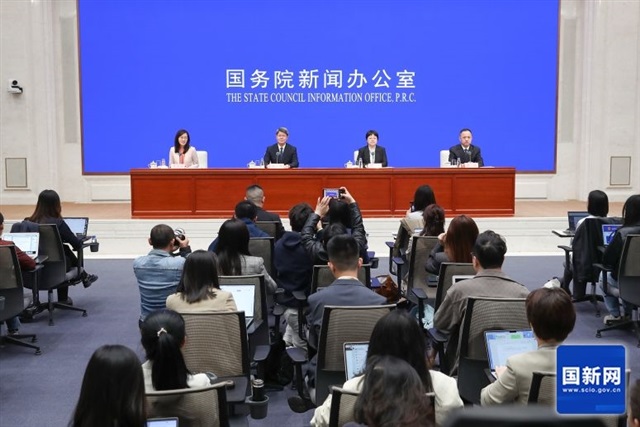
China Pledges to Stabilize Memory Chip Supply
China has announced its intention to stabilize the supply of memory chips, a strategic move reflecting the increasing importance of these components in the global technological landscape. The commitment, communicated by China's SCIO (State Council Information Office), is driven by expanding industrial growth and the rapid adoption of AI-driven manufacturing. This initiative underscores the Chinese government's awareness of the critical role of memory chips as a pillar for economic development and technological innovation.
The stability of the supply chain for essential hardware components is a decisive factor for the resilience and competitiveness of any modern economy. In an era dominated by AI and digitalization, the availability and predictability of memory chips are not just a commercial matter but become a strategic element for national security and technological sovereignty.
The Crucial Role of Memory Chips in the AI Era
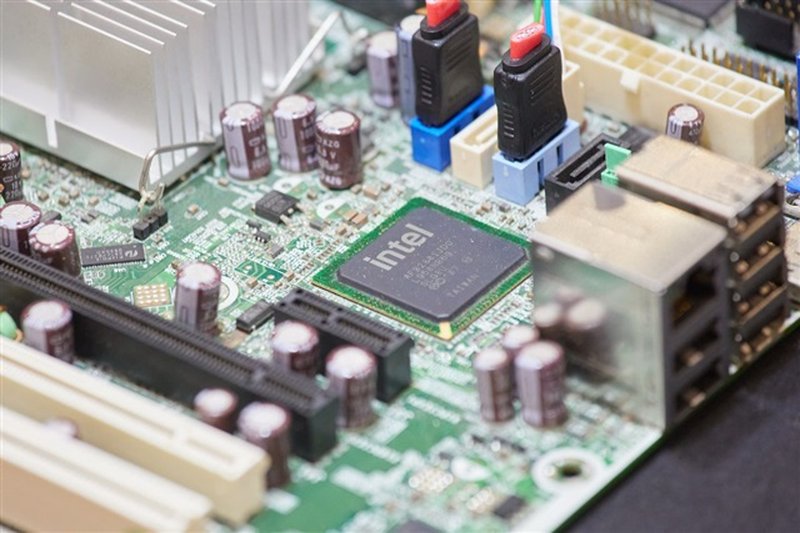
Memory chips, particularly high-bandwidth VRAM (HBM) integrated into GPUs, are fundamental for training and Inference of Large Language Models (LLMs) and other complex AI workloads. The capacity and speed of these memory modules directly influence the performance of AI systems, determining the size of models that can be loaded, the length of the manageable context window, and the overall Throughput in terms of tokens per second.
For companies developing and Deploying AI solutions, the availability of adequate memory chips is a primary hardware constraint. A stable and predictable supply allows for better planning of infrastructure investments, both for expanding existing data centers and for building new capacities. Without a reliable supply, scaling strategies and cost optimization can be seriously compromised.
Implications for On-Premise Deployments and Data Sovereignty
China's commitment to memory chip supply stability has significant implications for organizations that prioritize on-premise or self-hosted Deployments for their AI workloads. The decision to keep AI infrastructure within their own borders, often driven by data sovereignty requirements, regulatory compliance (such as GDPR), or the need for air-gapped environments, makes these companies particularly sensitive to hardware supply chain dynamics.
A volatile memory chip market can drastically influence the Total Cost of Ownership (TCO) of an on-premise AI infrastructure. Price fluctuations or delivery delays can increase initial costs (CapEx) and prolong implementation times, making the self-hosted option less attractive compared to cloud solutions. The promised stability can therefore help mitigate these risks, offering greater predictability and cost control for those investing in proprietary hardware. For those evaluating on-premise Deployments, AI-RADAR offers analytical frameworks on /llm-onpremise to assess trade-offs between control, costs, and performance.
Future Outlook and Global Challenges
The Chinese initiative is part of a global context of increasing technological competition and efforts to strengthen national supply chains. The demand for memory chips is set to grow exponentially, fueled not only by AI but also by the expansion of IoT, 5G, and high-performance computing. This makes supply stabilization a priority not only for China but for all major economies.
Future challenges include the need for continuous innovation in chip design, optimization of manufacturing processes, and management of geopolitical complexities that can affect the international trade of critical components. China's commitment is a clear signal that the availability of foundational hardware is recognized as a key enabler for the advancement of artificial intelligence and industrial digital transformation.








💬 Comments (0)
🔒 Log in or register to comment on articles.
No comments yet. Be the first to comment!