It doesn’t have the headline-friendly name of a GPU, but without this metal the AI acceleration could stumble. The news comes from China: Beijing is tightening checks on exports of indium phosphide, a semiconductor compound that is becoming a new friction point in the global AI race.
Why indium phosphide is so critical
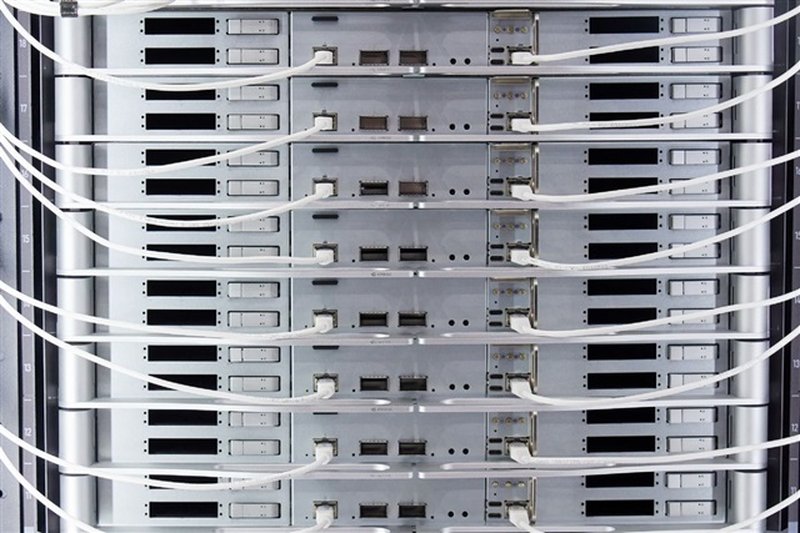
Indium phosphide (InP) is the material of choice for photonic chips that convert electrical signals into optical pulses and back. Inside a modern data center, every server communicates via fiber cables and transceivers: InP makes the difference by delivering high bandwidth, low latency and contained power consumption. With the explosion of AI workloads, the data volume exchanged between accelerators and storage grows enormously, making these optical components just as essential as the processors doing the math. Without them, the distributed architectures supporting large-scale inference and training hit physical limits that copper alone struggles to overcome.
The Chinese move and the domino effect
China controls a significant share of global indium production and, by extension, its high-purity compounds. The new export squeeze is not a bolt from the blue: it fits a broader critical raw materials strategy, similar to steps already taken on gallium and germanium. For AI infrastructure builders, the effect is twofold: longer lead times and higher costs for optical modules, right as everyone scrambles to scale clusters. At a time when GPU supply remains tight, an additional connectivity bottleneck risks slowing expansion plans, especially for those with less diversified supply chains.
What changes for on-premise deployment
Those evaluating on-premise, self-hosted LLM stacks know the game isn’t just about TeraFLOPS. Internal cluster connectivity – be it NVLink, InfiniBand or high-speed Ethernet – determines the efficiency of the whole system. InP-based optical modules sit inside switches, NICs and active cables; even temporary unavailability can extend deployment timelines or force design compromises (for example, shortening node distances or trimming high-band links). In Total Cost of Ownership terms, these constraints add to the well-known GPU procurement headaches, making financial planning even more uncertain. It’s a reminder that on-premise deployment requires analysis that covers the entire hardware chain, not just the headline components.
The lesson: technological sovereignty runs through metals too
The indium phosphide story shows that dependence on a single geopolitical supplier isn’t limited to processor silicon – it reaches into the base materials enabling high-performance networking. For organizations and public bodies aiming at data sovereignty, building autonomous data centers also means anticipating vulnerabilities far upstream in the value chain. AI-RADAR has often stressed how a full on-premise assessment must map risks and alternatives even at the level of technology commodities, integrating them into the decision frameworks available at /llm-onpremise. As AI demand keeps climbing, the infrastructure independence game gets more complex – and it’s no longer enough to count on silicon stockpiles alone.





💬 Comments (0)
🔒 Log in or register to comment on articles.
No comments yet. Be the first to comment!