
The format is sober; the warning is not. The Bank for International Settlements (BIS) has chosen the working paper route to sound an alarm that, in another era, would have rattled the boardrooms of investment banks. The rush to invest in artificial intelligence — fueled by expectations sometimes decoupled from fundamentals — is building the conditions for its own contraction, if not an outright bubble. It is not the first time the «central bank of central banks» has raised an eyebrow at a global financial phenomenon, but the timing and context make the message particularly sharp for those who now have to decide whether, how and when to land AI projects.
The analysis names no single company and ventures no quantitative forecasts, but it points a finger at a recognizable dynamic: vast capital poured into infrastructure, startups and research without it yet being clear, for many applications, what the real economic return will be. It is the classic «fool’s gold» syndrome that reappears whenever a technology promises to change the world and financial markets price a perfect scenario, ignoring bottlenecks, operating costs and adoption timelines.
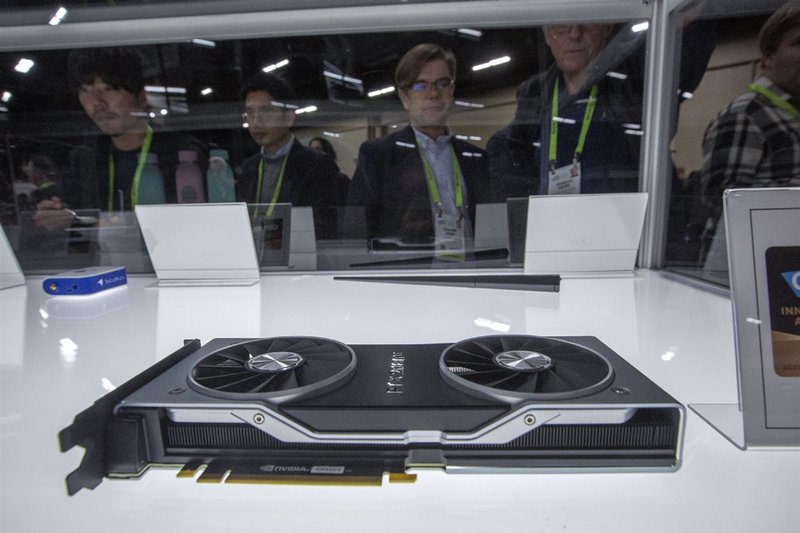
For those working on the on-premise architecture side, the BIS alarm bell is more concrete than it appears. Anyone investing today in GPU clusters, high-speed storage and industrial-scale cooling systems often does so with multi-year amortization horizons. If the bubble were to deflate, it would not just translate into lower stock valuations: there would be a potential surplus of hardware flooding the secondary market, a halt in expansion plans and, for enterprises that have tied their fate to single suppliers or restrictive contracts, a TCO that swells while the expected value shrinks. Conversely, those maintaining flexible architectures and not over-provisioning resources could find themselves in a position to absorb the correction without major shocks.
The issue is structural. The cost of inference, the energy footprint and the VRAM constraints for larger LLMs turn every deployment decision into a bet on usage volumes and the evolution of workloads. The BIS is not saying that AI is a bubble without substance; it is saying that the way it is being financed could create a rift between those who invested with moderation and those caught up in the frenzy, accumulating capacity that may remain idle or become rapidly obsolete. It’s a distinction eerily reminiscent of the dot-com cycle, but with one difference: back then, excess servers could be repurposed for other tasks; today, an AI-optimized server is often a specialized object, difficult to adapt to generalist workloads without sacrificing efficiency.
There is an added corollary that touches on data sovereignty. In a slowdown scenario, pressures to consolidate data centers and migrate toward managed cloud solutions could increase, straining data residency requirements and self-hosting strategies. Organizations that chose on-premise precisely to maintain control over their perimeter risk ending up managing expensive, underutilized hardware while cloud providers lower prices to saturate their own capacity. This is not a prediction: it is the standard mechanics of overinvestment cycles.
The BIS warning, therefore, is not only for investors and regulators. It is a useful lens for re-reading deployment plans with a realism that today is missing from many corporate presentations. The bubble is not a binary event that bursts or does not burst; it is a process that starts making its effects felt long before the pop. And anyone planning infrastructure, by definition, must anticipate it.










💬 Comments (0)
🔒 Log in or register to comment on articles.
No comments yet. Be the first to comment!