The AI Inference Boom and Memory Demand
The artificial intelligence sector is experiencing exponential growth, driven in particular by the increasing workloads associated with Large Language Models (LLM) inference. This technological evolution is not limited to major cloud providers but increasingly extends to on-premise and hybrid infrastructures, where companies seek to maintain control over their data and optimize operational costs.
Running LLMs, especially large models with extended context windows, requires a significant amount of high-speed memory. This requirement has triggered a true "memory race" among semiconductor manufacturers, who are vying for leadership in developing solutions capable of meeting the needs of a rapidly expanding market.
Memory as a Critical Factor for Performance
Performance in LLM inference is closely tied to the availability and speed of memory, particularly GPU VRAM. Larger models require more VRAM to be loaded, while wider context windows and high batch sizes increase the need for bandwidth to move data between memory and compute cores.
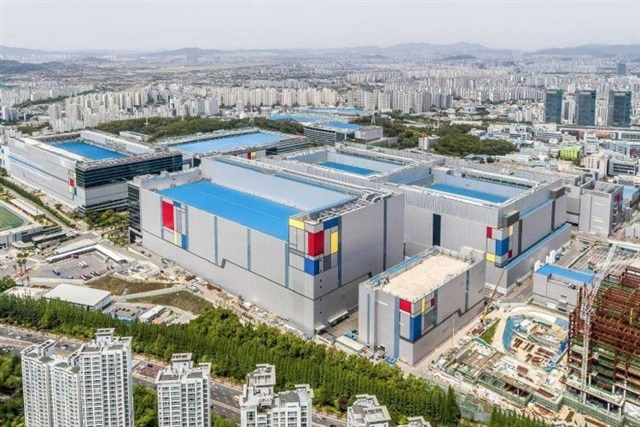
Technologies such as High Bandwidth Memory (HBM) have become crucial for overcoming traditional bottlenecks. Companies like Samsung are investing heavily in the research and development of these advanced memories, aiming to offer superior density and throughput. Choosing the right memory architecture is therefore a fundamental element for DevOps teams and infrastructure architects designing AI systems.
Implications for On-Premise Deployments
For organizations opting for on-premise or self-hosted LLM deployments, memory availability and specifications represent a significant constraint. Hardware with sufficient VRAM and high bandwidth can have a considerable initial cost (CapEx), impacting the overall Total Cost of Ownership (TCO). The ability to run complex models locally is directly proportional to the power and memory of the available GPUs.
Furthermore, data sovereignty and regulatory compliance often push companies to prefer air-gapped or otherwise internally controlled solutions. This makes reliance on specific hardware, and particularly memory, a critical factor in infrastructure planning. Evaluating the trade-offs between performance, cost, and control is essential for making informed decisions. For those evaluating on-premise deployments, analytical frameworks are available at /llm-onpremise to assess these trade-offs.
Future Prospects in the AI Memory Landscape
The future of AI inference will largely depend on the evolution of memory technologies. Continuous innovation is necessary to support increasingly larger and more complex models, which promise even greater capabilities. The competition among silicon manufacturers, with players like Samsung at the forefront, is set to intensify.
This "memory race" is not just about speed or capacity, but also about energy efficiency and scalability. Solutions that manage to balance these factors will be those that drive the next cycle of innovation in AI infrastructure, providing the foundation for next-generation deployments, both in the cloud and, increasingly, in self-hosted environments.










💬 Comments (0)
🔒 Log in or register to comment on articles.
No comments yet. Be the first to comment!