
The Growing Demand for AI Chips and KLA's Role
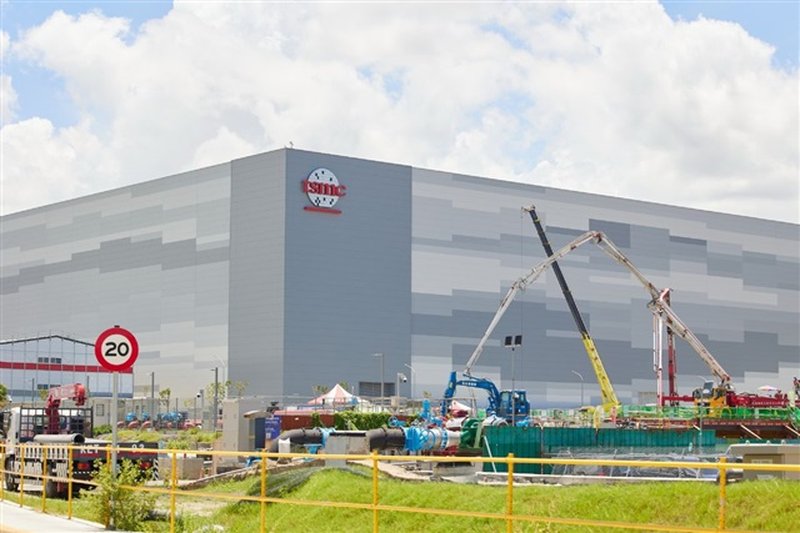
The semiconductor industry continues to be heavily influenced by the rapidly growing demand for chips dedicated to artificial intelligence. These components, essential for training and Inference of Large Language Models (LLM) and other AI workloads, represent a significant driver for innovation and production. In this context, companies like KLA Corporation play a crucial role, providing advanced process control solutions that are fundamental to ensuring the quality and efficiency in the manufacturing of these complex devices.
However, despite this scenario of strong demand, KLA recently announced its Q3 2026 results, accompanied by future guidance that did not fully meet market expectations. This gap between underlying demand and the ability to translate it into growth exceeding estimates highlights the intrinsic challenges within the semiconductor supply chain, an ecosystem characterized by high complexity and long production cycles.
The Importance of Process Control for AI Hardware
Process control is a critical phase in semiconductor manufacturing. It encompasses a set of methodologies and tools used to monitor, measure, and optimize every step of the fabrication process, from material deposition to lithography, etching, and packaging. For AI chips, which often integrate trillions of transistors and require extremely precise tolerances to operate at high frequencies with low power consumption, the accuracy of process control is even more vital.
Effective process control is directly related to manufacturing yield and the final quality of the chips. Microscopic defects can compromise performance, stability, or even render an entire wafer unusable. For companies investing in on-premise AI infrastructure, the availability of reliable and high-performance hardware, such as GPUs with high VRAM and Throughput, largely depends on the robustness of these production processes. Challenges in process control can therefore translate into delivery delays, higher costs, and ultimately, an impact on the Total Cost of Ownership (TCO) of AI solutions.
Implications for On-Premise AI Deployment
The dynamics of the semiconductor market have direct repercussions on the strategic decisions of CTOs, DevOps leads, and infrastructure architects evaluating the deployment of AI workloads. The availability and cost of hardware, influenced by the production capabilities and forecasts of companies like KLA, are determining factors. An AI chip supply that fails to keep pace with demand or experiences quality issues can slow down the adoption of self-hosted solutions and increase pressure on capital expenditure (CapEx) budgets.
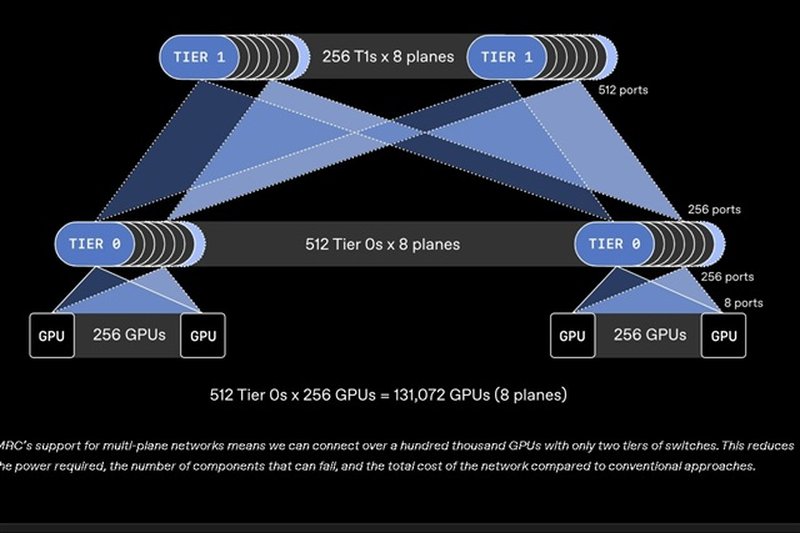
For those opting for on-premise infrastructures, supply chain stability is crucial for investment planning and ensuring scalability. The ability to acquire latest-generation GPUs, such as the H100 or MI300 series, with desired specifications (e.g., 80GB of VRAM per GPU) and within reasonable timeframes, is a competitive factor. Market forecast uncertainties, like those highlighted by KLA, can complicate the evaluation of trade-offs between initial hardware investment and long-term operational costs, including those related to system maintenance and upgrades. For those evaluating on-premise deployments, analytical frameworks are available at /llm-onpremise to assess these trade-offs in a structured manner.
Future Outlook and Industry Challenges
The gap between strong AI chip demand and the more cautious forecasts from a key player like KLA underscores a phase of transition and adaptation in the semiconductor industry. While AI innovation continues to drive the need for increasingly advanced silicio, the complexity of production and macroeconomic dynamics present significant challenges. Companies must balance investments in research and development with the need to optimize manufacturing processes and manage market expectations.
For IT operators and decision-makers, this means navigating a landscape where the availability and reliability of AI hardware cannot be taken for granted. The choice between cloud and on-premise solutions becomes even more strategic, requiring a thorough analysis of the risks and opportunities associated with the global supply chain. A company's ability to ensure data sovereignty and control over its AI infrastructure will increasingly depend on its skill in procuring and managing quality hardware in a constantly evolving market.








💬 Comments (0)
🔒 Log in or register to comment on articles.
No comments yet. Be the first to comment!