The Exponential Growth of AI Servers
The global demand for AI servers is experiencing a significant surge, driven by the widespread adoption of Large Language Models (LLMs) across various industries. This growth reflects a pivotal shift in enterprise IT strategies, where organizations are increasingly investing in robust infrastructure to support advanced AI workloads.
While cloud providers continue to expand their offerings, a substantial portion of this demand also stems from companies opting for on-premise or hybrid deployments to maintain greater control over data, ensure compliance, and optimize the overall Total Cost of Ownership (TCO) of their AI infrastructure.
The Crucial Role of Hardware and Cooling
At the core of AI servers lie powerful Graphics Processing Units (GPUs), such as NVIDIA A100 or H100, characterized by high VRAM and computational capabilities. These components, indispensable for training and inference of complex LLMs, generate a considerable amount of heat. Thermal management therefore becomes a critical factor not only for ensuring hardware stability and longevity but also for maintaining optimal performance and reducing energy consumption.
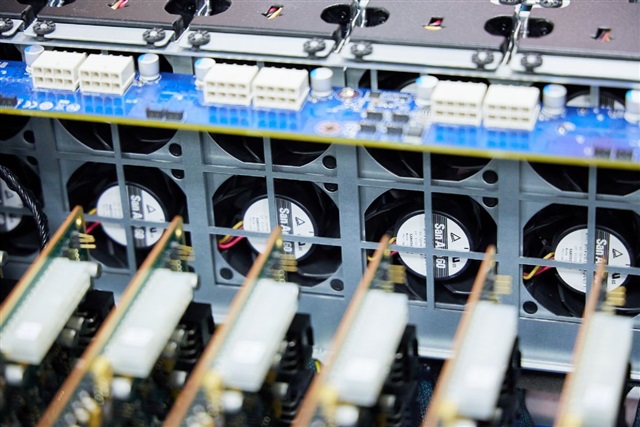
In this context, the strong visibility for Weltrend's fan motor driver ICs underscores the importance of seemingly secondary, yet vital, components. These chips control the fans that dissipate heat, ensuring servers operate within safe temperature limits. An efficient cooling system is directly related to a server's ability to sustain intensive workloads without throttling, directly impacting the throughput and latency of AI operations.
Implications for On-Premise Deployment
For CTOs, DevOps leads, and infrastructure architects evaluating self-hosted solutions, the availability and reliability of AI servers and their sub-components are absolute priorities. On-premise deployment of LLMs offers significant advantages in terms of data sovereignty, security, and environment customization capabilities. However, it requires careful infrastructure planning, including power and cooling management.
The growth in AI server orders indicates a strategic investment by companies seeking to internalize their AI capabilities. This approach allows for granular control over resources, which is fundamental for sensitive workloads or air-gapped environments. The health of the supply chain for components like Weltrend's driver ICs thus becomes a key indicator of the market's ability to meet this growing infrastructural demand, influencing delivery times and overall implementation costs.
Future Outlook and Supply Chain
The strong visibility for Weltrend's fan motor driver ICs suggests a robust supply chain and sustained demand for these essential elements. This is a positive signal for the entire AI ecosystem, as the availability of critical components is crucial to avoid bottlenecks in the production and deployment of AI servers. The ability to scale AI infrastructure, both in the cloud and on-premise, largely depends on the stability and efficiency of this chain.
In summary, the increase in AI server orders is not only an indicator of the maturing Large Language Models market but also a reminder of the importance of every single hardware element. From high-performance GPUs to the smallest fan control chips, each component contributes to the creation of resilient and efficient AI infrastructure, an indispensable requirement for companies aiming to fully leverage the potential of artificial intelligence.









💬 Comments (0)
🔒 Log in or register to comment on articles.
No comments yet. Be the first to comment!